How to Choose a School in Johannesburg: A Guide for Expat Families
Choosing a school is one of the biggest decisions you'll make when moving to Johannesburg with children. It affects more than their education. It will influence where you live, your daily commute, how quickly your children settle in and even when you decide to move home again.
So, where do you start?
Before you create a shortlist of schools, think about three things: how long you expect to stay in South Africa, where your family might move next, and which university system your children may eventually enter. These answers will help you decide whether an international or a local South African school is the better fit.
You'll also need to understand the South African school calendar, how children are placed into grades, what school fees look like and how early you need to apply.
I've lived in Johannesburg since 2010 and have helped many families navigate the move. Here is what I would consider before choosing a school for your children.
Updated 21 October 2026 | By Hannah Pirnie
Original Post: Feb 2017
1. Should you choose an international or a local South African school?
The best school for your family depends on how long you plan to stay in Johannesburg, your children's ages and where you expect them to go next.
An international school may be the better choice if you have a fixed-term posting and want your children to continue within a familiar international curriculum. A local South African school may be a better fit if your stay is open-ended and you want your children to experience South African life, culture and friendships.
There is no single right answer, and families can have very different experiences with both options.
The benefits of a local South African school
Local independent schools can offer a wonderful education alongside a real connection to South Africa. Your children have the opportunity to make South African friends, take part in local traditions and become part of a community that isn't constantly changing as international families move on.
Kate, a American mother who moved from London with children aged one and four, initially chose a local independent girls' school. She loved the experience and described it as a school raising "global children", rather than simply South African children.
When her family realised they would move on again, they switched to the French Lycée in Johannesburg. Its curriculum follows the same system as other French Lycées, making it easier to maintain continuity when moving between countries.
Her advice was simple: think about the end goal first, including the university system your children may eventually enter, and work backwards from there.
The benefits of an international school

International schools can offer continuity when families move between countries. Depending on the school, children may follow an American, British, French, German or International Baccalaureate (IB) pathway.
This can be particularly useful if your employer has a defined relocation period or your children are approaching important examination years.
However, international schools can have a higher turnover of families, and the fees can be considerably more expensive than those of many local independent schools.
What about friendships and school culture?
Many British families find that traditional South African independent schools feel familiar, with school uniforms, houses, assemblies, chapel at some schools, sport and an emphasis on manners and service.
Katrin, who moved from the UK with three daughters, chose a local girls' school rather than an international school and says she would make the same decision again.
The important thing is to look beyond the school prospectus. Visit if you can, talk to other parents and think about the environment in which your children will feel comfortable.
2. What curriculum do South African schools follow?
South African schools offer several educational pathways, so choosing a local school does not necessarily mean giving up international qualifications.
Most local independent schools write the matric, the National Senior Certificate, through the Independent Examinations Board (IEB). Government schools write the state version of the same certificate.
Other options include the International Baccalaureate, Cambridge qualifications and international school-leaving certificates.
Examples of different pathways in Johannesburg include:
Redhill School: Offers the IEB pathway and the IB Diploma Programme.
Deutsche Internationale Schule Johannesburg: Offers South African matric alongside the German International Abitur pathway.
St John's College: Offers a Cambridge A-level year after matric.
These are examples rather than a complete list, and the qualifications available can vary by year and programme.
Sine Thieme of Joburg Expat, whose children attended local schools, found that American universities accepted the South African qualifications her children obtained.
If your children are likely to apply to universities in the UK, US, Europe or elsewhere, check the entry requirements for their intended destinations before choosing a curriculum. University requirements vary, and you should confirm directly with the institutions your children may apply to.
3. How much do schools in Johannesburg cost?
School fees vary considerably depending on the school, curriculum, grade and additional services.
Based on published school fee schedules reviewed on 9 July 2026, local independent schools in and around Johannesburg's northern suburbs charged approximately:
| School | Primary (2026) | Senior (2026) |
|---|---|---|
| Local independent schools | R139,000 to R188,000 (Grade 4) | R180,000 to R233,000 (Grade 12) |
| American International School of Johannesburg | R478,800 to R643,400 depending on grade (2026 to 2027) | |
| Lycée Jules Verne | R125,806 (primary, 2026 to 2027) | R154,178 (high school, 2026 to 2027) |
| Deutsche Internationale Schule Johannesburg | R105,240 (Grades 1 to 4) | R118,260 (Grades 10 to 12) |
Annual tuition from each school's own fee schedule, read on 9 July 2026.
These figures are indicative, not a quote for any particular school. The American school's range reflects tuition across different grades, rather than a direct comparison of Grade 4 and Grade 12 fees.
International schools are not all priced at the same level. For example, the 2026 fee schedules reviewed for the German school ranged from R105,240 to R118,260, while the French Lycée's 2026–2027 fees ranged from R125,806 to R154,178.
What additional school costs should you budget for?
Tuition is only part of the overall cost of education in Johannesburg.
Ask each school about:
Application, enrolment and capital fees.
Uniforms, books and stationery.
School transport or bus services.
Lunches and aftercare.
Sport, music, trips and extracurricular activities.
Boarding, where applicable.
Annual increases and payment arrangements.
One-off fees can make a significant difference to your first-year budget. The schedules reviewed in July 2026 included enrolment fees ranging from a few thousand rand to more than R40,000 at local independent schools. The American International School of Johannesburg listed a capital fee of R185,200 for a new student.
If your employer is paying for education, ask for written confirmation of exactly what the relocation package covers. Some packages cover tuition but not enrolment fees, transport or extracurricular activities.
Always check the latest fee schedule directly with the school before making a financial commitment.
4. How does the South African school year work?
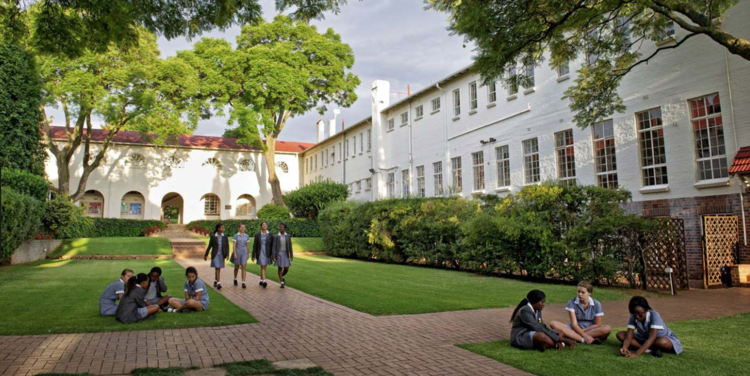
St Marys Waverly
The South African school year generally runs from January to December, with the main summer holiday over Christmas and New Year.
This is an important difference for families moving from the UK or other Northern Hemisphere countries, where the academic year often starts in August or September.
The American International School of Johannesburg follows an August-to-June calendar, while the French Lycée follows a September-to-July calendar.
What does this mean when relocating?
If your children arrive from a September-start school system, they may need to bridge the gap between academic years. Depending on their age, previous school and intended destination, you may need to plan for a transition period.
Most local independent schools run three terms, although some operate four. Exact term dates vary by school.
Before confirming your relocation dates, check:
When the school year starts and finishes.
Whether your children can join partway through the year.
How the school will assess their previous education.
Whether their current grade will transfer directly.
How the dates fit with your employer's relocation arrangements and home-country holidays.
Do not assume that a child will automatically move into the next grade simply because they have completed it overseas. Schools will consider their age, previous schooling and their own placement policies.
In our New in Town podcast, Sine Thieme of Joburg Expat explained that her children had been in gifted programmes in the US, but their Johannesburg school would not move them up a grade.
The earlier you discuss placement with your prospective school, the fewer surprises you are likely to encounter.
5. At what age do children start school in South Africa?
In the South African school system, children typically enter Grade 1 in the year they turn seven, following Grade R, the reception year.
This can be later than families from the UK expect, and the early years of school can look quite different from what children have experienced elsewhere.
Grade R places a strong emphasis on learning through play and developing foundational skills. A child arriving from a system that introduces formal reading and writing earlier may find some areas familiar, while a child leaving South Africa may need additional support to adjust to a more academic early-years programme.
Can my child start Grade 1 early?
Placement depends on the applicable rules and the individual school's admissions policy.
The Department of Basic Education's guidance allows for certain early admissions to Grade 1 in public schools, subject to age cut-offs. Independent schools may have their own policies, so ask the admissions team how it would assess your child's age and previous schooling.
Do not rely on age alone when planning a move. Get the proposed grade confirmed by the school in writing.
Will my child fall behind when we move again?
This is worth thinking about, particularly if your children are under eight.
Sine's daughter arrived in a Johannesburg school already reading Harry Potter. Her school supported her by giving her a separate reading group and access to the older children's library.
Katrin's youngest daughter had a different experience when the family moved from South Africa to Dubai. She needed about a year of additional support in reading, writing and maths.
Katrin's advice was to arrange support during school hours where possible, rather than adding lessons at the end of an already long school day. Some families also arrange tutoring in the final months before an international move to help children prepare for the next curriculum.
Every child is different, so these experiences are examples rather than a prediction of what will happen to your child.
What should you look for in a preschool?
When visiting a preschool, look at how children are learning, not just what is displayed on the walls.
Are the children encouraged to ask questions, explore and create their own work? Or does every child produce an identical picture using the same template?
The atmosphere, teacher-child interactions and opportunities for play can tell you a great deal about how a preschool approaches early learning.
6. How important is the school run when choosing where to live?
Your school choice and your choice of suburb should be made together. Johannesburg is a large, spread-out city, and the daily school run can have a significant impact on family life.
Morning traffic starts early, often before 6am, and can remain busy until around 10am. The evening commute brings similar challenges.
A school that looks manageable on a map may involve a much longer journey during peak traffic. Depending on where you live and where the school is located, the wrong combination can mean spending an hour or more travelling each way.
When comparing schools, think about:
The actual drive during school-run hours.
Whether the route is against or with the main flow of traffic.
Whether siblings can attend the same school or nearby schools.
Whether the school operates a bus service.
How sport, after-school activities and late finishes affect transport.
How the commute will work for both parents.
Where are Johannesburg's international schools located?
Some of the main international school options are spread across different parts of Johannesburg and its surrounding areas:
American International School of Johannesburg: Knopjeslaagte, Midrand, near Kyalami.
Lycée Français Jules Verne: Morningside.
Deutsche Internationale Schule Johannesburg: Parktown, on Sans Souci Road.
British International College: Bryanston Drive, Bryanston.
Several schools offer paid transport services, although routes and availability should be checked directly.
The best arrangement is often one where the children can walk, use school transport or travel on a route that avoids the worst of the traffic.
For more information on choosing an area to live, read my guide: Where do expat families actually live in Johannesburg?
7. How early should you apply to Johannesburg schools?
Apply as early as possible, particularly if you are considering a popular independent school.
The main entry points at many independent schools are Grade 0 (year they turn 6yr) and Grade 8 (year they turn 14yr).
Places in other grades may only become available when a family leaves, and admissions teams often work through waiting lists.
For example, in July 2026, St David's Marist Inanda was accepting applications for 2028, while St John's College had already closed Grade 8 applications for 2027.
Application dates and availability differ from school to school. Some schools accept applications well in advance, while others limit how far ahead families can apply.
The 2026 admissions information reviewed for this guide included:
St Stithians College: Its first-round Grade 8 application deadline was 31 January of the year before entry.
Lycée Français Jules Verne: The application deadline for September 2026 was 15 May 2026.
American International School of Johannesburg: Applications could not be submitted more than 18 months ahead, and the school described its waiting lists as relatively short compared with some local schools.
These are historical examples, not current deadlines. Always check the school's latest admissions information.
What can you do to improve your chances?
Start early. Research schools as soon as your relocation becomes likely, even if you do not yet have a confirmed arrival date.
Explain your circumstances. Tell the admissions team when you expect to arrive, how long you plan to stay and which grade your child needs.
Keep in touch. Follow up politely after submitting your application and ask whether any additional information is required.
Be clear about your preferences. If the school is your first choice, say so.
Ask about employer relationships. If your employer has an established relationship with the school, ask whether it can assist with the admissions enquiry.
Have alternatives. A second or third option can make the relocation process less stressful if your first choice has no space.
If you are applying from overseas, ask each school what documents it needs and whether interviews or assessments can be completed remotely. For more advice and support book in a Discovery Session with Hannah to help connect you and your children into the right school.
8. What is different about attending a local South African school?
One of the things many expat families enjoy about local South African schools is the emphasis on developing the whole child.
Alongside academics, schools may place considerable importance on sport, music, cultural activities, manners, leadership and community service.
Sport can be a particularly important part of school life. Teachers often play a hands-on role in coaching, fixtures and extracurricular activities, and schools may organise transport for matches and events.
However, provision varies. Some traditional schools still divide certain sports by gender, and the opportunities available can differ between schools. If your child is serious about a particular sport, check that it is offered at the appropriate level.
Will my children need to learn another language?
Depending on the school, children may study Afrikaans, isiZulu or another language as part of their education.
They will also encounter South African history and cultural perspectives that may be different from those taught in their previous school.
As a British parent, I found it fascinating to learn more about South African history, including the Boer War, through the experiences of my children.
Sine also found that her son's isiZulu was something he was asked about during university interviews.
Some schools have a religious foundation or affiliation. St John's College, for example, has Anglican roots, while Brescia House has a Catholic foundation. If faith is important to your family, ask how it is reflected in school life and admissions.
Boarding is another consideration at some traditional South African schools, with some children starting at around 14 or 15. For certain families, it is an established and positive part of the school experience, but it will not suit everyone.
9. What should you consider if you plan to leave South Africa again?
It is just as important to plan your children's next move as it is to plan their arrival in Johannesburg.
The January-to-December school year can create a mismatch when returning to the UK, US or another country. Your children may be partway through a grade when the next school year starts elsewhere.
Different education systems may also have specific requirements for subjects, languages and qualifications.
Sine's son needed two years of language study to meet the requirements of the US system. His fluent German and his isiZulu did not meet the requirement in the way the family expected, so he had to complete an additional German course online.
Her family also chose to stay until the end of the South African school year so the children could receive their school prizes, which were an important part of the school's traditions. When they returned to the US, the children entered a different grade placement, but the family felt the transition worked out.
The lesson is not to avoid a South African education. It is to understand how your chosen school system will fit with your longer-term plans.
If a future move is likely, speak to your current school and the intended destination school well in advance. Ask about subject requirements, grade placement, examination dates and any documentation you will need.
10. How do you choose the right school for your family?
There is no single best school in Johannesburg for every expat family. The right choice depends on your children's ages, personalities, educational needs, your budget, your likely length of stay and where you plan to live.
Before making a shortlist, work through these questions:
How long are we likely to stay in South Africa?
Where might we move next?
Which university systems do we want to keep open?
What is our annual school-fee budget, including additional costs?
Which curriculum best suits our children?
What grade will each child enter, and has the school confirmed this?
How will the daily school run work?
What are the admissions deadlines?
What support might our children need when arriving or leaving?
Does the school's culture and approach feel right for our family?
If your child has an identified learning need, or you suspect they may need additional support, consider speaking to an educational psychologist before finalising your shortlist. This can help you understand what to look for when speaking with prospective schools.
For visa and study-permit questions, seek advice from a qualified immigration specialist. Schools' fees, admissions rules and dates change, so confirm important details directly with each school.
Need help choosing a school in Johannesburg?
Schools are where I start with almost every family I help relocate to Johannesburg. Once we understand where your children will go to school, we can make much better decisions about which suburb to live in, how the commute will work and what kind of home will suit your family.
If you are moving to Johannesburg and are not sure where to start, my Discovery Session is a private video call focused on your family's relocation questions.
Together, we look at your children's ages, your relocation dates, where you may move next and the practicalities of the school run. We then build a shortlist of three or four schools for you to investigate further.
After the session, you receive four personalised documents:
A summary of our conversation and recommendations.
A school-visit crib sheet with questions to ask.
A research sheet for each shortlisted school.
A dated application plan to help you stay on track.
The Discovery Session costs US$297. If you subsequently choose my Global Executive Concierge service, the full fee is credited towards it.
You can also listen to our conversation about schools in Johannesburg on the New in Town podcast, featuring Sine Thieme of Joburg Expat.
Listen to the podcast: Schools in Johannesburg with Sine Thieme
Moving countries is a big enough adventure without trying to work out the school system on your own. Start with your family's bigger picture, ask plenty of questions and remember that choosing a school is also about finding the right community for your children.
Best Johannesburg schools by area
A directory to start your research, grouped by area.
Last updated October 2026: curricula, grades and affiliations change, so confirm the details with each school.
Midrand, Waterfall, Kyalami and Centurion
American International School of Johannesburg (AISJ): Knopjeslaagte, international (American and IB), co-ed, Pre-K to Grade 12, day and boarding
Reddam House Waterfall: Waterfall, private (IEB), co-ed, from age one to Grade 12
Kyalami Prep: private, co-ed, 18 months to 13
Beaulieu College: private, co-ed, three to 18
Pinnacle College: private, co-ed, two to 18, day and boarding
Cornwall Hill: private, co-ed, three to 18, day and boarding
Fourways, Dainfern and Steyn City
Dainfern College: Dainfern, private (IEB), co-ed, Grade 0000 to Grade 12, Christian
Steyn City School: Steyn City, private (IEB), co-ed, Grade 000 to Grade 12, day only
Crawford International Fourways: Craigavon, private, co-ed, Grade 0000 to Grade 7 (high school at Crawford Lonehill)
HeronBridge College: Nietgedacht, private (IEB), co-ed, age three to Grade 12, Christian
Fourways High School: government, co-ed, Grade 8 to Grade 12
Mi Kinder Educational Centre: preschool
French Pre School: preschool
Lonehill
Crawford International Lonehill: private, co-ed, pre-primary to Grade 12
Lonehill Academy: co-ed, Cambridge, four to 19
Bryanston
St Stithians College: Lyme Park, private (IEB), boys' and girls' schools on one campus, Grade RRR to Grade 12, Methodist
Brescia House School: private (IEB), girls, Grade 000 to Grade 12, Catholic
British International College: Bryanston Drive, international (Cambridge, Junior High to A Level), co-ed; its prep school is in Northriding
Michael Mount Waldorf: private, co-ed, four months to 18
Sandton, Morningside, Inanda and Sunninghill
Crawford International Sandton: Benmore Gardens, private (IEB), co-ed, Grade 0000 to Grade 12
Redhill School: Morningside, private (IEB or IB Diploma), co-ed, KG1 to Grade 12
Lycée Jules Verne: Morningside, international (French, with an American section), co-ed, age two to 18
St David's Marist Inanda: Inanda, private (IEB), boys, Grade 000 to Grade 12, boarding in the College, Catholic
St Peter's Schools: Sunninghill, private (IEB), Grade 000 to Grade 12, separate boys' and girls' prep schools and a co-ed College, Anglican
The Willows: Montessori, 18 months to six
Grayston Prep: private, co-ed, five to 13
Rivonia Primary: five to 13
Melrose and Waverley
St Mary's School, Waverley: private (IEB), girls, Grade 000 to Grade 12, day and boarding, Anglican
Kingsmead College: Melrose, private (IEB), girls, Grade 000 to Grade 12, Anglican
Future Nations: private, project and digital learning, 18 months to 18
Houghton, Parktown, Westcliff and the Parks
St John's College: Houghton, private (IEB, with a co-ed Cambridge A-level Sixth Form), boys from pre-prep to Grade 12, day and boarding, Anglican
Roedean School: Parktown, private (IEB), girls, Grade 0 to Grade 12, day and boarding, Anglican
Deutsche Internationale Schule Johannesburg (DSJ): Parktown, international (IEB and German International Abitur), co-ed, from age one to Grade 12
St Katharine's: Parktown, private, girls' prep school
The Ridge: Westcliff, private, boys' prep school
Pridwin: private, boys, five to 13
Auckland Park Prep: private, girls, five to 13
King Edward's: government, boys, five to 18
Parktown Girls School: government, girls, 13 to 18
Parkview Primary: government, co-ed, five to 13
Hyde Park: government, co-ed, 13 to 18
Sacred Heart College: co-ed, three to 18, Catholic
Kairos: co-ed, five to 13, Waldorf-inspired
Small World Playschool and Pre School: co-ed, one to six
BlueBird: co-ed, 18 months to five
Bedfordview
Reddam House Bedfordview: private (IEB), co-ed, early learning to Grade 12
Crawford Italia Preparatory: private, co-ed
Holy Rosary School: private, girls, three to 18, Catholic
Saheti School: private, co-ed, three to 18, Greek Orthodox
St Andrew's School: private, girls, five to 18
St Benedict's Catholic School: private, boys, five to 18, Catholic
Other faith schools
King David: Jewish
De La Salle Holy Cross College: co-ed, Catholic
Nur-ul-Islam: Lenasia, Islamic
Remedial and special needs schools
Further reading
Jozi Kids: school listings for the northern suburbs
ISASA: the Independent Schools Association of Southern Africa
Joburg Expat: Sine Thieme on the South African education system
Frequently asked questions about schools in Johannesburg
-
Not necessarily. International schools can provide continuity for families moving between countries, while local South African schools can offer a strong education and deeper integration into local life. The right choice depends on your children's needs, your budget and your future plans.
-
The South African school year generally runs from January to December, with the main summer holiday over December and January. Some international schools in Johannesburg follow different calendars, so check the dates for your chosen school.
-
Children typically enter Grade 1 in the year they turn seven, following Grade R. Admissions and early-entry rules vary, so confirm your child's placement directly with the school.
-
Fees vary considerably. Published 2026 schedules reviewed for this guide showed local independent schools in and around the northern suburbs charging approximately R139,000 to R188,000 annually in Grade 4 and R180,000 to R233,000 in Grade 12. Some international schools charge considerably more, and additional fees may apply.
-
Apply as early as possible. Popular independent schools may fill key entry grades well in advance, while other schools accept applications within a defined window. Check each school's current admissions dates and availability.
-
Yes, but grade placement is not always a direct transfer. Schools will consider the child's age, previous schooling and their own admissions policies. Discuss your child's records and proposed entry grade with the admissions team before moving.
-
St John's College offers Cambridge A Levels in it Sixth Form, and Redhill offers the IB Diploma alongside the matric. British International College and Lonehill Academy teach Cambridge qualifications, the Deutsche Internationale Schule Johannesburg (German International School) offers the German International Abitur alongside the matric, and Lycée Jules Verne offers the French Baccalaureate. Check the current curriculum and university-entry requirements with each school.
-
It is usually sensible to consider both together. Johannesburg is spread out, and peak-hour traffic can make the school run a significant part of daily family life. Understanding where your children will study helps you choose a suitable area to live.
Please note: School fees, application dates, curricula and admissions requirements can change each year. The information above is intended as a starting point for research, not a substitute for confirmation from the school.