
Yes, most expat families can build a good life in Johannesburg with sensible security habits. Crime is serious, and the risk changes from one street to the next. Start with a home that has working security, make a few routines second nature and stay alert when you are out. You do not have to live on an estate, and you do not have to let fear decide how much of the city your family gets to enjoy.
First recorded as a New in Town episode, February 2024, you can listen here to the advice CAP provide on how to stay safe and what the crime is really like in Johannesburg.
Updated 18 November 2026 · Hannah Pirnie, raising her British family in Johannesburg since 2010
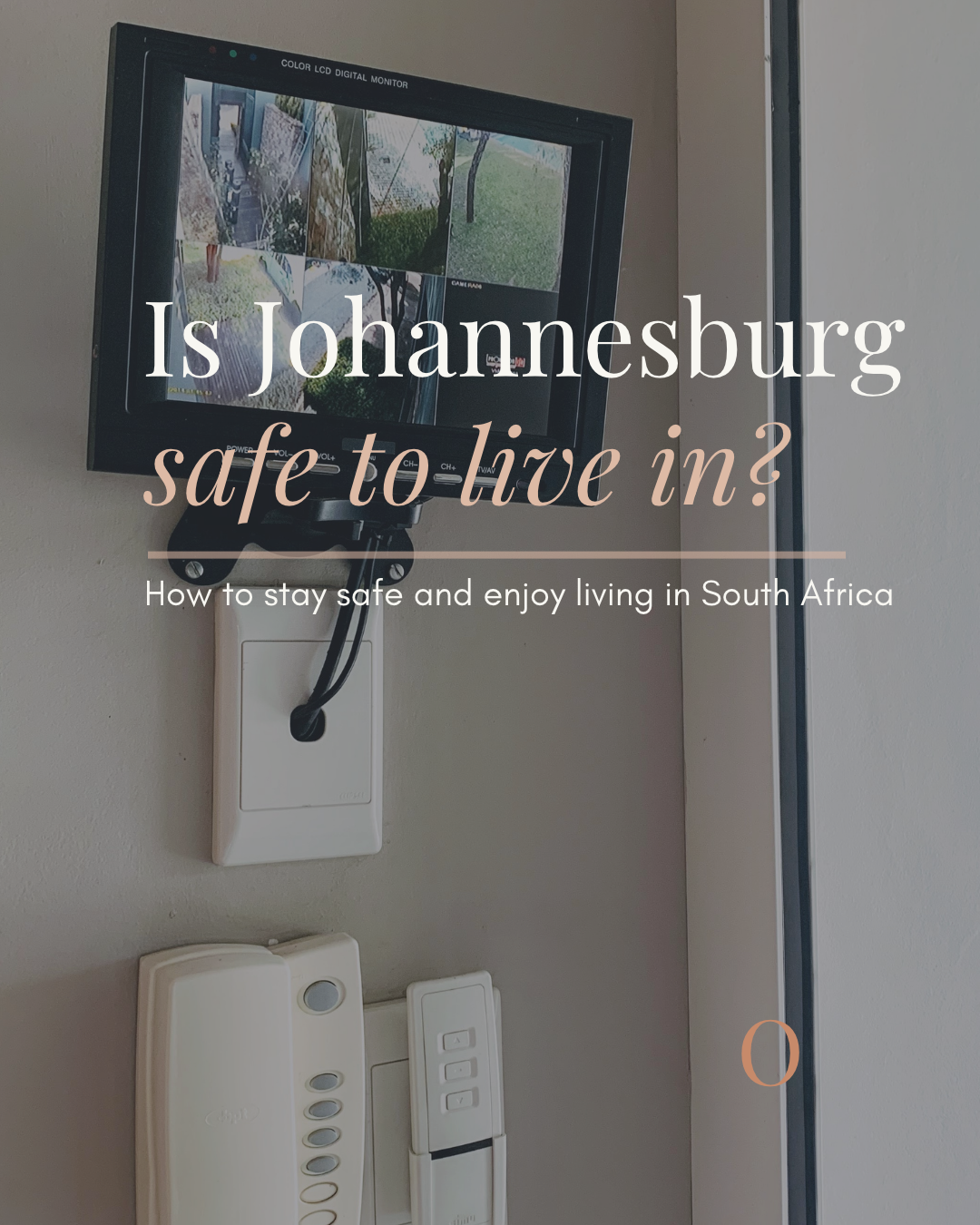
“Am I going to get shot?”
That is the question underneath most of the others. Sarah Passmore and I took it to people who work on this every day: CAP, a non-profit security company working alongside the police in parts of Johannesburg. This page brings together what we discussed, the latest figures available to me and the habits I have learnt since moving here.
How much crime is there, really?
Crime is serious, but the latest police figures show several important categories falling. From April to June 2026, murder was down 5.9%, carjacking 18.2% and house robbery 17.6% compared with the same period in 2025. Gauteng still carries a large share of the national burden: it accounted for 57% of reported carjackings from January to March 2026.
Sources: SAPS first-quarter release, reported by SAnews, 28 August 2026; Parliament's analysis of the fourth quarter of 2025/26, 18 June 2026.
National figures cannot tell you what happens on your street. CAP shared local incident rates with us in February 2024: around 23 to 27 incidents per 1,000 households across the better-off suburbs it discussed, including trespass and theft as well as violent crime. Its best-performing areas were around three incidents, and its highest around 15
CAP's Sean Jammy also described a small, changing group of repeat offenders as responsible for a large share of violent crime in Johannesburg. The figure quoted in the episode was around 300 suspects and 70% of violent crime.
Inequality is part of the backdrop to crime, but it does not make the harm any less real. Understanding the wider picture can help you respond with care and perspective while still taking practical steps to protect your family.
Do we need to live on an estate?
No. An estate can make security feel simpler and give children room to move around within its boundaries. A freestanding home can also work well when its physical security, daily routines and response arrangements are properly set up. The right choice depends on the life you want, as well as your home's actual security plan.
An estate may suit a family that wants managed security and a shared community. A house in the Parks may bring a high street, familiar neighbours and Saturday mornings on 4th Avenue. For the wider neighbourhood decision, read Where do expat families actually live in Johannesburg?.
How do we secure a family home?
Think about three things: the physical setup, the routines and the people who come into your home. Gates, lighting, an electric fence and an alarm matter. So does using and maintaining them consistently. Most security plans have weak points where equipment, routine and access meet.
Arm the alarm when you leave and use the beams at night.
Ask whether an interior security gate can create a secure area around the bedrooms, then use it consistently.
Test panic buttons with your response provider so you know they connect to the control room.
Ask your security provider how best to keep pets safe overnight.
If you have a safe, keep its key somewhere secure and accessible to you.
If you are renting, ask which systems are installed, whether they work and whether the response contract can transfer to you
What about people who work in our home?
Set up a fair, consistent process for checking references and identity before someone starts work. Staff and contractors learn how the household runs, so share the information they need to do their jobs and keep alarm codes and family routines private.
CAP described a domestic-staff vetting service involving police criminal checks and profiling.
Is it safe to drive in Johannesburg?
Driving is part of daily life here. Keep valuables out of sight, put your phone away and lock the car yourself before you leave it. When you get home, pause beside your gate and check that the road is clear before turning in. Plan long trips so you are not driving unfamiliar rural roads late at night.
Car jamming: A jammer can block the signal from your key, leaving the car unlocked even when the remote appears to work. Stand beside the car, lock it and check the doors or the usual lock signal before walking away.
At traffic lights: Slow down as you approach and leave space around your car where possible. “Robot” is the local word for a traffic light.
Vehicle theft: Popular models can attract thieves, but the most-targeted vehicles change over time.
Night driving: Traffic, animals and heavy vehicles can make rural roads demanding after dark. If you are driving to the Cape, consider splitting the trip over two days.
CAP also recommended an anti-hijack course for drivers.
Can we walk, run and get outdoors?
Yes. Choose busy routes, keep your phone out of sight and leave valuable jewellery at home. Those simple choices make it easier to enjoy Johannesburg's parks and trails.
When I first arrived, I walked the dog to the vet, about a mile down the road. My South African friends looked at me as if I had lost my mind. The security professionals I spoke to encouraged people to walk, while staying aware of their surroundings. One practical suggestion was to carry an inexpensive prepaid phone and a spare wallet with a little cash, leaving the phone you care about at home.
The bigger loss would be letting worry keep your family indoors. Get to Delta Park, Emmarentia and the Wilds. Walk the dog. Try a Saturday parkrun. Being outside with other people is part of what makes this city feel like home.
What should we do if something happens?
If someone confronts you, stay calm and hand over what they ask for. Do not argue or chase them. A phone or a car can be replaced. Once you are safe, contact the police and your security response provider.
Save your response provider's control-room number in every family phone. SAPS lists 10111 for emergencies; 112 is also available from a mobile phone.
How do families live with the risk?
They set a few rules and then get on with life. Parkhurst residents I spoke to for New in Town described ordinary habits: do not leave valuables outside, and glance behind you as you drive home at night. Then they carry on.
Street WhatsApp groups can spread rumours, and CAP shared an example of a warning about men at gates that turned out to be installers putting up stickers. Still, neighbours who check on one another and respond quickly are one of the lovely things about living here. CAP mentioned Craighall Park, Glenhazel, Norwood and Parkhurst as communities where neighbours look out for each other.
The aim is to move from frightened to prepared. Learn the risks, make a plan that fits your household and leave room for the life you came here to live.
What this page does not cover
This is a general guide for families, not a security assessment of a particular home or street. It does not rank suburbs or recommend a security company. CAP appears here because Sarah and I recorded the episode with them. Ask which providers cover the streets and homes you are considering. Crime figures reflect reported crime, use specific reporting periods and change with each release.
Talk it through with me
I moved to Johannesburg with my husband's job, for an adventure. He was in the office day two. No local network, no idea which suburb was safe, no sense of who to trust.
A Discovery Session is a 90-minute private video call. Choose safety as the focus and I will help you think through the suburbs on your list, the school run, the kind of home you are considering and the habits your family will need in the first weeks. Afterwards, you receive one written document, such as the Neighbourhood & Housing Guide or your first 90 day Action Plan.
Listen, read and watch
Listen: New in Town: How to Stay Safe in Johannesburg, also on Apple Podcasts.
Read: The episode summary (PDF).
Watch: Staying safe at home, on the road and out and about, a webinar with Sine Thieme of Joburg Expat.
More: What do expat families need to know before moving to Johannesburg?


