

Johannesburg Tours
People often ask me if I feel safe to walk around and explore Johannesburg. Like any city there are no go area's. or places I would only go through with a local, or as part of a group. But there are lots of places that you just have to be aware (rather than paranoid). Plan your trip, know where you are going, where to park, and leave your Rolex at home.
Here are my top experiences, the majority are individually or community run, with the larger more established tours at the end.

1. Day Tour With Thami
Thami provides the BEST tour in the whole of South Africa! Every guest who comes to stay with us, has to go out with him, at least for half a day. We have sent global CEO's, and my in laws out with him. Thami has grown up in Soweto, he know everyone and everything. There isn't anything he can't show you or explain to you. Thami will personalise your tour, and give you a day you will always remember! He really is outstanding. All the profits he makes go directly back into the people of Soweto.
2. Micro Adventures Tour Guide
Great variety of adventures to go on, from running up the stairs at Ponte Tower, to exploring Joburg's Heritage. Each event always has a great mix of people who create a welcoming environment. But be warned their adventures sell out quickly, so if you see something you would like to do, make sure you book it!
3. Johannesburg Heritage Foundation
My good friend Heather Mason from 2Summers told me about these guys, and wow what a great find! They provide a vast amount of knowledge and history delivered in a variety of formats, from bus trips to neighbourhood walking tours. They always run a special offer on tours throughout September to celebrate Heritage Day.
4. Joburg Photowalkers & InstaWalks
For those who want to explore off the beaten path, join the Photo walkers facebook group, or keep a look out for the next Instawalk.
5. Dlala Nje - Hillbrow
Most Joburger's consider Hillbrow a no-go area. Thankfully Micro Adventures and Dlala Nje are changing that, by encouraging people to return, by running Hillbrow and Ponte tours and have also just opened a bar and yoga classes inside Ponte Tower. Dlala Nje operate a youth club based out off Ponte, all proceeds from their tours go directly to the running costs..
6. City Skate Tours
The tour lasts three hours and skateboards are provided (tours are for persons aged over 18 only). The first hour is usually spent teaching you how to skate, before heading into town to tell you more about the history, and point out some up and coming urban developments, graffiti and street sculptures. To book contact Mnyandu on +27 79 839 8833, email cityskatetours@gmail.com. Tours from R300 per person (including skateboard rental). Tours on Sat, Sun, start at 10:00 and 14:00.
7. New In Town Orientation Tour
Have you just moved to Joburg? There is no need to do this all on your own. We can pick you up and show you around for the day! Introduce you to people within your area, take you to the local yoga studio, shops, schools, parks, and generally help you get your weekly routine set up. We are all expats so understand whats its like, let us take you shopping and introduce you to all our favourite South African brands!
General Tours - You Need To Do At Least Once
Have a specific question? I like to hang out over on Instagram, and often have a story or two to show you around.




10 Reasons To Get Excited About Moving To Johannesburg
‘You live where? Johannesburg!!! WOW, don’t you worry about getting shot?’
OR
‘Your daughter, son in law and grandchildren live where? What on earth took them to Johannesburg? When are they coming home?’
OR
‘Hannah, the other day I saw this TV programme on Johannesburg, are you sure you are safe there?’
If you are living in Joburg, you get used to these comments each and every time you head back home. My poor parents are so fed up of defending our choice to live here, and constantly telling people how wonderful it is (thanks mum).
Who can blame these every day questions when often the media and South African’s living abroad will talk about crime, unemployment, water or electricity shortages and corruption the same way Brits talk about the weather or Londoners talk about travel options. Sadly there are a multitude of challenges for people living in Johannesburg and South Africa as a whole, but it is also a vibrant welcoming city, that opens its arms to invite you in, to love it or hate it.
So if Johannesburg or South Africa becomes an opportunity for you to move too, here are our Top 10 reasons why we think you should say yes!
The Sky
Blue skies, stormy skies, big skies (from road trips), beautiful white skies (after a storm), sun sets (range of colours reds, yellow, pink).
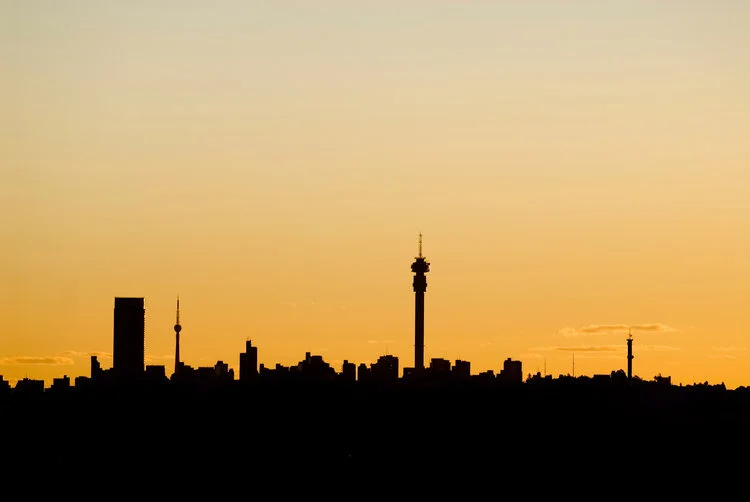
Image Marikjke Willems
Entrepreneurship
If you think you can, why not give it a go. The number of people who create their own business and execute their ideas into a reality is inspirational. You still have your hardware store, fruit and veg shop, cheese shop, local coffee shops, whereby you get to know the owner personally. This variety and personal approach is incredibly refreshing. The urbanisation of Joburg city centre is also incredibly exciting and vibrant, whether you are visiting Arts on Main, Braamfontein, Newtown, 1 Fox Street, or Jozi Lane. The personal belief to create something unique, to buy local, and make it happen is wonderful.
The Houses

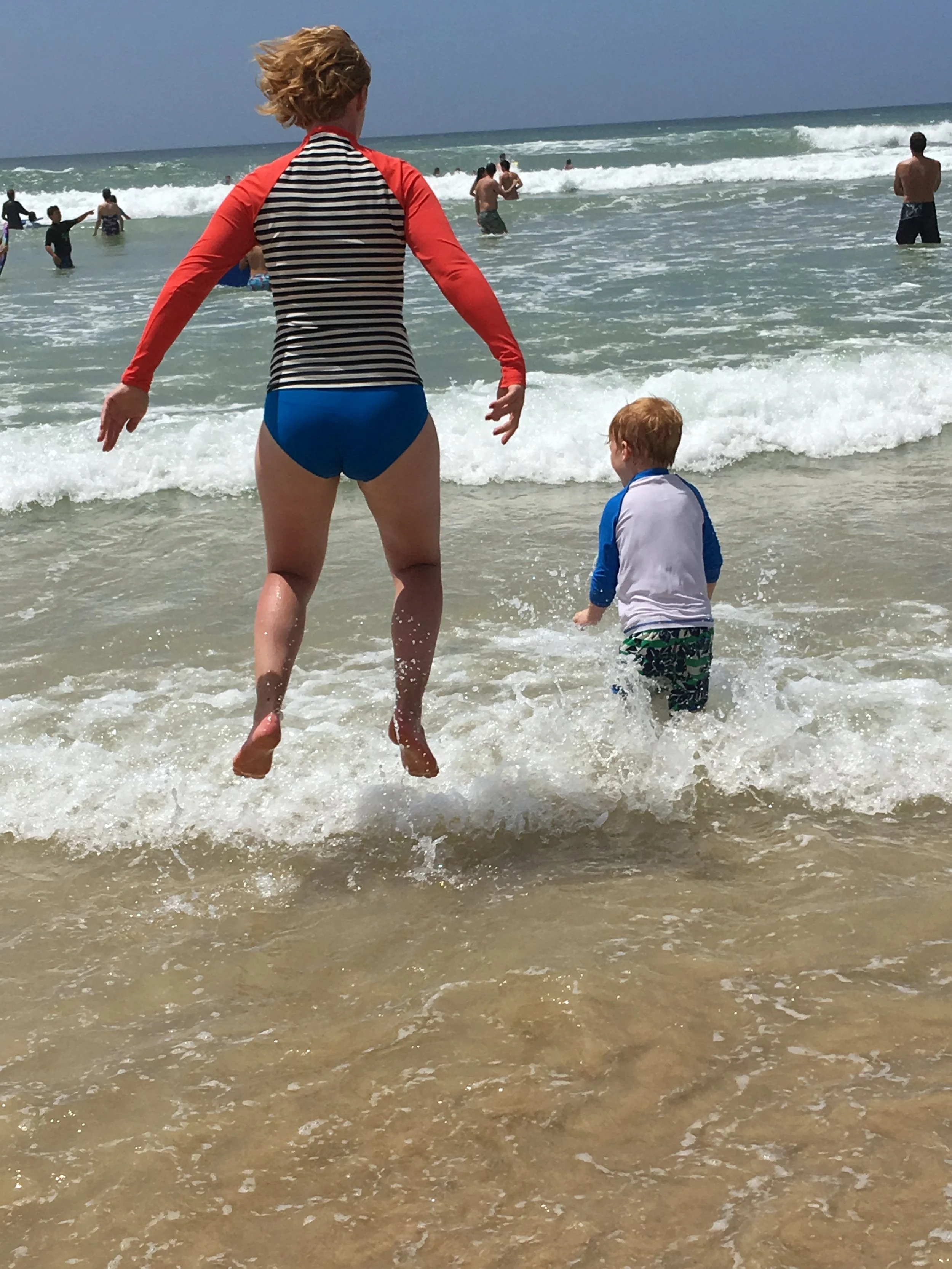
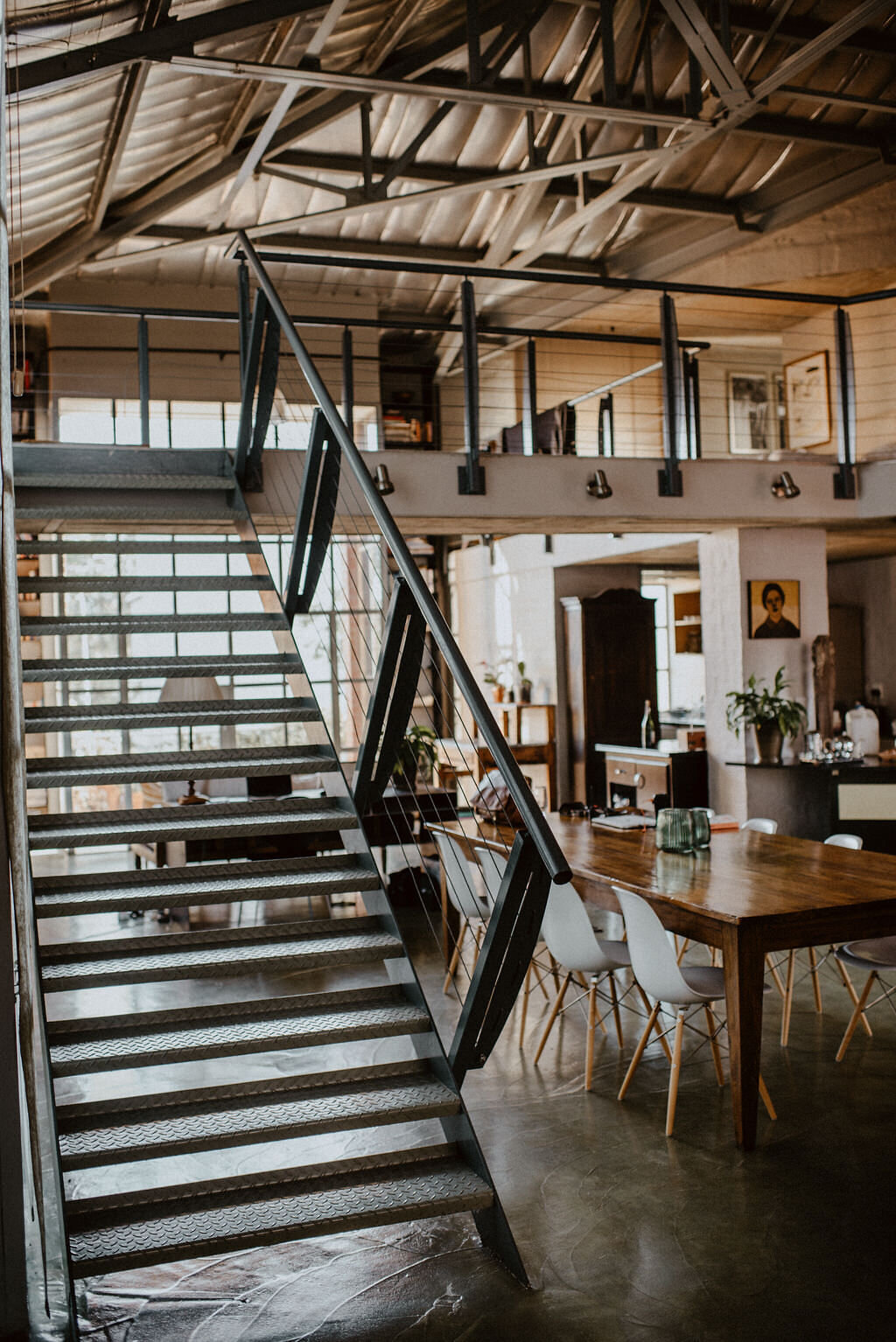
We have been very lucky to live in beautiful houses, as have our friends. Many of the houses are bungalows, which when you have small children it is brilliant not to have to keep running up and down stairs when trying to leave the house. There is so much space, opportunity to have a swimming pool (which keeps our kids entertained for 7 - 8 months of the year).
Laid back lifestyle
It is so easy to escape the city for weekend breaks away in the most beautiful countryside or beach, and the working day is nowhere near as long as many other cities. The down side of that is things take a LONG time to happen, and people often don’t show up when they say they will.
The Colours
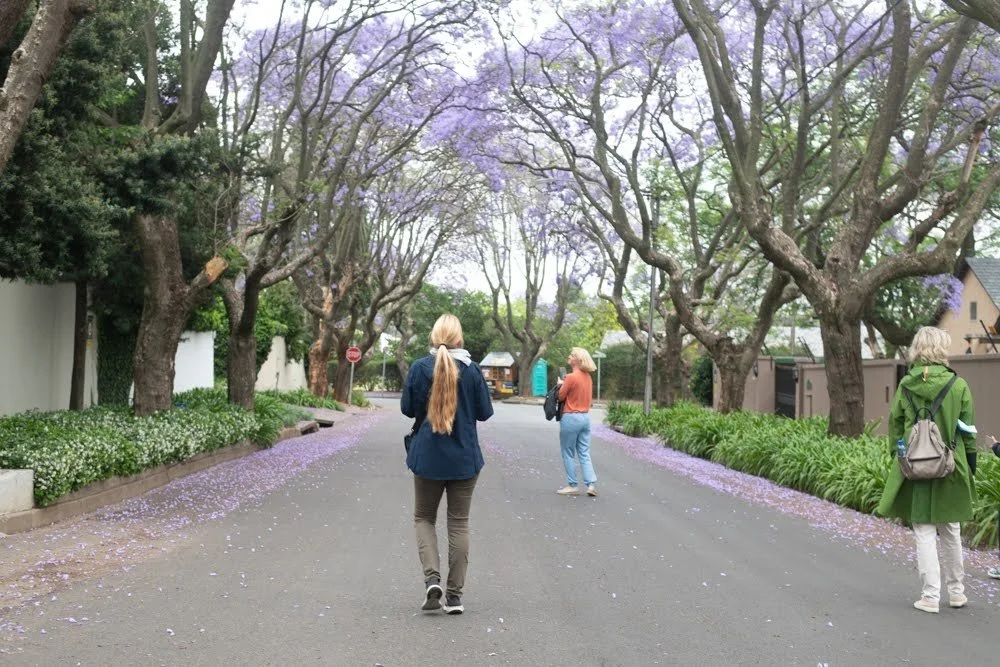
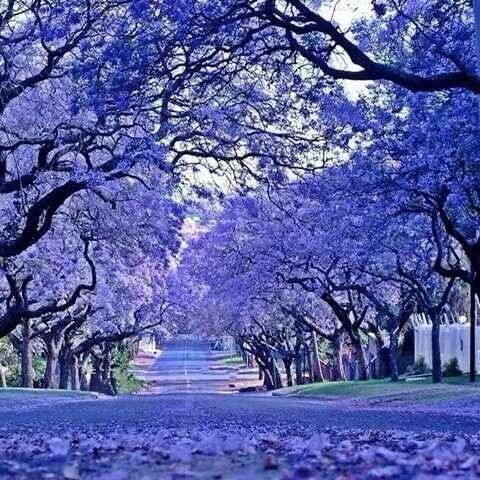
The pink Cherry Blossom, Purple Jacarandas, orange and purple Bird of Paradise, pink Proteas, orange Clivia Miniata. The whole city turns purple in October, and you cannot but smile as you drive around on your normal daily commute. There are beautiful parks with incredible views overlooking the city, perfect for early morning run or bike rides, walking the dog or just going for a stroll.
Food & Wine
The range of restaurants and price for good food and wine means that it is often cheaper to eat out than stay in! Also means its so easy to pick food up for the kids on the go, rather than always having to pack their lunch.
It is a Big, Little City
There is so much stuff to do, right on your door step, and it doesn’t take long before you know your way around so you don’t get lost in doing it all. Incredible to go and watch Cold Play or International Sport and then be back home in bed just 30 minutes later.

Accessible
Joburg is brilliant to travel into the rest of Africa, whether for business or on a road trip, it brilliantly.
International Sport

International Rugby, Cricket & Soccer are all very accessible and so easy to do as a family. We have taken our three kids (who are all under 5) to many test Cricket games, they have loved running around on the grass bank, the crowd are always so friendly, and great atmosphere, such a treat to be able to afford and then enjoy.
Cosmopolitan
For an African capital city it is very cosmopolitan and a lot more open to different views and cultures than many places in the country and the continent.
Joburg is one of the few cities without a river, sea or port, nor are there any mountains. But it does turn purple in October, have hot rain bouncing off the streets in December, warm clear blue winter days in May. You can walk around barefoot probably 360 days of the year (which my children now do), but the one thing I can guarantee is that you will be met with a welcoming smile and “howzit?” as soon as you land, whether it is from the cleaner in the OR Tambo airport or someone you pass whilst walking in the park, Johannesburg is mainly all about the people.
If you do brave the decision to come live here, a much hard decision is going to be why should we ever leave.

Our Top Short Term Furnished Accommodation
Let us help you find the perfect place to stay in Joburg.
When you first arrive in Johannesburg, finding a home is your first priority. If you are lucky the perfect place comes available at the right time, in the right location. Sadly, thats easier said than done. It often takes time to find the perfect home, and we believe its worth holding out for.
Often expats are forced into making a quick decision to escape their hotel, or small apartment with everyone on top of one another. We don't want you to be forced into making a decision, plus we understand many families are coming with pets (or children!) that need outdoor space.
Whilst Airbnb is a good option, often you aren’t able to book the same property for 6 weeks + and you are never too sure what the property is like in real life.
Which is why have sourced the best furnished short-term accommodation in Johannesburg, below is a selection of our top-rated properties, but to gain access to our portfolio and availability, drop Hannah an email: hannah@translatingme.org and we can get you booked in somewhere special.
Rosebank

Stylish Apartment Rosebank
2 bedroom apartment right in the middle of Rosebank. Beautiful views and incredible rooftop balcony.

The most beautiful home in Joburg! Perfectly located, 3 bedrooms, serviced twice a week. You won't want to leave.
Parkhurst
3 Bedroom Parkhurst Home - great if you are bringing children and pets 😝.

Amanzi Guest House
Home away from home, you will be welcomed to Joburg by Rob and Pam. Choose from a selection of apartments or cottages.

http://amanziguesthouse.co.za/
Fourways Garden Guest House
If you are looking to base yourself up north, then this is perfect for you. http://www.fourwaysgardens.co.za/
Serviced Apartments
Corporate serviced apartments.
Marriott Apartments in Melrose Arch ….
https://www.marriott.com/hotels/travel/jnbmc-johannesburg-marriott-hotel-melrose-arch/
The Capital on Bath and
One Hyde Park. https://onehydepark.co.za/
To secure any of these properties please contact me, Hannah - hannah@translatingme.org and if these aren’t available I can find you the perfect place to stay.

Where to See the Jacarandas in Johannesburg and Pretoria
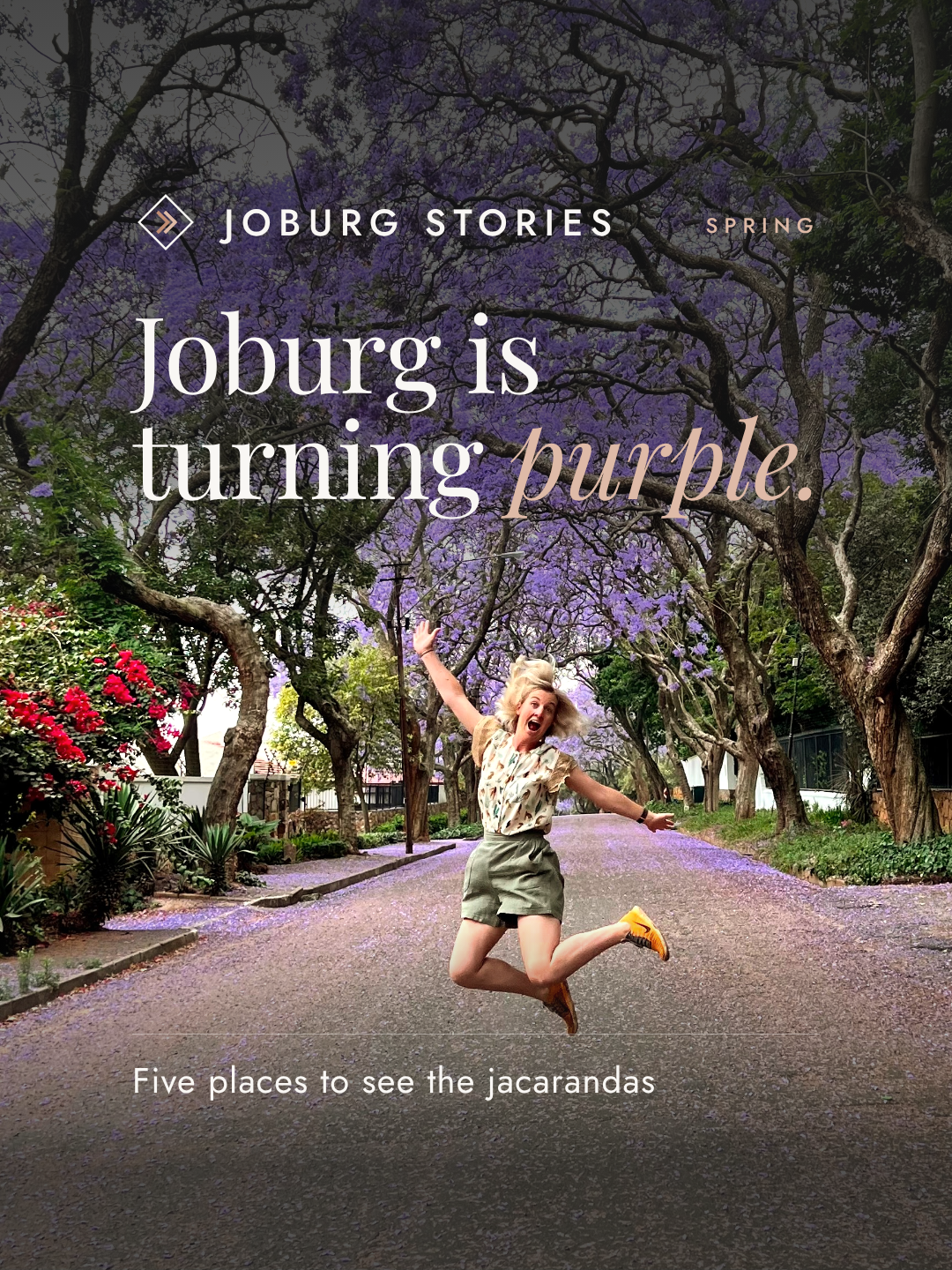
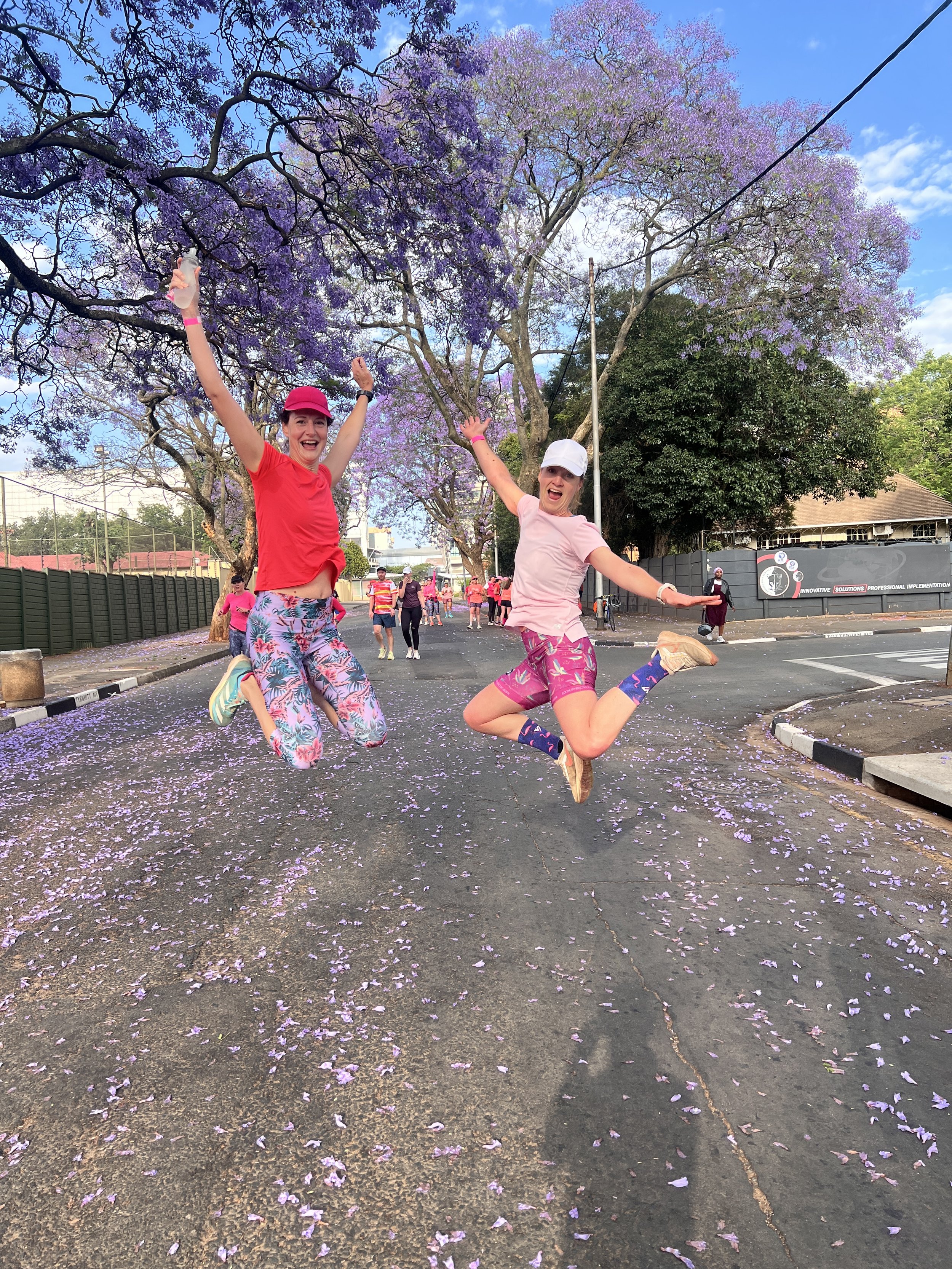
There are few signs that spring has arrived in Johannesburg quite like looking up one morning and realising the streets have turned purple.
Suddenly, the school run feels a little more special, familiar neighbourhoods look completely different, and everyone seems to be stopping for photographs beneath the jacaranda trees.
There is even an old student superstition that if a jacaranda flower falls on your head, you’ll pass your exams. You’ll often hear students joke that if the streets have already turned purple and you haven’t started revising, it might be too late!
The flowering season doesn’t last forever, so it’s worth making the most of it while you can. Whether you fancy a stroll through Rosebank, a picnic in Emmarentia or a day trip to Pretoria, here are some of our favourite ways to enjoy the jacarandas.
Updated 1 October 2026 · Hannah Pirnie, in Johannesburg since 2010 · First published 3 October 2019
When is the best time to see the jacarandas?
October is usually a good time to start looking, although the exact timing depends on the weather and rainfall each year. Pretoria can begin flowering earlier than Johannesburg, and the season can stretch from late September into November.
Our advice? Keep an eye on local photographs and social media for reports of trees coming into bloom, rather than planning around one particular weekend.
And remember, you don’t need to organise a big day out to enjoy them. Sometimes the best displays are on an ordinary residential street you happen to drive down on your way to somewhere else.
1. Where can you see jacarandas in Rosebank and Melrose?
Rosebank is a lovely place to start if you want to combine the jacarandas with a little exploring, coffee and lunch.
Park at Rosebank Mall or arrive via the Gautrain, then make your way towards Tyrwhitt Avenue. From there, explore the streets around Oxford Road and continue towards Keyes Avenue and the Keyes Art Mile.
You can then loop back along Jellicoe Avenue, looking out for the purple canopy overhead and the petals collecting on the pavements.
Allow yourself time to wander rather than rushing straight from one stop to the next. The streets around Rosebank and Melrose are particularly pretty when the trees are in full flower.
Make a morning of it: Finish with coffee, brunch or lunch around Rosebank and the Keyes Art Mile, where you can combine your jacaranda outing with galleries, restaurants and a little people-watching.
This is a good option if you have visitors staying with you, or if you’re still getting to know Johannesburg and want to explore somewhere beyond your usual routine.
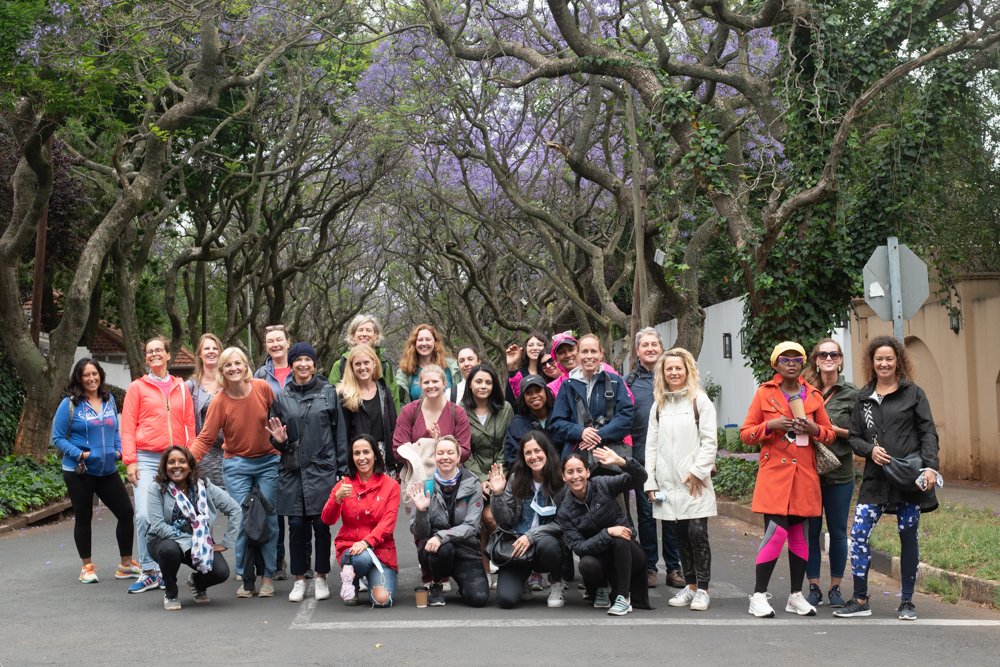
2. Where can you picnic among the jacarandas in Emmarentia and Greenside?
If you prefer a slower morning outdoors, head towards Emmarentia and the surrounding Greenside streets.
Start around the residential roads near the park and explore the streets towards Troon Road and Clovelly Road. When the jacarandas are flowering, this part of Joburg makes a beautiful backdrop for a gentle wander.
Afterwards, head back to Emmarentia Dam and Johannesburg Botanical Gardens for a picnic or a little time outside.
It’s a particularly good outing for families. Pack a blanket, bring something to eat and let the children burn off some energy while you enjoy the spring sunshine.
Our tip: Make an early start on a warm weekend, and check the park’s current access arrangements before you go. If you’re planning to walk the residential streets, stick to suitable pavements and use designated pedestrian crossings.
3.Why explore Parkview and Westcliff in jacaranda season?
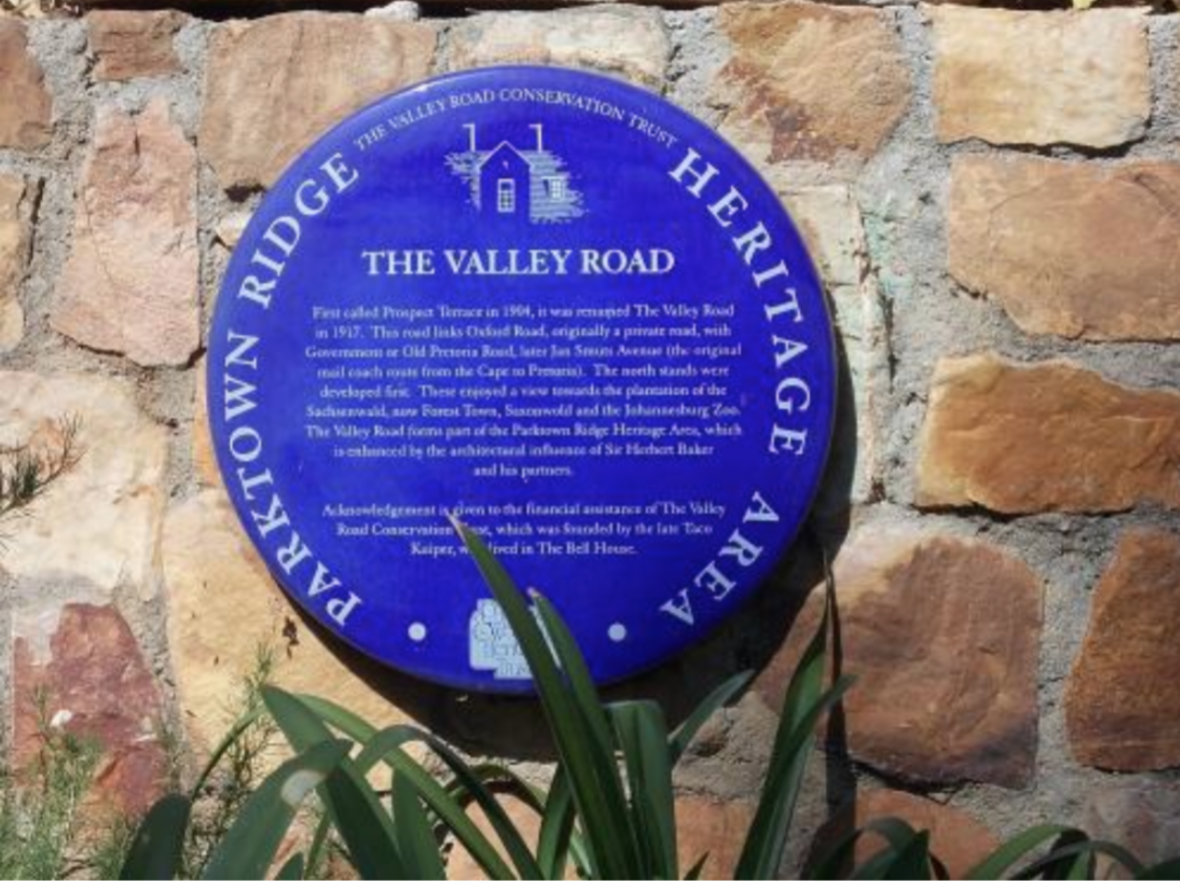
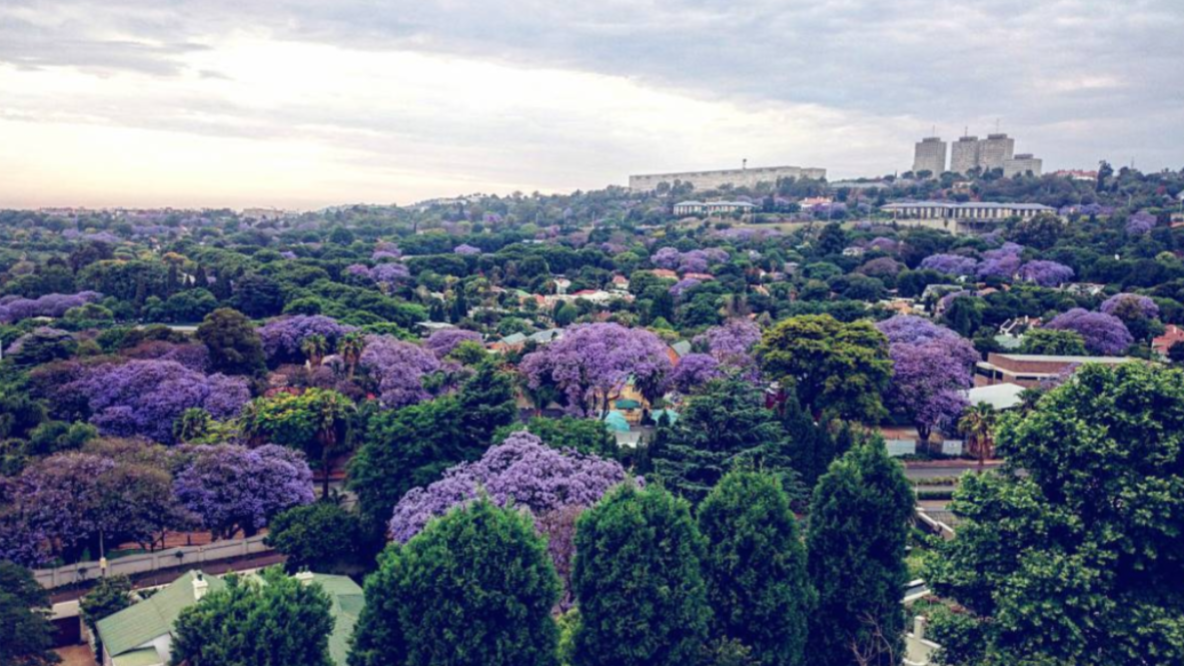
For a combination of beautiful streets, old Johannesburg architecture and a rewarding view, spend some time exploring Parkview and Westcliff.
These established neighbourhoods have plenty of character, from older homes and mature gardens to leafy streets that are particularly lovely in spring.
You can take a leisurely drive through Parkview before heading towards the Westcliff Steps on Crescent Drive. If you’re feeling energetic, climb the approximately 210 steps to take in the view across Johannesburg.
The steps are a local favourite for anyone wanting to add a bit of exercise to their morning. The climb is worth considering even if you aren’t visiting during jacaranda season, as the elevated view gives you a different perspective on the city.
Westcliff also has a fascinating architectural history. If you’d like to learn more about Johannesburg beyond its shopping centres and restaurants, look out for guided heritage walks organised by the Johannesburg Heritage Foundation.
Make a morning of it: Explore the neighbourhood, enjoy the views and then head to Izzy’s Coffee Shop in Forest Town, or Croft and Co in Parkview for a well-earned coffee or lunch.
4.Where can you see the jacarandas from above in Johannesburg?
If you’re looking for something a little more special, a meal or drink overlooking Johannesburg from Four Seasons Hotel The Westcliff is worth considering.
The hotel’s elevated position gives you wonderful views across the city, and spring is a particularly beautiful time to take them in.
This is less about following a specific jacaranda-lined street and more about appreciating the bigger picture: Johannesburg’s green canopy, the surrounding hills and the splashes of purple that appear across the city.
It’s a lovely option for a long lunch, a celebration or simply an excuse to explore a part of Joburg you may not visit very often.
Our tip: Book ahead, particularly for popular October weekends, and confirm the current restaurant and terrace arrangements before setting off.
5. Is Pretoria worth a day trip for the jacarandas?
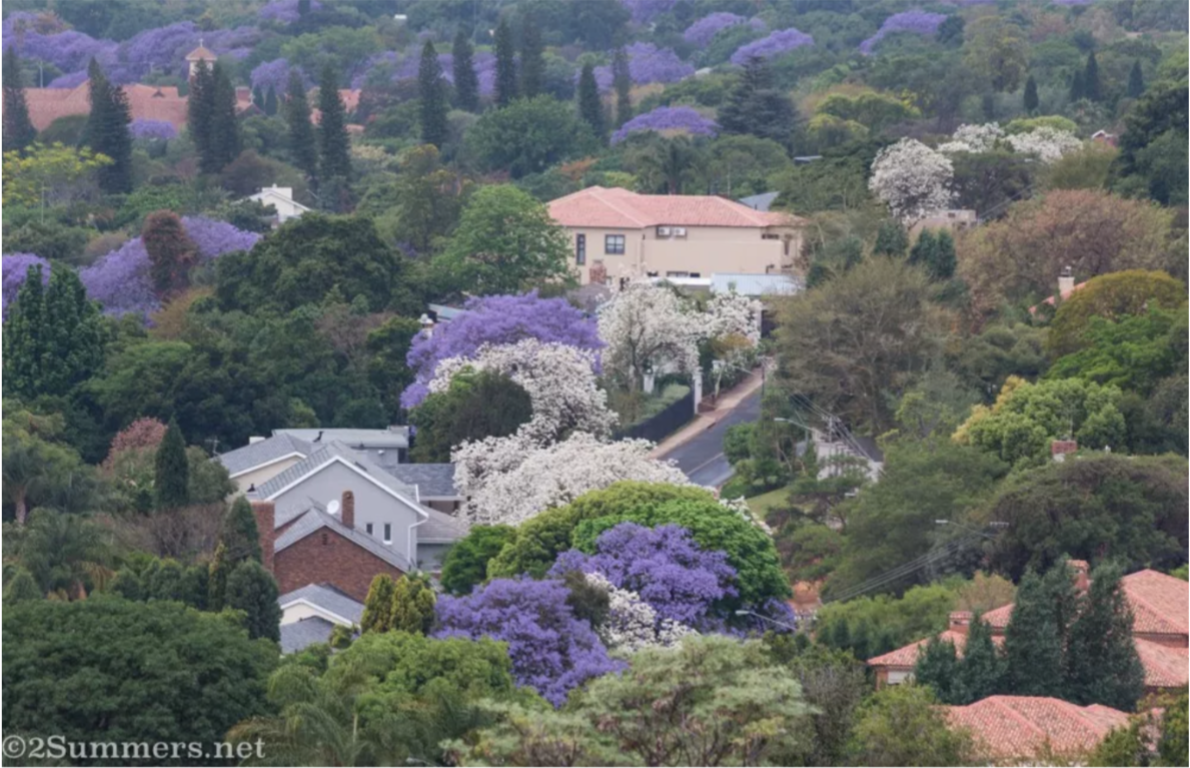
If there is one place that deserves a special mention during jacaranda season, it’s Pretoria.
The city is famous for its thousands of jacaranda trees, and when they flower together, whole stretches of the city seem to turn purple. It is well worth the drive from Johannesburg, especially if you have friends or family visiting.
The Brooklyn neighbourhood
Start with a drive through Brooklyn, where streets including Pienaar Street and Murray Street are known for their jacarandas.
Keep an eye out for Herbert Baker Street, which is particularly well known for its white jacarandas. These offer a lovely contrast to the more familiar purple blooms.
This is an outing best enjoyed at a relaxed pace. Plan a route before leaving, stop only where parking is permitted and avoid blocking residents’ driveways while taking photographs.
The Union Buildings
The Union Buildings are another excellent stop, combining beautiful architecture, landscaped gardens and views across Pretoria.
Take some time to explore the public areas around the buildings and Government Avenue, where the jacarandas add colour to the historic setting.
Access can be affected by official events or security arrangements, so check the current visitor information before you go.
Klapperkop Nature Reserve
For a different perspective, head towards Klapperkop, where elevated viewpoints offer a chance to appreciate the wider landscape.
Seeing the jacarandas from above gives you an idea of just how much of Pretoria is covered by these trees. It is a lovely option if you want to combine the spring scenery with a little time in nature.
Check current opening and access arrangements before setting off, and visit during daylight hours.
Make a day of it: Combine a drive through Brooklyn with a visit to the Union Buildings, then finish with lunch or coffee before heading back to Johannesburg.
A few things to remember before you go
Check the timing. Jacarandas flower for a relatively short period, and the best dates vary each year. Look for recent photographs before planning a special outing.
Give yourself time. The pleasure is often in wandering through the streets rather than rushing between destinations.
Think about parking. These are often residential neighbourhoods, so park legally, respect driveways and avoid stopping in the road for photographs.
Keep your belongings secure. As with any Johannesburg outing, stay aware of your surroundings, keep valuables out of sight and choose busy, well-used areas for walks.
Look beyond the trees. Stop for coffee, explore a local gallery, visit a park or take in some of Johannesburg’s history while you’re there.
Still getting to know Johannesburg?
One of the things I love about living in Joburg is that there is always another neighbourhood to explore, another little café to discover and another reason to get out and enjoy the city.
Jacaranda season is a good reminder to look beyond your usual routine and enjoy the place you call home, whether you’ve lived here for years or have only just arrived.
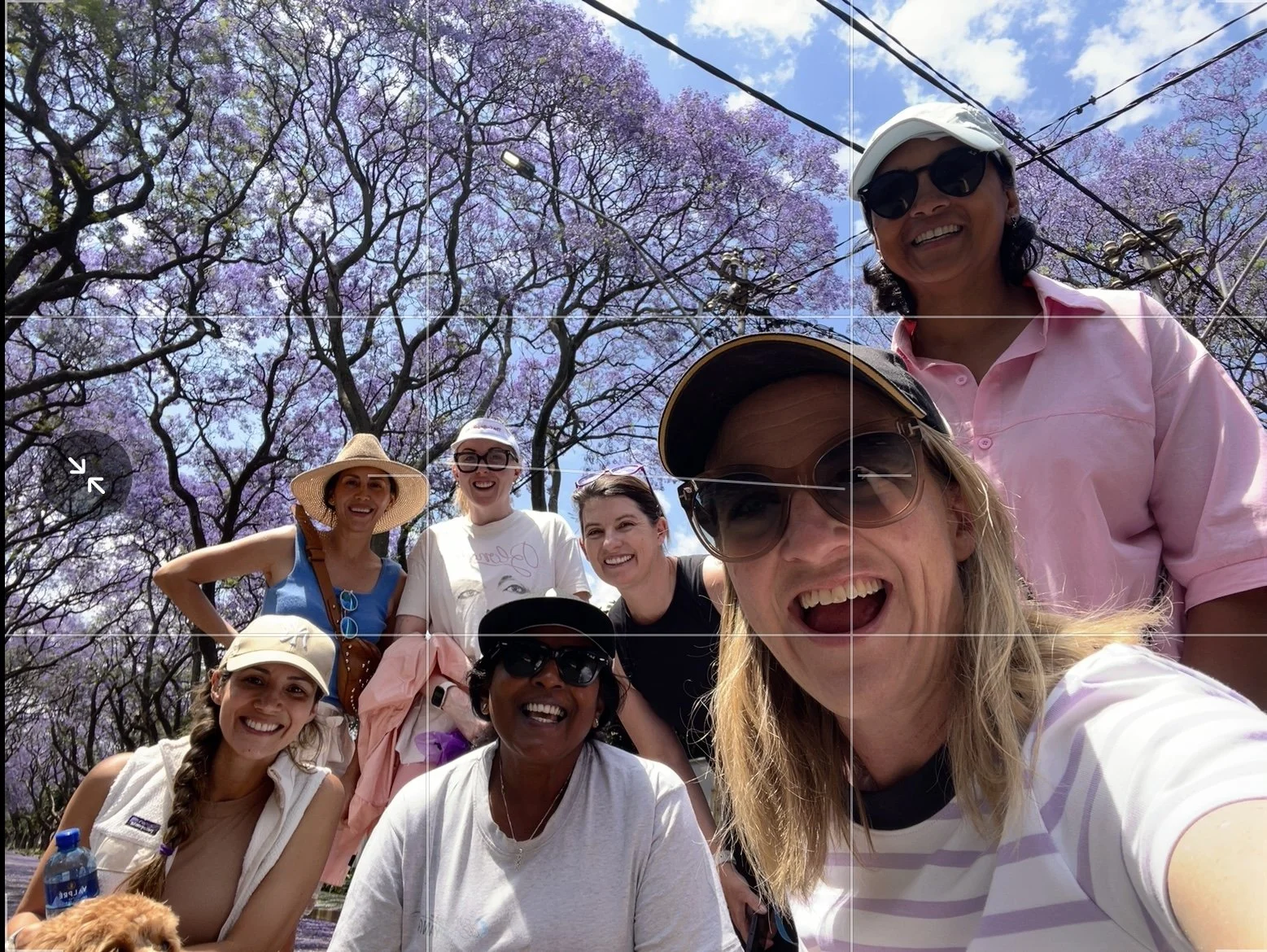
Want to explore with others? Join Beyond Coffee, our WhatsApp group for international people calling Joburg home.
What is the best route for a Road Trip from Johannesburg to Cape Town?
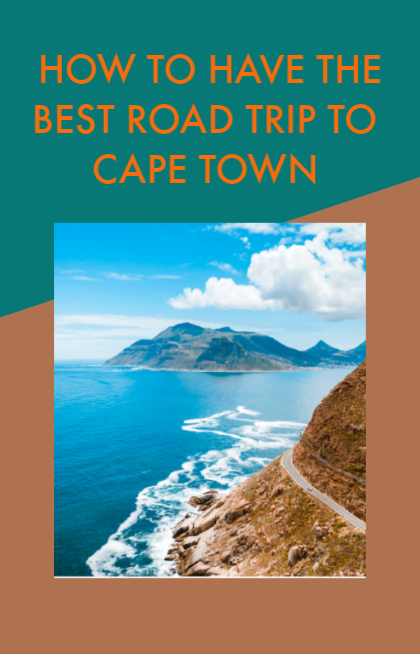
Back in the UK a road trip was anything over an hour! Since moving to South Africa we have learnt that most people thinking nothing off putting the kids in the car and driving 10 - 12 hours!
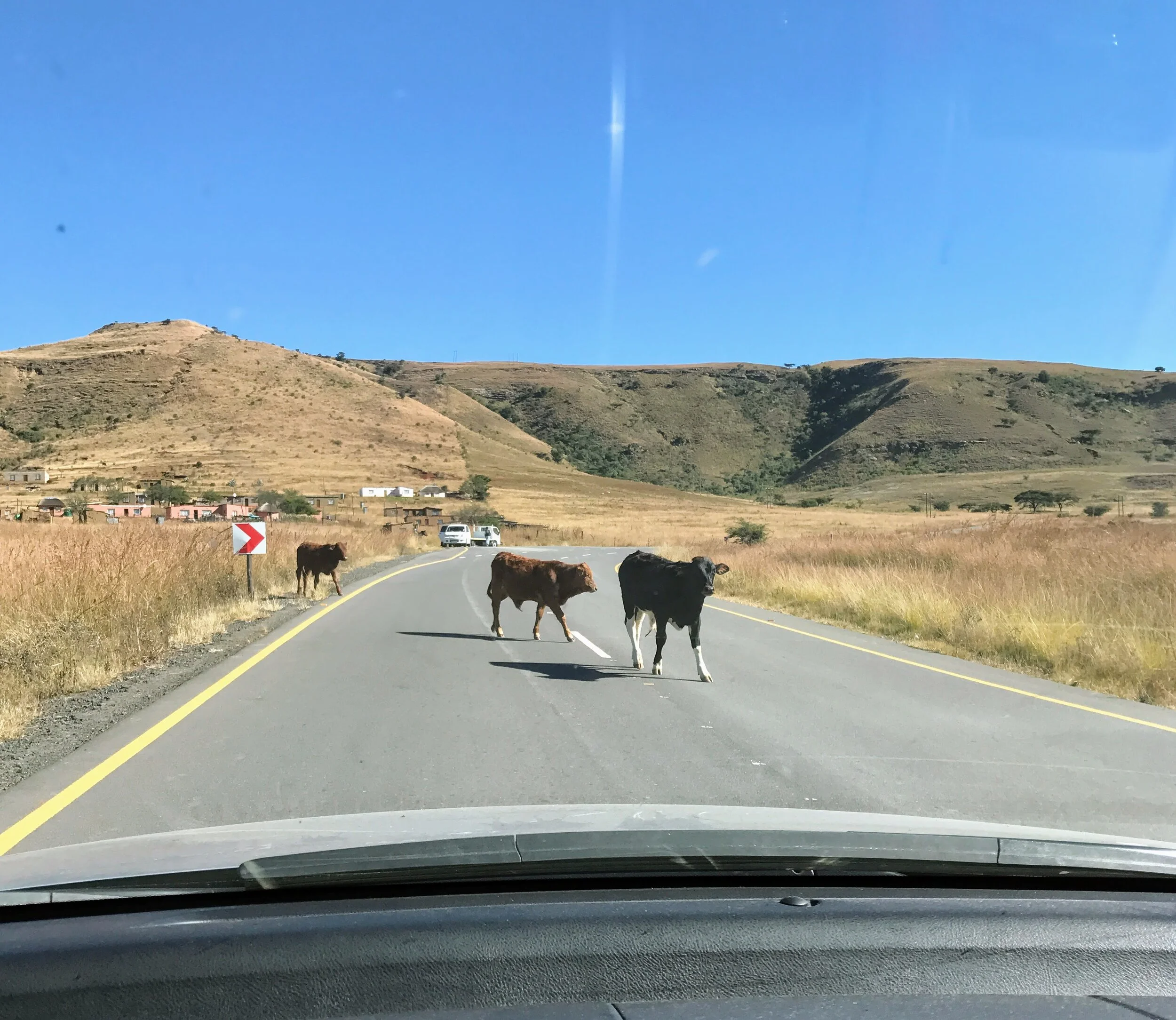
At the end of our first year in Joburg we headed to the Transkei for Christmas. It was the longest road trip we had ever done. We drove the route over 2 long days which looking back will be one of the most memorable trips we have taken for good and bad reasons. Good: Beautiful scenery and the sense of adventure in the new routes undertaken. Bad: locking the keys and the dogs in the car, a burst oil pipe and driving through the largest thunder storm over Van Buren pass (at night) in years. What a journey, loved (in hindsight) every minute.
We are learning, and now Road Trips are something we have come to love and don’t think twice about jumping in the car for a weekend away to Durban (5/6yrs) or out to Madikwe (4/5yrs).
This year we are driving 16 hours down to Cape Town with twin boys (2yrs) and our girl (4yrs) and ridgeback dog, which is going to take some preparation.
Here is my research to date, which covers - route selection, places to stay and other tips for making it the best road trip ever!!
Johannesburg to Cape Town some 1400 km on the N1 - put it into your sat nav and it will say continue on this road for 1,401 kilometres.......
The Route:
Option 1: N1
(15/16 hours)
Leave Joburg on M2
Take M1 N to Christian Barnard St/M60
Take N1 exit to Cape Town
Pass through Bloemfontein
Colesberg
Richmond
Beaufort West
In to Cape Town via the Wine Lands
We stayed at the beautiful Bloemhof Karoo - click here to read our review.
Route 2: 1519km
Not much more than standard 1400km on N1, route taken from Traveller 24
Joburg - Kimberley
Kimberly N12 to N1 at Three Sisters
Continue N1 through Beautfort west
N12 - Outdshoorn
Outdshoorn to George
George - N2 - Cape Town
Route 3: The Ultimate Road Trip Of South Africa
Around 2,500Km Route supplied by South Africa To
Leave Joburg N3 - Vaal River
Head onto R26 towards Bethlehem
Clarens - R712 - R711 towards Ficksburg
Fouriesburg change from R711 onto R26 (again)
At Ficksburg you will enter Lesotho
Lesotho visit Maseru
Head back into SA back on R26
Rouxville - N6
Then head onto R58 crossing the Orange River
R56 towards Middelburg
N9 South to Graaff Reinet
N12 to Oudtshoorn
George - Mossel Bay
N2 Heidelberg (start Garden Route)
Hermanus
Cape Town
Going To Eastern Cape - Portfolio Collection
Not heading to Cape Town but Plet or Port Elizabeth - Click here for Back Road Route, highlighting some wonderful stop overs and places to eat along the way.
Where To Stop
N1 route: Day 1
1. Windmill casino in Bloemfontein (the Spur) has a good play area for the kids and off the road so the dogs can run around a bit.
2. Colesburg or our fav is the Karoo Padstal just before Richmond on the right (has red flags leading up to it).
3. Service Stations / Padstals - usually yummy home baked goods for quick stop

Stay Over:
Beaufort West (small town in Cape Karoo) - 930Km from Joburg and 460Km to Cape Town, so majority of your drive will be done on day 1
Lemoenfontein Game Lodge
Ko kat sara Bush Camp
If this is too far to drive in one day - you can stop off in Colesberg at Kuilfontein Stable Cottages
or we love to stay at the Bloemhof see my review here.
Take the additional day to head to Graaf Reinet and Camdeboo National Park, fellow blogger 2summers has a great write up of this beautiful stop over. READ IT HERE
Or slight D Tour to Gariep Dam - DeStijl Hotel
Day 2 stops: standard N1 route:
1. Matjiesfontein - very cute little town. Nice to grab lunch at the coffee shop, dogs can sit out back with you. Nice to walk around the town as well.
Kimberly Route 2:
Stay at Country Club Kimberly

There are also lots of little Farm Stalls on route, selling uniquely South African items such as Rose Geranium Cordial, Lamb and mint Pies, Fig Jam and Biltong. Check out Food Jams post by Jade de Waal
General Tips:
• Leave early to avoid queues at the tolls
• Have a map and backups to your GPS
• Take enough small change / cash for the tolls (don’t accept foreign credit cards, and only some accept south african credit cards)
• The big petrol stations have grassy areas for the dogs so make great pit stops.
• Stick to Speed Limit (usually - 120km/h major routes / 100km/h secondary roads, and 60km/h in towns)
• Pull over into hard shoulder (yellow line) to let cars pass and then thank other drivers by flashing your hazard lights.
• Make sure you have your drivers licence on you and certified photocopies of your passports (or actual passports)
• Don’t leave your bag or valuables in the car when stopping at service station and double check manually your car is locked as car jammers (systems that block your automatic central locking) operate over the holiday season.
• Avoid traveling in the dark (the conditions of the roads aren’t always great, and often deserted).

Emergency Numbers To Have In Your Phone:
The best advice I have is to download this app! It literally enables you to get the support you need where ever you are in country.
• ER24 paramedics: 084 124
• Police/Fire Department: 10111
• Ambulance: 10117
• Arrive Alive Call Centre: 0861 400 800
• Netcare Emergency: 082 911
Also your insurance details, who to call in emergency and break down.
Other Places to stay - AirBnB and Greenwood Guide / Portfolio Collection




What is the best mobile phone network in South Africa?
HOW TO SET UP A MOBILE PHONE ACCOUNT

(Please note we do not have any paid affiliation or sponsorship deals with any of the accounts mentioned below - all comments are made from our personal experiences)
There are three main service providers, which all use the same telecommunications infrastructure (a legacy of a centralised communication network), and provide essentially the same kinds of contract options, but with some pros and cons:
Cell C: Affordable contracts but limited signal in some areas
MTN: There have been complaints of poor customer service in the past but MTN undoubtedly has the most expansive service network on the continent so with an MTN contract you’ll often get signal in area when others don't, which can be helpful if you intend on travelling to off the grid places.
Vodacom: The most established and accessible service provider (apart from in Bryanston area), you’ll find a branch in most shopping malls, and although there are still complaints around customer service, steps have been taken to improve this.
Personally I have found the best network to be a company called Afrihost, because it is by the far the cheapest I have come across plus their app gives you full transparency on data usage (something I fought with for 2 years over with the other networks!)
Similarly to setting up a bank account, to set up a cellphone contract you will need to provide proof of identity and proof of address, to comply with RICA, the Regulation of Interception of Communications and Provision of Communication-Related Information Act, which makes it compulsory for everyone in South Africa to register their cellphone number.
This can be a pain, but to reduce crime, needing to provide a permanent address has recently been introduced to make cheap phones and pay-as-you-go contracts more difficult for criminals to buy on the fly.
You can set up a contract at any franchise store around the country, provided you have the right documentation, but be aware that these stores can be busy, especially on weekends, and are often understaffed.
With rare exceptions, everyone in South Africa will have a mobile phone, but not everyone will have a smartphone, so keep in mind that communicating with some people will be largely via text, calls or Whatsapp.
Be aware that to get onto a contract you will need to have a work permit that is valid for the full 24 month period. But once on a contract it is cheaper than pay as you go for data and calls.
The best way to get set up is to pick up a SIM card at the airport, (you then don't need to have proof of residence). One company that offers this service is: B4 I Travel https://b4i.travel/za/.
INTERNET
If you want to get connected straight away, the fastest way to do this is to purchase a router through Vodacom and use their pay as you go service, this will enable you to get wi fi until you or your landlord set up the fibre or connection for you.
For more info click here: http://www.vodacom.co.za/vodacom/services/home-internet
Tip: Where possible try to get the wifi included in your rent, since often the contracts are 24 months, and hard to disconnect (particularly Telkom)
Telkom is the national telecommunications provider, and is a company you will often hear South Africans complain about due to poor customer services (although this has also been challenged to improve with recent industry competition).
FIXED LINE
Telkom provides fixed line voice and ADSL services, but they only provide the line. Once you have secured a Telkom line (which can sometimes be a lengthy process), you’ll need to take out an additional service provider contract, although they will manage the line for you.
If you are renting an apartment or house that has been lived in before you’ll often find that there is an existing Telkom line that just needs to be reactivated. In order to set up a Telkom line you will need to set up an appointment for a technician to activate/install the line.
While inconvenient, you will need to set aside a day to be at home, or arrange for someone to be there, as the technicians work on a rotation basis and won’t give you a definite time of arrival. They will also be leaving and coming back in order to check the line and how it corresponds with the central hub for your suburb/area so expect this to take at least an hour or two, depending on whether there is a problem or not.
You will be billed separately for the Telkom and the ISP accounts. You will receive all of the invoices via email.
The easiest way to pay your Telkom is by setting up a private beneficiary on your online banking profile and pay via EFT, otherwise you can pay in person at various physical locations, like Checkers and Pick n Pay stores, Telkom stores or at the Post Office. Easy Pay is another online payment option: https://new.easypay.co.za/
There is the option to set up a debit order for payment to your ISP, which you can set up through your online client profile (this is the case with Afrihost).
You will need to buy your own modem, although you can order this through your service provider for an extra fee. You will also need to do the setup yourself but if the Telkom line is working correctly this isn’t difficult at all.
Some options include:
Some Recent Reviews
https://mybroadband.co.za/news/adsl/174116-best-and-worst-adsl-isps-in-south-africa-3.html
NOTE: When dealing with Telkom, especially when logging a fault (when your internet doesn’t work), always get a reference number.
FIBRE
In many areas of Joburg there are various companies setting up fibre-optic lines, which are contracted by suburb.
Check with your apartment complex manager or residents association to find out which fibre optic service providers are in your area, and to find out specifics about contracts. In the case of an apartment complex, there will be a central fibre connection point that all apartments will connect to.
The difference with fibre is that it is independent of Telkom infrastructure, so you can deal with the service provider directly instead of having to go through a third-party line provider.
Some Fibre Options
WebAfrica
Fibrehood
Vumatel
Vox Telecom
Cool Ideas
Vodacom
TELEVISION
To own a television in South Africa, you will need to pay an annual TV licence fee, which gives you access to all of the free national channels: SABC 1, 2 and 3 and eTV.
Read more: http://www.tvlic.co.za/tvlic/index.php?lang=en
To be able to watch a more diverse variety of television shows you will need to subscribe to DSTV. Premium access currently costs R759 a month, with various other packages available depending on the channels you want to watch. Note that there will be an additional cost for the DSTV decoder.
Read more: http://www.dstv.com/topic/compare-packages-20150713?pos4_GetDstv_ComparePackages
While many South Africans will have a DSTV subscription, online subscriptions are also becoming more popular, like Netflix and Showman. Particularly when linked to your own VPN service.
https://www.netflix.com/za/
https://www.showmax.com/eng/welcome/za
VOICE LINE
It’s not as common for households to have a fixed voice line anymore as everyone is contacted via mobile phone, but in the case that you want one for international calls, you will just need to follow the same contract setup process with Telkom as you would for an ADSL line- you’ll just be paying extra for voice line rental, and for calls.

Where to Take your Guests in Joburg
One of the most enjoyable parts about being an expat is having friends and family come over to visit. While living in South Africa might have its frustrations and challenges at times, visitors to South Africa are never disappointed.

While many tourists might head straight to Cape Town or the bush and completely bypass Joburg, having friends come to stay in the city is a wonderful opportunity to show them an African city that is becoming more and more popular with visitors every year.
1. A Drink With a View
Even with the many “koppies” (small hills) in the city, it can be difficult to get a view of the city unless you’re in a tall building.
Make the most of some of the best views in the city by taking your visitors for a sunset drink at Marble in Rosebank, or the balcony of Flames at the Four Seasons Hotel at the Westcliff.
If you’re hungry, and looking for 5-star dining, you can also choose to stay for a meal at either.
If you’re lucky you might catch a summer thunderstorm, or in October, the purple Jacaranda bloom that happens every spring.
2. A Special Treat
The Saxon is one of the most luxurious hotels in the city, and is famous for its afternoon tea, and its spa.
Internationally renowned South African chef Luke Dale-Roberts has also set up a restaurant at The Saxon. This is definitely worth visiting if you feel like splurging on a 7-course set menu.
3. Explore the Cradle of Humankind
Finding out more about prehistory and our early human ancestors is relevant to visitors from any part of the world, so a visit to the Cradle of Humankind is a must if you’re looking for an enlightening and educational experience.
The Cradle is also known for its variety of restaurants and outdoor venues. For upmarket Italian try Casalinga, for contemporary cuisine try Roots at Forum Homini or if you’re looking for something a bit more wholesome try Leafy Greens, a vegan restaurant on the Casalinga property.
4. A Weekend Market
Outdoor weekend markets have become very popular in Joburg, especially since they’re perfect for making the most of the city’s sunny climate, even in winter.
The city’s markets are also a great way to interact with all kinds of different people, as well as get a taste of local food and drinks, and just to have a good time (Joburgers definitely know how to have fun!).
Saturdays:
Neighbourgoods Market in Braamfontein
Bryanston Organic MarketSundays:
Market on Main in Maboneng (go exploring in the Maboneng Precinct afterwards)
Fourways Farmers Market opposite Monte Casino
Waterfall Market at Mall of AfricaMonthly markets are also found in the greater Gauteng area, including:
Irene Village Market
Ngwenya Country Market
5. Arts & Culture
Johannesburg is a thriving cultural hub, with several world class galleries and museums. If your guests are here on the first Thursday of a month, take them out to Rosebank, Braamfontein or Maboneng, where all of the art galleries and some stores open late for First Thursdays.
Other well-known art galleries and museums to visit are:
Origins Centre (a great complement to a trip to the Cradle of Humankind)
Keyes Art Mile (Circa and Everard Read Gallery, with Goodman Gallery and David Krut further down the road)
Lilliesleaf (historical museum in Rivonia)
6. Township Culture
It’s no secret that South Africa’s segregated past is an indelible part of the city, but there’s no better way to engage with than with a visit to Soweto, one of South Africa’s most famous “townships”, or designated residential areas for black people under apartheid.
There are many ways to visit Soweto, which include many different private tour offerings, but you can also go there by yourself and visit some of the following places:
Vilakazi Street: a historical precinct with several restaurants, Mandela House museum and the Hector Pieterson memorial and museum, which commemorates the Soweto Riots that took place on the 16th of June 1976.
Orlando Towers: a repurposed landmark, the well-known Orlando Towers are now a tourist attraction with a bridge swing and a range of other activities on offer.
An easy way to get around Joburg with guests is to take them on a Red Bus tour, which stops at several locations in and around the city centre, as well as the Apartheid Museum, with additional smaller bus trips that take guests to Soweto.


Provinces of South Africa
Well-traveled individuals from all over often say their favourite holiday was in South Africa. Living here, we can see why people love it. South Africa is a land of big skies where people live knowing we are surrounded by the natural beauty of the land and animals. We cannot control the wild thunderstorms and heavy rains, the strong Cape winds, or the thundering of the elephants in the bush. We cannot change history and pretend there was no long struggle for freedom. But we can learn the stories of all the different people, tribes, animals and places of South Africa, and celebrate the diversity that makes this place so uniquely beautiful.
Read below for more about the difference provinces below. We review the environment, climate, and highlights that each area has to offer, so you can help narrow in on what you’d like to see during your time in South Africa!
(Note- if you are traveling in the Northern provinces and are concerned about Malaria, do ask your doctor for prevention pills. But always carry sun block and bug spray with you, just in case!)

GAUTENG
Gauteng (Pronounced ‘how-teng’) is the smallest but most populated province. Most people leave the city on holidays. However, Joburg in December is quiet, which is also a nice change. With so much to see here, don’t let your family come to visit but only see Cape Town!
Gauteng falls into the bushveld or grassland biome, which means that the province is largely flat, with rolling hills. The exception is the Magaliesberg mountain range about an hour outside of Johannesburg which is known for its beautiful hiking trails and natural pools.
With a very temperate climate, Gauteng is considered to have some of the best weather in the world, with sun almost every day of the year, summer thunderstorms, dry and only mildly cold winters. (The coldest place will be your house, as the sun will warm you quickly in winter!)
PRETORIA: As the capital city, Pretoria is an interesting place to visit to get a sense of the country’s history, with many historical attractions and museums. Pretoria is also a bit more laid back than Joburg, and has a number of outdoor markets and restaurants. Day Trip Idea: Take the Gautrain to Pretoria and then an Uber to the city’s weekend market at 012 Central.
JOHANNESBURG: As you’ll soon discover, Joburg is known for its busy nightlife, many restaurants, and art and cultural events. Check out our calendar for what’s going on.
SOWETO: An acronym for South Western Townships, Soweto is one of South Africa’s largest and most established townships, and is a popular tourist attraction for its many historical sites, including Nelson Mandela House. Other things to do: Lebos Backpackers Cycle Tour; Chisa Nyama in Soweto; Bridge Swing; Mandela’s House, Tour with Thami
Magalies Meander: One of the country’s many tourist routes, follow the Magaliesberg Meander for restaurants, hikes, getaways and other places to visit.
Dinokeng: The only Big 5 reserve within city limits in the whole world, Dinokeng is just past Pretoria and an accessible option for game viewing, with a number of self-drive routes and accommodation options.
Cullinan: Close to Dinokeng is the old mining town of Cullinan, where you can visit a mining hole enjoy the town’s many restaurants.
Suikerbosrand Nature Reserve: South of Johannesburg you’ll find open spaces and nature reserves like Suikerbosrand where you can go for walks and escape the city buzz.
Cradle of Humankind: This area of the province is where the oldest hominid fossils have been found, which you can learn more about at the Maropeng Visitors Centre and Sterkfontein Caves. There are a number of restaurants and outdoor activities in the Muldersdrift area. More places to visit in the Cradle of Humankind are the Monaghan Farm, Walk Haven, Forum Homini, Nirox Sculpture Park
2. WESTERN CAPE
The Western Cape is South Africa’s top tourist destination, with Cape Town at the hub. Not only is Cape Town a center of food, art, and culture, but is full of historic landmarks from the spice trade. The area is world renowned for the wine industry, and the unique natural beauty of the land, flora and fauna.
The Western Cape is the fynbos biome, or the Cape Floral Kingdom, which is entirely located in South Africa and you won’t see anything like it anywhere else in the world. There are more than 8,000 species of plants, and nearly 70% can only be found here. But the soil isn’t great, and the mountains are vast, and the winds are heavy... This all means the plants here are hardy, tough, and short. There are not a lot of big game animals naturally, but the birds, insects, small mammals and lizards are many! The Fynbos is where the protea thrives (the national flower), and where the rooibos is native (used mainly in tea). Inland, the valleys between mountains have fertile grounds, where settlers found amazing soils for vineyards centuries back.
As the Western Cape is the Southern most area of Africa (Cape Agulhas being the most Southern point), you’ll have a mix of the two currents from the oceans meeting. This means amazing viewing of sea life at certain times of year. It can be very windy and wet in the winter, but long dry spells of summer make for an almost desert-like scene in some areas. Its often likened to the climate in the Mediterranean.
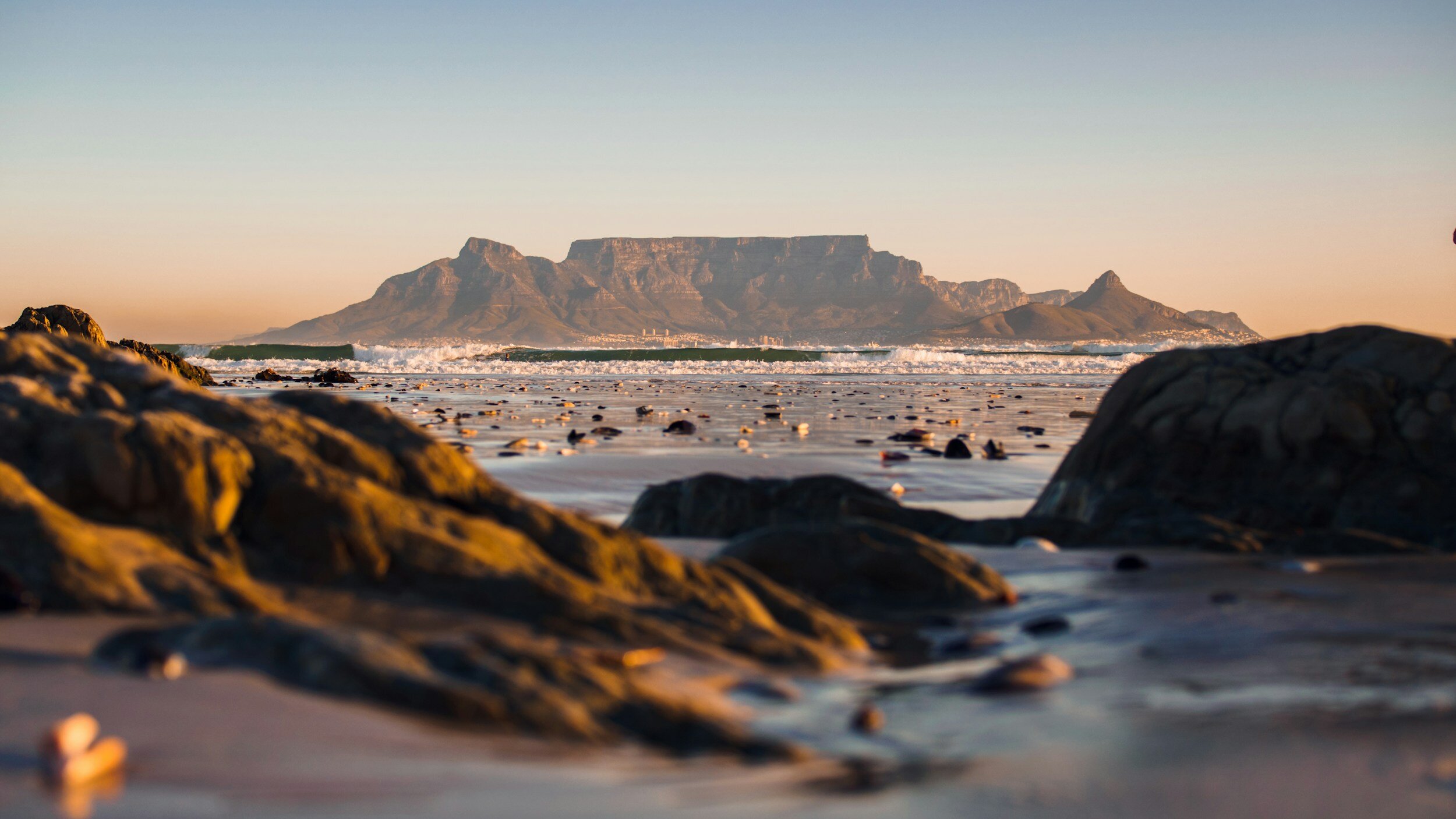
CAPE TOWN: The “Mother City” as it’s known is a very popular tourist destination with beaches, winelands, world renowned restaurants, and nature reserves. Do not miss Table Mountain and the Cape Point. (Often done with a tour guide to make sure you see it all within your time frame.)
GARDEN ROUTE: East along the N2 from Cape Town you’ll be spoilt with mountain ranges, winelands, and even whale sightings in season.
Train trips: Although it is possible to travel on Shosholoza Meyl from Johannesburg to Cape Town, there are some luxury options including The Blue Train and Rovos Rail.
Paternoster: North West outside of Cape Town, the town of Paternoster is a popular holiday destination along the coast, known for its fresh seafood and white-washed houses.
Some online resources to plan your trip: Route 62, Cape Town Travel, West Coast Way, Garden Route
3. KWAZULU-NATAL
A diverse province that has everything from rolling hills, mountain ranges, and coastal forests, KwaZulu-Natal (often referred to as KZN) offers a number of different kinds of holidays, only limited by the time you have to spend! Durban is the heart of KZN, but you’ll find great destinations all around the busy metro area that will amaze you.
KZN is part of the savanna, or bushveld, though the sub tropical climate along the beaches will vary differently from the mountain sides, especially in winter where you may find snowy ski resorts! In summer, it is very lush and beautiful in many areas and feels more like a jungle than the savannah!
Very humid in the summer, but more temperate year round due to the warm ocean currents. It is a great option for a winter break from Joburg.
DURBAN: A popular holiday destination year-round, Durban is popular for a beach get-away. Many resorts are North and South of the city center.
LESOTHO (Sani Pass): Accessible as a day trip from Durban, the Sani Pass is a rugged pathway into the Drakensberg Mountains, and an off road adventure for anyone who’s into 4 x 4’s.
DRAKENSBERG: This extensive mountain range has a number of different peaks to climb and lodges to stay in at all times of the year.
Battlefields (Rorke’s Drift, Spitskop): in the early years of British colonialism in South Africa, there were many epic battles between the Zulu and the British in the interior KwaZulu-Natal region. With a knowledgeable guide, exploring this region is like taking a step back into the past, and gives a insight into the early beginnings of South Africa as a country. (We highly recommend a stay at Fugitives Drift - its a once in a life time experience!)
Hluhluwe: A park famous for its rhino conservation, the Hluhluwe-Umfolozi Park is a private reserve well known for its variety of animals.
iSimangaliso: a wetland park and UNESCO heritage site, the iSimangaliso Wetland Park (also known as La Lucia), is home to a number of endangered species and wonderful place to learn more about South Africa’s marine life.
For more information and travel resources: Zulu.org, Durban Experience, Battlefields Route
4. MPUMALANGA
A diverse province when it comes to scenery, and has everything from misty, fly-fishing getaways to your prized 5-star luxury wildlife safari getaways around Kruger.
Mpumalanga is a mix between the grassland and bushveld, with some mountainous areas. The area does have a lot of farms and plantations you’ll see on the roads. To learn more about the land, visit the Lowveld National Botanical Garden in Nelspruit.
When visiting, prepare for rains and mosquitos in the summer but the winter will be colder and dry, though the sun will warm you during the day. If you plan on a safari to see animals, prepare to start before sunrise and bring warm clothes and hats for open-air safari rides!
Kruger National Park: the world renowned park spans a wide area of the north eastern part of the country and extends into the Limpopo province, so here there are various types of terrain, from bushy shrub to more sparse, Baobab dotted landscapes. With so many different kinds of accommodation available, you’re likely to see all of the Big 5 here, and more.
In addition to Kruger, there are so many other different game parks and private reserves to visit, from luxury Londolozi to more affordable family-getaways. One of the most popular tourism routes is the Panorama Route, which will take you to all of the most popular destinations in the area, including God’s Window.
Dullstroom: A popular getaway for people living in Gauteng, Dullstroom is known for its fly-fishing, outdoor activities and it’s variety of restaurants.
Some resources to use to plan your trip: Bush Breaks, Mpumalanga.com, South Africa.net
5. NORTH WEST
The North-West province is best known for its platinum mines and its main tourist attraction: Sun City, only a couple hours drive from Joburg.
With rolling savanna and bushveld, the North-West province has some of the country’s best known game reserves.
The climate here is much like Joburg in Gauteng. You’ll have plenty of sun all year with colder winters and hot summers.
Hartebeespoort Dam: take a day trip out to the dam to eat at one of the area’s popular restaurants (Silver Orange Bistro and Orient- one of the top 10 restaurants in the country), or go up the newly built cable car to get a view over the surrounding area. There is also an elephant rehabilitation centre where you can walk “trunk-in-hand” with elephants.
Pilanesberg: Pilanesberg is easily one of the country’s most underrated game reserves. Easily accessible from Joburg, this Big 5 reserve offers a range of accommodation options, and is also very close to Sun City.
Sun City: a gambling mecca, Sun City is an expansive resort that hosts an annual golf tournament and a popular outdoor water park and outdoor activities centre- great for kids!
Madikwe: One of the most famous and luxurious game reserves in the country Madikwe is close to the Botswana border.
Groot Marico: a historic area famous for the stories about it written by South African author Herman Charles Bosman, the Groot Marico is a quirky, off-the-beaten path literary and cultural destination.
6. LIMPOPO
Previously known as the Northern Province, Limpopo is named after the river that forms the boundary between South Africa and its neighbouring countries. It is less populated by large modern cities, but boasts much larger influence from traditional African tribes. You can drive here from Joburg or Kruger within a few hours.
Made up of a variety of different landscapes, from savanna to forests, a section of the province is the Kruger National Park, with the rest of the province home to a number of other wilderness areas. You’ll find a lot of Baobab trees in this area.
Limpopo can get very hot, and is a welcome escape from Gauteng in the winter because it will still be cold only at night here.
Waterberg: An accessible getaway from Joburg, there are a number of private game reserves in the Waterberg area, which is malaria-free.
Venda: a lush and fertile area, Venda is one of South Africa’s official languages, but one of the less well known tribes, but high in cultural significance.
Mapungubwe: The ruins of Mapungubwe show evidence of an advanced civilisation, which wasn’t given credit until recently, which makes it an important cultural destination.
National Parks: Marekele National Park is one of South Africa’s national parks, with a variety of accommodation options available.
Magoebaskloof: known for its forests and famous cluster of cycads, Magoebaskloof is a beautiful escape from the surrounding bushveld.
Some ideas of things to do and where to stay in Limpopo: Leshiba, African Ivory Route, Go Limpopo, Limpopo Overview
7. EASTERN CAPE
The Eastern Cape is a bit of a drive from Joburg, but for an extended getaway a road trip down to the Eastern Cape will be well worth your time, with lots of stops to make along the way. Or, you can opt to fly to Port Elizabeth and then rent a car.
The Eastern Cape landscape ranges from semi-desert Karoo to rolling grasslands, savanna and coastal thicket. You’ll find beautiful forests and amazing beaches. You’ll easily fall in love with the landscape here!
The climate can be windy and cooler on the coast and hotter inland, much like the Mediterranean feel. You might see a lot of surfers enjoying the water!
Kenton: A popular seaside holiday destination for families, Kenton-on-Sea has both a large beach and a river nearby, if you’re looking to ski or take part in watersports, and have access to a boat. There are also some game reserves nearby which make this a destination with lots to see and do in the area.
Wild Coast: A largely underdeveloped part of the country (and formerly an “independent” country), the Wild Coast is an idyllic getaway for those looking for something more rustic, although there are a number of luxury resorts and lodges as well.
Graaff Reinet: A Karoo town with beautiful historic architecture, Graaff Reinet is an ideal stopover on the way to the Eastern Cape coast, for its history and nearby game reserves, the most famous of which is the Valley of Desolation. The town also hosts an annual wine festival called Stoep (Porch) Tasting.
Addo Elephant Park: One of South Africa’s most diverse national parks in terms of terrain, Addo covers everything from dunes to forest, and is most famous for its elephants, although you’ll also see a variety of other animals as well.
Port Elizabeth (PE): a thriving port city, PE infrastructure got a substantial upgrade before the 2010 FIFA World Cup, and has several historic sites worth visiting, as well as an underrated variety of restaurants and coffee shops.
Jeffrey’s Bay: A surfing town made famous by the movie The Endless Summer for its right break wave, Jeffrey’s Bay is still a surf mecca, and a popular tourism destination along the N2.
Mahkanda (formerly Grahamstown): Historic and beautiful. Famous for its annual arts festival, which takes place in July.
East London: Another coastal hub along the N2, East London is South Africa’s only river port, and also a gateway to many of the province’s tourist attractions. Nearby Chintsa is a popular holiday destination.
Another resource to help plan your trip: https://www.sanparks.org/parks/mountain_zebra/
8. FREE STATE
A largely agricultural area, the Free State is known for several agricultural fairs, it’s history, and Bloemfontein- the judicial capital of the country.
The interior of South Africa has wide open grassland spaces, and moves towards mountainous terrain closer to the Lesotho border.
The continental climate will bring hot summer suns, and maybe even snow in the winter time in the mountainous areas.
Bloemfontein: the judicial capital is also a convenient stop over along the N1 highway. An administrative hub for the surrounding region, Bloemfontein has a number of historic buildings.
Clarens: right next the beautiful Golden Gate Park (named for the range of sculpted sandstone mountains), Clarens has become a popular getaway only 4-5 hours away from Joburg. The town has an annual craft beer festival in February.
Ficksburg: right next to the Lesotho border, the town of Ficksburg hosts an annual cherry festival.
Gariep Dam: a prominent water source for the rest of the country, the Gariep Dam is an impressive structure to see, and there are a number of resorts and places to stay nearby, as its also a convenient N1 stopover.
9. NORTHERN CAPE
The area is mostly semi-desert Karoo vegetation, made up of two different areas: Succulent Karoo and Nama Karoo. Seeing the desert flowers in this area is one of the truly beautiful experiences you will ever have.
As it is mostly desert, there is not much rain, colder nights, and hot summers.
Kimberley: the place where the South African diamond rush took place, Kimberley is an administrative hub for the surrounding region and a historic centre, with the Big Hole a prominent tourist attraction. We reocmmend staying over at the Kimberley Country Club.
Upington: A prominent agricultural and miningcentre, Upington is a gateway for further travel in the area.
Richtersveld: a reserve famous for its “halfmens” plants and quiver trees, this rugged terrain is popular for those looking to experience a different kind of wilderness.
Namaqualand: famous for its annual bloom of desert flowers, you’ll need to plan ahead to make the most of this natural event. The coastal Groenspoeg area is a recent addition to the national park in the area.
Tankwa Karoo: an area known for its stargazing, there is another national park in this area as well as the annual Afrikaburn festival.
Sutherland: one of the coldest places in the country during winter, Sutherland is the best place to go stargazing, and the home of SALT, an internationally run astronomical telescope and centre.
Kgalagadi Transfrontier Park: An international collaboration between South Africa, Namibia and Botswana, the Kgalagadi is a large expanse of wilderness with a lot to see and do within it.
That’s just a taste of what South Africa has to offer.
Enjoy your adventure!
Contact us with any questions!

A Brief History of South Africa
South African history is complex, and still evolving. We can definitely recommend reading more in-depth books and articles about South Africa’s past, especially its most recent history, but just to give you an overall picture, this blog post will give you a very brief overview of some of the highlights:

Pre-Colonial History
Although only discovered in the 1900s, hominids like Mrs Ples and Little Foot, some of our earliest human ancestors were living in the area in and around Johannesburg, now known as the Cradle of Humankind.
Long before Europeans arrived in Cape Town, San and Khoi pastoralists were living in South Africa. Nguni tribes were also making their way down into the southern part of Africa in the period between … and by the … were settled as far down as the present-day Eastern Cape province. Read more
1500s
It’s rumoured that ships from China had already visited Africa before the 1500, but the most celebrated “discovery” of the South African coast was by Portuguese explorers, who were the first to map out a route to the East by rounding the Cape, which they called Cabo das Tormentas (Cape of Storms). Read more
1600s: Dutch Settlement
As part of finding a better way to trade with the East, the Dutch East India company (VOC) set up a refresh station at the Cape, which became a more permanent settlement as the need for fresh food, and farmers, grew.
1700s: European Expansion
With an established presence in the Cape, European residents began to resent the control of the VOC and started moving into the interior to set up their own farms as “Free Burghers”. This led to conflict with the Xhosa in the Eastern Cape.
1800s: Voortrekkers And British Expansion
With a drive to grow their empire, Britain soon looked to the Cape and Natal to further solidify their international maritime and colonial growth, which led to conflict with the Dutch authorities, and eventual takeover of the Cape and Natal provinces by the British.
Dissatisfied with being British subjects, farmers known as “Voortrekkers”, moved into the interior in several phases and under different leaders, and settled their own republics in the Transvaal (now Gauteng, Limpopo and Mpumalanga), parts of Natal and the Free State.
During this migration, known as the Great Trek, there was conflict between Voortrekkers and local groups of people like the Zulu, mostly famously at the Battle of Blood River.
British control intensified when diamonds and gold were discovered in the interior in the latter part of the 1800s, which led to conflict with the so-called Boer republics, and the Zulu.
1900s: Gold, Industry And Union
In the early 1900s, South Africa was still a divided country, but eventually, after several negotiations and conflict, South Africa was united as a single country in 1910, and the famous Union Buildings in Pretoria were built to commemorate the occasion.
Since then, there has been an intensive period of conflict and struggle, from involvement in both World Wars, the introduction of segregation by law, the declaration of South Africa as a republic, the rise and fall of apartheid, and the last 20 years of post-apartheid growth and adjustment.
Resistance to apartheid is an integral part of the last 100 years of South African history, and has been there from the very start, when segregation was first enforced. However, it was in the last 40 years that resistance became violent, and uprisings changed the nature of the conflict.
1994- Today:
The New South Africa brought in a different era of South African history, one that still faces challenges of rectifying the wrongs of the past.
The Truth and Reconciliation Commission (TRC) and the CODESA negotiations were a fundamental part of bringing in this time of change, and Nelson Mandela’s humility helped to create the country we know today.
To expand on this very brief overview, we definitely recommend the following:
Long Walk to Freedom by Nelson Mandela
The Illustrated History of South Africa by Herman Giliomee and Bernard Mbenga
Driving and Buying a Car in South Africa
In South Africa, the majority get around in mini-bus taxis or buses, but as an expat, it’s likely that you will be able to afford your own car and will prefer to drive yourself. This is the easiest and most convenient way to get around Joburg (unless you’re stuck in peak traffic, which happens!) Owning a car as an expat involves some effort, but with all the right documents, and patience, you’ll be able to buy and register a car.

We recommend that each adult has access to a car (it will make your life much easier). But, make sure you are both prepared to drive on the right side of the car, left side of the road!
Driving in South Africa happens on the left side of the road, and the driver is on the right side of the car.
You do not need an additional drivers license unless your ID card is not in English. In this case, you need a International Drivers Permit. Always carry a copy of your passport, your drivers license, and the car registration tag (usually posted on the windshield). If you are getting residency, then you will need to apply for a South African Drivers License.
NOTE: Services like Uber are very popular, so make use of them, especially if you’re going downtown or plan to drink alcohol.
Finding a Car
For the price difference, you may want to look to buy a second-hand car in good condition. You can research online to see what’s available, as the models available might differ slightly from other countries: http://www.autotrader.co.za/
To give you an idea, here is a list of the top 10 passenger cars sold in South Africa as of July 2016:
1. Volkswagen Polo Vivo
2. Volkswagen Polo
3. Toyota Corolla Quest and Auris
4. Toyota Etios
5. Ford Fiesta
6. Ford EcoSport
7. Toyota Fortuner
8. BMW 3 series
9. Renault Sandero
10. Ford Figo
Other common models, especially in Gauteng, are Mercedes Benz, Volvo, Hyundai i10S, Honda Jazz and Toyota Quantums and Volkswagen Kombis (the car of choice for mini-bus taxis).
Most cars in South Africa are manual transmission but automatics are becoming more common. It’s advisable to get a car that also has ABS breaks, power steering, airbags and adequate boot (trunk) space, especially if you have children.
You’ll see most of these popular cars are white in color. This is because white will reflect the hot sun just a little bit more, and it blends in so that you don’t stand out.
SAFETY FIRST!
Hi-Jacking and Smash-and-Grab
There’s no need to be overly paranoid, but know that in certain areas of Johannesburg, especially in the wealthier suburbs and downtown, that vehicle crime is an unfortunate reality.
To mitigate your risk, know which cars are targeted for hi-jacking by criminals. These models are popular and easier to take apart and to be used as spare parts. These high-risk models include:
• Toyota Fortuner
• Volkwagen Polo
• Toyota Quantum
• Toyota Hi-ace
• Nissan 1400
• Toyota Hilux
• Toyota Venture
• Toyota Corolla
Avoid driving in high-risk areas or at late night/early morning, but unfortunately hi-jacking may happen anywhere. Take an Uber if you feel unsafe in a certain area.
Smash-and-grab can also happen anywhere. Keep your valuables, purses, laptops out of sight from passersby, either under your seat or in the boot of your car at all times. When leaving your car, always be sure to keep your valuables in the boot where they cannot be seen. Double check your doors are locked, as it is common that criminals have remote lock jamming devices to keep your doors open. If your car will not lock, get back in and drive away.
Smash-and-Grab Protection
This is a plastic film will prevent the glass shattering if someone breaks your window during what is known as a smash-and-grab, where a criminal will break a window to steal something out of your car when you are stopped at a robot (traffic light). Keeping your window open a fraction also makes breaking a window more difficult.
Other preventative tactics include always leaving adequate space in front of you and the next car when stopped at a robot, this will give you a chance to maneuver in the event that someone does try to break your window.
Also, it is common that people do not come to a complete stop at intersections when roads are open and cars are not seen. We recommend you drive safely and defensively at all times, but if you ever feel unsafe or threatened, put your safety first!
Children in Cars
It is the law for children 3 and under to be strapped into a car seat at all times. Beyond that, the laws are few and rarely enforced. It is estimated that much less than 60% of children in vehicles even use car seats, and the thought of this is frightening. We recommend you secure your children in the car as you see fit… and get a car seat!
You can buy car seats at Baby City, Babies R Us (Toys R Us), Makro, Game, or other stores that carry baby items. You can also find ones from people in your area or expat groups selling old ones which works out well, provided they have never been in an accident.
4x4 Vehicles in South Africa
In Johannesburg 4x4 or SUV’s are common. One of the South African customs we adopted as a family is to go on long road trips to the coast, and so now need a larger car to pack all the bikes / beach gear etc, plus its great to get off road exploring either on safari or in Lesotho. (Most game reserves will allow you to drive you own car, but 4x4 cars will have access to more roads and be able to get through rougher terrain than others!)
Note that you’ll spend a lot more on fuel though!

To give you an idea of what’s available, here are the top 10 SUV’s in South Africa in 2016:
• Ford EcoSport
• Toyota Fortuner* (See above)
• Renault Captur
• Toyota Rav4
• Ford Kuga
• Nissan Qashqai
• Nissan X-Trail
• Volkswagen Tiguan
• Jeep Grand Cherokee
• Toyota Prado
Land Rovers, BMW X5, and Volvo's are very common amongst the expat community and you can often pick one up from someone that is leaving. Other common utility vehicles, which you’ll see more of in rural areas, are Ford Rangers and the Toyota Hilux.
How to Register a Car
In order to register a car, you will need to buy one first and organise the requisite finance (if needed). To secure finance you will need to have a bank account (See post on finances).
You’ll first buy the car (pay a deposit and secure finance), and will then receive a certificate of registration from the car dealership where you bought the car. This can be an issue if you do not have South African credit already accumulated. Discuss with your employer, sponsor, relocations agent, or bank representative what’s possible in your situation.
Without a South African ID, you will need to get a Traffic Register Number, but please note that the laws keep changing on this. Often you can only get a Traffic Register Number if you have a valid work permit or permanent visa (but not always!).
Documents for the Traffic Register Number
To get a Traffic Register Number, register your car with the Traffic Department, and provide the following, which your car dealership should provide:
• Roadworthy certificate
• Current registration
• Invoice/Proof of payment
In order to get license plates for your car, go through the registration process at any branch of the Traffic Department. This can be very busy, so plan plenty of time!
In addition to the above documents, you will also need to provide the following documents to register a car:
• Proof of identification: Passport and passport pictures (for processing)
• Proof of residence: Lease agreement
• Proof of drivers license: Foreign drivers license
Insurance and Car Tracking
As crime is a problem in South Africa, it’s important to take out comprehensive insurance. Many South Africans also install a tracking device in their cars so they can be more easily traced if they are stolen.
There are various options available but the following are popular companies that operate around the country:
• Outsurance
• Miway
• Hollard
• Dialdirect
• Tracker
• Cartracks
• Matrix
Your car dealership will also be able to offer you some options to consider, and may be also able to organise this on your behalf.
If You Are Stopped…!
In the past few years there has been a noticeable increase in police and metro police presence in Johannesburg so be sure to always keep your driver’s license with you and make sure that your vehicle license is up to date. If not, you will be fined, and could potentially be arrested, if any of these are out of date.
Road blocks are not uncommon, but are not to worry about. Just keep your license, registration, copy of your passport with you. If you are flagged by a police officer at day in a busy area, you can pull over. They mostly just make sure your documents are in order.
With many minibus taxis notoriously unroadworthy, metro police have taken a hard stance on infringements, particularly DUI, so be careful and don’t drink and drive (stricter laws have just come into play). Even two drinks is too much. If you don’t have a designated driver, just take an Uber!
If you are asked to pay for an infringement that you do not agree with, you can always call your embassy, and tell the officer you will be doing this. Keep this number handy on your cell phone, and make sure your phone is charged!
ENJOY THE RIDE!
You will not avoid driving in South Africa, as public transit options are very very limited and walking or biking is often not an option for the commute. Make it a comfortable journey for you and your family- connect your bluetooth to your phone, get some excellent music, podcasts, audiobooks, even when driving around the city. Traffic jams are common, but just drive defensively, keep your phone charged, carry a pair of sunglasses, and you’ll be just fine.


Hiring Domestic Staff

The employment of household staff is common in South Africa by both local and expat families of all races, due to the large social-economic gap pervasive in the country (for cleaning, gardening, child care, etc.). It can be complicated, both morally and practically, and can dramatically improve your lifestyle in some ways. But, at the end of the day, it’s a personal choice for what’s best in your situation.
When I first came to South Africa I was firmly against employing full time household staff but then I found Francina working and living in the home we were moving in to. My choice changed to hiring someone or whether to make a middle-aged woman unemployed and homeless. It made my decision easier… Although she retired shortly after my first child was born!!! Very wise of her!!
I have been very lucky with the people we have employed. Each has been fantastic and we now have the most wonderful and joyful lady working with us. Nonhlanhla has been a massive blessing to my family, she brings fun and laughter to our house, loves our children, and looks after any guest like royalty.
In truth, I now believe the moral question is not whether you choose to employ or not. Rather, if you do employ someone, how will you do it? In his inspirational The Long Walk to Freedom, Nelson Mandela wrote that:
“A Nation should not be judged by how it treats its highest citizens, but it's lowest ones”.
I firmly believe that you can judge the character of a person and a household by how happy, engaged and fairly paid the domestic worker or nanny is. (Please note that the term “maid” is used often but can be considered derogatory, and the word domestic worker is used instead.)
Some South Africans are amazing employers and are helping in their own homes to rewrite the wrongs of the past. Many South Africans pay for their domestic worker’s children to attend the same private schools their own children go to, others pay for driving licenses, loans to buy property, cars, to put them through apprenticeships… there are 101 ways you can support an individual or family that makes your life a bit better.
Unfortunately here are still some who do still take advantage of people needing work. It is common to hear that employers don't pay a fair wage because they think they can always get someone else at a cheaper daily rate look after their children and homes. There are others who treat their employment as charity, expecting to be thanked, and favours to be returned for their generosity. There are also those who feel let down, betrayed or misunderstood.

At the start of employment, I’ve always asked each person what they would like to do and will offer to pay for training in order for them to upskill (and ultimately let them escape us). Our first nanny took courses in health and safety, food preparation and crafts. Our current nanny (the aforementioned Nonny) decided she would like to be a teacher. Each Saturday morning she attends college, and now has a job as a pre-school teacher.
Having staff in the home is a big cultural difference if you aren’t used to it, but you can approach it the same as any other form of employment or relationship. Keep communication open and regular. Ask yourself if you could do that role, work those hours, and for that pay. I am sure you will hear good and bad stories, but your experience will be uniquely yours.
Things You Need To Know
The domestic worker industry has come a long way since 1994 at the end of apartheid. This is now a regulated industry that will require complying with the following legislation:
Common Laws of South Africa
Labour Relations Act
Basic Conditions of Employment Act
Sectorial Determination of Domestic Workers
There is a domestic staff workers union who advocates for the industry, but it is rare that you hear of any formal reporting happening by employees or employers at this time, partly out of lack of information (and fear, honestly). But it does happen. Overall, it’s important to establish clear lines of communication and expectations upfront. A language barrier might be something you may need to overcome in some instances, as many domestic workers don’t speak English as their first language (common first languages are Zulu, Tswana, Pedi and Sotho).
Live-In or Live-Out?
Most domestic workers will travel long distances for their jobs if they are live-out. Consider this in your pay rate or your expectations on hours and over-time work.
Most houses that you will see around the metro areas have domestic quarters on the property. You can choose to have a live-in support, or live-out support in either case. Be sure you see this attached or detached cottage and understand what quality of house you can provide for a domestic worker, if you want someone live-in.
Naturally, these women have lives of their own as well, and many have children. If they do have children, would the children be able to stay living with them, or are the children enrolled in a school across town? If they are living with you, how will the children interact with you and your family? We find it a blessing to have added South African family/siblings to our household, but not everyone is so open. Think about what works for you and your family and be clear about what you expect!
Finding a Domestic Worker
The most common way of finding a domestic worker is to reach out to your network for recommendations. If you are just moving here, you may not have a network yet, so you can either wait until you find someone to trust, use a professional recruitment service. Ask your realtor or relocations group for advices.
It is common for your residential neighborhood, area, workspace, or whatever community you find yourself in to have a WhatsApp Group. Its a great way to ask for recommendations. At any time, you are welcome to ask for advice on our Moving To South Africa Whatsapp Group as well (email Hannah to be added)!
Professional Recruitment Services
Sweep South (A newly established online portal where you can book cleaning appointments online with screened domestic workers. This is includes insurance and is very affordable for ad hoc cleaning.)
Little Sunshines (Au pair agency)
To employ domestic workers to look after children, make sure you have a more in-depth research and interview process. Many service providers can offer this support to find the right fit.
Healthcare
HIV/AIDS is notoriously prevalent in South Africa, although it is illegal to require someone to reveal their status. However, many professional recruitment services will require domestic workers to have a tuberculosis (TB) screening.
SEE OUR HEALTHCARE BLOG POST FOR FURTHER GUIDANCE ON HIV AND DOMESTIC WORKERS.
You may want to outline expectations about healthcare upfront. There are public hospitals that will provide services, and you should find the one closest to your home in an emergency. It is your choice if you want to support your worker or worker’s family in the case of a health crises. It may be something you want to consider, as we often hear of problems surrounding ongoing medication, tests, doctor visits, emergencies, and the like. Set an agreement about what you will and will not consider when health is a challenge.
Wages
Wages are paid at month’s end. You can pay in cash, EFT, or even send money via your bank App. Whatever suits your worker.
When determining a wage for your domestic worker, you’ll need to consider the following:
• Hours of work
• Overtime pay
• Salary increases
• Deductions (for example, rental for a live-in space)
• Annual and sick leave
Minimum wages differs between urban (A) and non-urban areas (B), so make sure you know what you need to comply with, although in most cases (unless you live just outside of Johannesburg), you’ll need to comply with the wages set out in A. Most people will pay at least R450 per day, plus money for transport, and meals in addition. This then will be increased each year in line with inflation.
About meals… on a regular day, you should be sure to feed all your domestic helpers, including gardeners and cleaners. It is standard to give them tea and breakfast, and lunch. If you choose not to do this, tell them in advance and give them a small bit of extra pay for the day’s meals.
This is a great tool if you are employing someone full time, to ensure you are covering basic costs of living: http://living-wage.co.za
Follow this link for everything else you need to know (including a contract template).
Employment Contract
It’s advisable and legally required to have a formal employment contract set out before hiring a domestic worker full-time. See link above for a template. Part-time workers usually do not expect a contract, but you can choose to create one that clearly outlines expectations.
Also consider that you will need to register and deduct costs like UIF from your employee’s monthly wages. UIF is the Unemployment Insurance Fund. Some people opt to deduct costs like health insurance and airtime from monthly wages, but this is not regulated and will need to be agreed to in the contract.
Be aware when hiring someone that labour law is very strict in South Africa, and if an employee feels that you have dismissed them unfairly you will taken to the CCMA (Commission for Conciliation, Mediation and Arbitration), so make sure understand all the legal requirements and a clear contract agreement in place to avoid any potential conflict.
Advice For Making A Contract
Having a job description is vital!
It is helpful to set up a cleaning schedule and lay out clear expectations as some domestic workers may be more experienced than others, and some will need some guidance as to where, how and how often to clean, and which cleaning products to use.
LEAVE: Ensure that in the employment contract annual leave is clearly defined as to whether it is entitled to or on an accumulation.
TERMINATION: Termination of a contract should always be in writing. It is custom to help find your domestic worker another job, and to pay anywhere between 3 months - 1 year salary as compensation.
SUNDAY: Sunday work needs to be agreed on by both the employee and employer. Generally, if the employee works on a Sunday he/she shall be paid double the daily wage. Of it it is the routine to work Sundays, he/she shall be paid one and a half times the wage for every hour. Paid time-off in return for working on a Sunday may be agreed upon.
Family Responsibility leave is for five (5) days.
The Sectorial Determination prohibits an employer from deducting any monies from the workers’ wages without his/her written permission.
LANGUAGE: Your domestic worker’s language skills may not be the same as yours! Be sure to sit down with her/him and go over your contract verbally so you both understand the expectations and ask questions of each other.
If you choose to employ workers in your household in any capacity, we hope you find the right person to make your life just a bit more enjoyable here in South Africa!

Cost of Living and Getting Set Up in South Africa
We have already discussed Bank Accounts and Mobile Phones and Internet. This week we look at the general cost of living and setting up all your utilities.

AVERAGE HOUSEHOLD BUDGET
Your monthly budget will depend largely on your lifestyle, and what sort of corporate package (if any) you are on. There is a brilliant comparison website Numbeo whereby you can type in your current city, and new destination to compare all the typical living costs.
But to give you a rough idea here is our average monthly budget.
There are some things such as security (R600 per month) and private School Fee's that you may not pay for back at home. However eating out, wine, and entertainment is much cheaper.
Rent (3 bed house) R30,000 - R70,000 per month
Electricity / Water/ Waste R3500
Healthcare (family of 5) around R4000- R8000 per month
School Fees R3,500 - R7,500 per child per month
Car / House Insurance R4000 per month
Petrol R2500 +/- (keep this in mind when choosing a place to live and daily distances travelled)
Food shopping R6500 +/- per month
Eating out and coffee (a very popular past time in Joburg) about R3500
Entertainment (events, cinema and live shows) R1200
Phone account (both landline and cellphone) R450 - R1500
Internet (Fixed landline and ISP or just fibre, depending on whether this is available) R950
Domestic Worker (depending on the contract, this can involve paying for airtime as well, as it’s common for home helpers to run out of airtime and this can make it very difficult to get in touch) R6500 +/-
Gardener R350 per day (1500 per month for 1 day a week)
TV R800 for DSTV, or if you have a smart TV use netflix
Gym R300 - R1500
Wine ……………….
In addition to the above, your car will be much higher cost, you can expect to pay at least R300,000 + South Africa imports of their cars, and they come along way - so they are very expensive. Its also good to remember there is a high import tax applied to most luxury goods, to most branded items are much more expensive to buy here.
UTILITIES
In most rental agreements, water is included, but if you don’t have a prepaid electricity meter, its best you ask for your electricity to be added to your monthly rental invoice, and your landlord can send you the meter reading so you can check it.
Refuse removal is also included in most rental agreements if you live in an apartment complex or housing estate. Note the day that refuse is removed in your area, and make sure your bin is out first thing in the morning, or you take your rubbish to the collective waste removal area in your apartment or housing complex.
Recycling still isn't that wide spread, some area's will pick up your paper, but recycling still tends to happen by people looking for work, and thus going through bins to collect your recycling and taking it to the relevant centres for you (they then get paid per bottle or container). We sort our recycling out and put it in a clear bag at the top of our bins. There is also a great organisation that is formalising this process by employing the same collection people to work directly for them - http://wholeearth.co.za/
POST OFFICE
The national postal service has come under fire recently for poor service delivery due to internal management issues, but while you can’t always rely on the post office 100%, it’s still functional and can help you with the following:
Local postage
International postage (although for speedy delivery it’s advisable to use a courier service like DHL, Aramex, PostNet, Dawn Wing or FedEx, even though these services will be more expensive. Note that when receiving an online shopping purchase from an international retailer you might need to pay import tax duties so take this into consideration when making the purchase)
Car license renewals
Paying for your TV license

Furthering Your Career Whilst Living in Joburg
Living in a new place is daunting, and sometimes wears on our confidence of who we are, and what we are capable of. Sometimes, to live the life you want you need a new purpose or new perspective. Here are some things for you to think about as you think about your time living in Joburg, whether it is temporary or permanent!

It is important to think how to create a weekly routine in your new life. It helps to give you the certainty and structure that we crave. Whether you are in full time employment or have time to fill, here are our suggestions on how you can gain new skills and further your career whilst living in Johannesburg.
VOLUNTEERING OR WORKING FOR AN NPO/NGO
In general, South Africa is a fairly advanced country when it comes to most kinds of technological and industrial development, but what you’ll find is that there is a glaring gap between those who have access to the direct benefits of this development and those who don’t.
As a visitor and expat, this economic divide can be very overwhelming and uncomfortable, but there is a lot that you can do to contribute to organisations that are working to build an economy that supports education, entrepreneurs, and the growth of small to medium businesses (SME’s).
As Johannesburg and Gauteng have the largest population density in the country, you’ll find no lack of opportunities to work with people if that is something you are interested in. As ad hoc volunteering is welcomed, but often not conducive to sustainable change, taking up a more extended position at a local or international NGO could be an option if you are looking to do something rewarding with your time in South Africa.
NGO Pulse is an online publication that gives a broad overview of the Non-Profit and Non-Governmental landscape in South Africa, and also lists available vacancies: http://www.ngopulse.org/
For Good is an online search engine that connects your skills and availability to current opportunities. https://www.forgood.co.za/
Contact an organisation that works in an area that you’re passionate about and ask about how to get involved. Volunteering is a big tourism industry in South Africa, which charges international visitors to take part in volunteer and internship programmes. You can sidestep paying to volunteer, unless this is affordable or something of interest to you (the main target market for these programmes are university students and recent graduates).
SETTING UP YOUR OWN BUSINESS
Unemployment is a huge problem in South Africa, and entrepreneurship is highly encouraged. Setting up your own business can be a great opportunity. If you choose to hire someone that could be added opportunity to pass on your skills to a local and help them grow their career!
Depending on your visa and what work you’re allowed to do, here are some ideas of growing industries in South Africa to consider:
eCOMMERCE PLATFORMS: with the success of online retailers like Yuppiechef, Superbalist and One Day Only, this industry is growing as people start to trust online retailers more and courier services become more efficient.
VIRTUAL ROLES: Virtual assistants are becoming more and more popular, and with increasing numbers of people starting up online businesses, support assistance is needed. This is most needed for administrative and marketing support, so it could be worthwhile investigating a role that suits your skills and needs, and which could also provide some flexibility.
EDUCATION: With an education system that is changing but has historically not served the majority of the population, especially in more rural areas, there is definitely a need for skills development and education in all areas, so investing your time in supporting an educational initiative could be very worthwhile.
Skills development is also a major component of Black Economic Empowerment (BEE), which aims to rectify the injustices of the past by prioritising the development of previously disadvantaged individuals.
It’s important to note that BEE has been introduced to bridge the gap created by historic lack of access to education and employment. Preference will always be given to locals with the relevant criteria, so keep this in mind when applying for a job as a foreigner.
Want to find out more or have questions on how to start your own business? We often run online webinars and meet up events to discuss the opportunities. Contact us with questions, or join the Portable Careers for Expats Facebook Group for regular updates or webinars!
TRADITIONAL JOBS
It’s not impossible to get a job in South Africa, especially if you have certain critical skills and speak different languages, but you will need to go through an extensive process to apply (see BEE note above).
Here are some popular job search websites:
Bizcommunity: http://www.bizcommunity.com
Career24: http://www.careers24.com/
Career Junction: https://www.careerjunction.co.za/
It’s more old school, but also keep an eye out for listings in local newspapers… as you never know! Noticeboards at supermarkets or community centres also post job listings.Check out…
The Rosebank Killarney Gazette
Sandton Chronicle
Randburg Sun
Networking
Using your network has a huge influence on finding a job. Make use of social media pages and groups! Join groups like LinkedIn and update your profile to showcase your personal story and brand! With more online networking in South Africa than ever before, it can also be helpful to join a local organisation or group to meet people and discover all kinds of opportunities.
Internations Johannesburg
MeetUp.com
Moving to South Africa (Run by Translating Me!)
Or join a CO-WORKING SPACE to have opportunity to rub elbows with other entrepreneurs! There are co-working spaces all over the metro area, and some actively encourage networking. Find a space near you at this site.
If you speak a foreign language, want to learn one, or are interested in expanding your international network, here is a list of organizations in the area at Expatica.com.
NOT THE RIGHT VISA?
If you have a Visitor Visa and are unable to work locally, you might consider working remotely. Here is a post we put together: Careers to Start From Home.
Or find inspiration on our Pinterest board here.
THE MAIN POINT IS…
Don’t let a lack of confidence or the wrong visa make you think you need to put your life on hold. You can further your career and professional development in all kinds of ways. Online tools are getting more accessible every year- making opportunities to study, work, learn, network, and use your skills! Alternatively, there’s nothing wrong in choosing to enjoy your new expat life and focus on your family, traveling, and learning about South Africa. Just be sure to take care of yourself and your needs at the same time!
Make sure you join our Portable Careers for Expats Facebook Group, or reach out to us directly if you have any questions!
To read more about how to find your “Sparkle”,
continue on our Translating Me blog:
Staying Relevant Whilst On Your Career Break.

Renting or Buying a House in Johannesburg
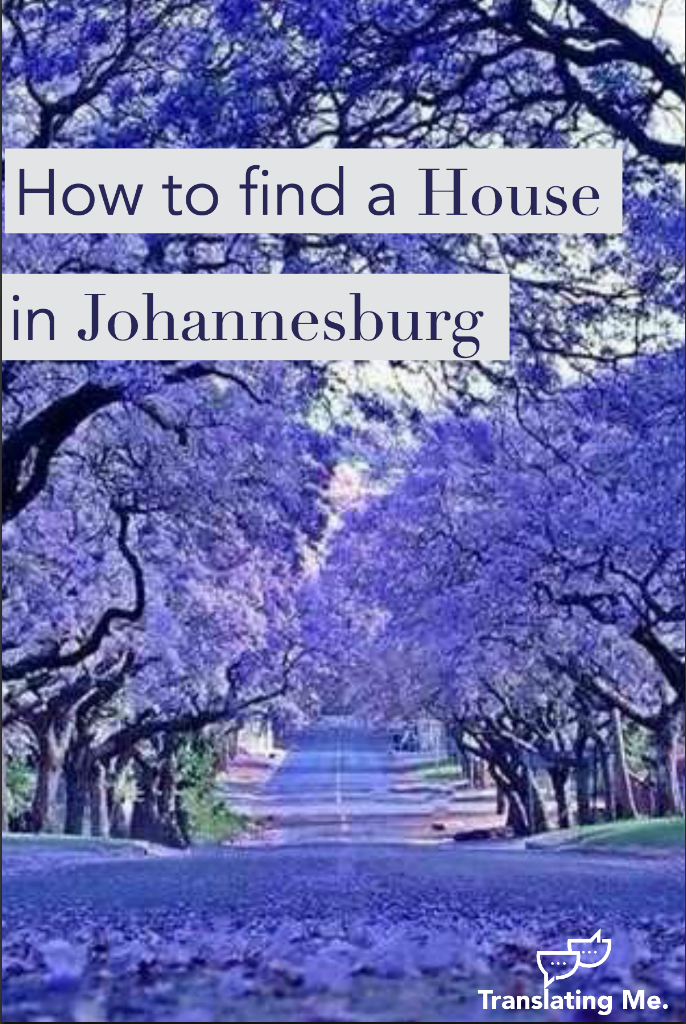
Is it best to rent or to buy when moving to South Africa? We give you a run down of the variety of property choices here in Johannesburg…
Many expats choose to live in the northern suburbs of the city (Dainfern, Fourways, Cedar Lakes) due to its close proximity to international schools and its many security estates, which provide a convenient way of living. It’s also more recently developed part of the city, so all properties are newer with a wide variety of styles.
Before you choose to follow the usual expat trail, it’s worth investigating some of the other areas in the massive city of Johannesburg, which might (or might not) fit your family’s lifestyle. (See Where to Live in Joburg)
For expats who will be staying for a limited time, it’s more advisable to rent. Those looking to stay for longer could investigate buying a house, but note that the South African Rand is one of the most volatile currencies in the world, so you may not want to bring in a large sum of money.
Whether you choose to rent or buy, there are a number of different home types to choose from:
Free-standing home in a suburb: Freestanding homes will give you more privacy and space, but will also require maintenance and investment into security, for example an electric fence, alarm and voice/camera intercom for visitors. Generally houses in the Parks area are free standing.
Security village / Estate: A popular option, a security complex will offer residents individual homes within a gated community, often with shared leisure facilities (golf course, tennis courts, etc.) and strict visitor entry/exit criteria at the gate. Big estates are mainly based in the far north of the city in and around Fourways.
Townhouse / Cluster homes in a complex: Townhouses are split level homes that are larger than an apartment and typically have a small garden or play area. Cluster homes are smaller to estates but are clustered with 3 - 6 other homes behind guarded entrance. There may or may not be shared facilities, but the community is much smaller and compact. You’ll find these in Bryanston, Hyde Park and a few dotted around the Parks.
Apartment in a complex: With the growth of the city, apartments are now popular and widely available. Newer complexes are typically oriented for 1-2 bedroom apartments. Newer developments are in Sandton, Rosebank, Melrose Arch. Apartment complexes in older, more established parts of the city such as Killarney, Parkview, or Illovo can be larger around 3 bedrooms.
THINGS TO CONSIDER BEFORE SEARCHING ONLINE
LOCATION & TRAFFIC
Northern suburbs are notoriously gridlocked during peak hours (approximately 7-9am and 4-6pm). Traffic can also be worse in the mornings if you live near to a school, university, or highway on ramp.
This is because business and residential expansion in the Northern suburbs has been rapid, without planning or expansion of the road network, which originally served a farming community. To get around this, live close to your office or school (See school listings here), or consider living near a Gautrain station.
Main highways (the M1 and N1) can be backed up from accidents or road blocks regularly-at any hour. Always factor in extra travel time when needing to drive on the highway. Apps like Google Maps and Waze can help you to figure out alternate routes.
SIZE
Houses can be a lot bigger than you might be used to and gardens will typically be bigger. The amount of space you are comfortable in can influence where you’ll choose to live, as some suburbs and security complexes have more spacious homes than others.
When looking for a house you’ll also need to factor in whether you’re going to get a permanent domestic worker and if they will stay with you on the property. If so, consider the space available for them with a separate entrance and bathroom.
CLIMATE
Johannesburg has particularly mild and sunny weather, so having a covered patio and outdoor space/garden to take advantage of the weather will make your life very enjoyable. A South African will also make sure to tell you to have adequate outdoor space for your braai (barbeque), which typically is a wood fired or charcoal grill often built into your patio design. Gas barbeques are also becoming more popular.
A swimming pool is very common and can be a wonderful addition in summer, but does require maintenance. Hiring a gardener or pool service can help with maintenance.
NOTE: Check the orientation of your home to make sure it is North-facing to take advantage of the movement of the sun in the southern hemisphere. Houses that face in another direction can be terribly cold in winter.
COST
Rental cost may also depend on whether or not the house is furnished, which might be a more convenient option, but are not as available. Most houses come unfurnished. Below are general prices per month.
Dainfern / Estate Living (3 bed R35,000 - R70,000)
Melrose Arch / Sandton 1/2 Bed Apartment R25,000 - R50,000
Cluster Home (Hyde Park / Sandringham/ Bryanston) R30,000 - R70,000
Free Standing in the Parks 3/5 bed R30,000 - R70,000
For a broad overview of the cost of living in Johannesburg read more here: https://www.expatistan.com/cost-of-living/johannesburg
HOW TO GET STARTED
There are a number of different property websites in South Africa, here are the most popular:
Property24: http://www.privateproperty.co.za/to-rent/gauteng/johannesburg/33
Private Property: https://www.property24.com/to-rent/johannesburg/gauteng/100
Once you have an idea of the type of property you are looking for, get in touch and we will keep an eye out for you. We would love to show you around the various neighbourhoods, and help show you a range of options. Click on the photo below to tell us more about you!

Estate Agents
Relocation agents will work with estate agents. Feel free to contact agents directly, you’ll see advertisements all over the city!
Pam Golding
Jawitz
Chas Everitt
Sothebys
Vered
Firzt
Its best to call or set up an appointment in person, and get them to show you around!
Find out more: https://www.property24.com/estate-agencies
NOTE: Even when you’ve made a signed offer or lease application, don’t think that an offer is a guarantee! A landlord or seller can refuse an offer at the last minute so be sure to factor this in when looking for a place and making arrangements for furniture transportation, etc.
TIPS
Visit the estate agent and go through the lease in detail and make sure you understand every single point before signing.
Understand what is your responsibility to maintain and what is the landlord’s responsibility.
Find out what utilities are included in the rent, and if possible, organise a pre-paid electricity meter as this will help you manage your electricity bill a lot more easily, especially in winter when you will be using a lot of electrical appliances to keep warm!
Include in your monthly budget how much help you’ll need to maintain the house and garden, or added estate levies!
Health Care Options in South Africa

South Africa has some of the most well-trained doctors and medical professionals in the world, but unfortunately, while you’ll definitely find adequate care in many private facilities, most public healthcare in the country is unfortunately understaffed and under-resourced.
This means that you’ll need to set up a healthcare investment such as medical aid or a hospital plan to make use of private, and more expensive, medical facilities.
In general, medical aid schemes offer three kinds of plans:
Comprehensive: These plans cover all medical expenses, including routine visits to a health professional.
Network: A network plan is more affordable, but will mean that you can only make use of certain medical service providers which are part of the scheme’s network, which will require research on your part, to make sure that you can be reimbursed.
Hospital Plans: These plans generally cover only medical emergencies and planned hospital visits/procedures, and it’s advisable to take out an additional gap cover policy to make up for the potential shortfall between what your medical aid will cover and the actual cost.
Some professional industries offer their own medical aid packages, for example ProfMed for professionals with certain qualification criteria, GEMS for government employees and CAMAF for Chartered Accounts. Depending on what industry you work in, there may be a particular medical scheme that would work better for you, but this will be a matter of research and finding out what’s available to you specifically.
TOP HEALTHCARE PACKAGES:
While local packages might be more affordable, there are global health plan options for expats who move regularly, and travel frequently, some of the global programmes are run in conjunction with a local company:
BUPA Global Health Insurance
CIGNA Coverage in Africa
LOCAL OPTIONS
DISCOVERY: One of the most common local options is Discovery, which you’ll notice advertising for in many places as they offer a range of benefits, from discounts and rewards programmes at gyms, at the cinema and when purchasing flights online from certain airline companies. (Be aware that with many Discovery packages, you will only be able to make use of specific service providers so do your research before visiting a medical professional/facility to make sure that you will be reimbursed for your claim)
Other local options include:
BEST MED
BONITAS
FEDHEALTH
MEDIHELP
MOMENTUM
Great tool to use to compare options: Hippo
GENERAL TIPS ON MEDICAL AID
In many cases, be prepared to pay upfront and then claim back from your medical aid, or expect to do research on which specific doctor or hospital to use as some medical aids are very specific about which services they approve. When paying for anything, you’ll be asked if it will go on Medical Aid or Cash. If you plan on making a claim to your insurance provider for the expense, answer “cash”.
For intensive procedures, it’s advisable to get approval from your medical aid upfront, to avoid any unanticipated costs down the line, as claiming back from medical aid can be a lengthy process. Always be sure to get a detailed receipt.
NOTE: Dentists and orthodontics sometimes aren’t covered by medical aid.
GENERAL HEALTHCARE
General regular immunizations are: Hepatitis B, DTP, MMR, and Polio
You might also require a Yellow fever vaccination required when visiting certain African and South American countries. This is valid for 10 years, and you may need to show proof of vaccinations when entering South Africa from a yellow fever area, its a good idea to scan and save a copy for your records.
Some Diseases To Be Aware Of:
HIV/AIDS: Although massive strides have been made to prevent HIV infection, with the distribution of Antiretroviral medication and free testing, HIV/Aids is still an issue in all Sub-Saharan countries, and there is still a lot of social stigma around the disease that often complicates and delays treatment.
As always, preventing HIV infection and STDs means having protected sex and being responsible.
The topic of HIV/Aids will be something to consider, especially in the workplace and when dealing with staff, as HIV positive employees are not obliged to reveal their status by law. If you are employing staff on your property, odds are they will have HIV. It is good practice to send any care givers on a first aid course which will cover HIV along with all the other conditions. Please note it is very hard to contract the disease- there has to be blood to blood exchange, or sexual activity. HIV treatment has come along way and now with the right medication and care you can carry on living a normal life. It is important as employers to support where we can if you notice a sudden weight loss, or frequent illness. Do seek out further help and advice if you have questions. At least supply healthy food and financial support for medication. For further information see: The Right To Care.
Other diseases to be aware of are tick-bite fever and malaria, which you can get when travelling to the bush, but being aware of high risk areas and taking the necessary precautions should prevent you from getting these.
MEDICATION
A “drug store” or pharmacy is called a chemist in South Africa, and there are individual pharmacists who run stores in some parts of the city, but these have largely been taken over by nationwide franchises over the last decade.
Here are the most popular ones, which also offer basic medical screenings and clinic facilities, and also sell food and homeware items:
NOTE: In stores like Dischem you will obliged to put prescription medication into a cage-like contraption after you get it from the medications counter, and while you make your way to pay at the main checkout till. Once you register your family at a location, try to use that same place repeatedly!
EMERGENCIES
Be aware that if you don’t have medical aid, an ambulance will take you straight to a public hospital and might have to wait for treatment. Its a good idea to know which hospital you would like to be taken to, plus have thought through emergency plan if you are absent and your child gets sick (we have a list of emergency numbers on the fridge, and have a process whereby if there isn't anyone present who can drive, then press our security panic button which is linked to medical response team, these guys drive around the area and so will be quickest to arrive).
Ambulance
ER24 084 124
Netcare 911 082 911
Hatzollah is a private not for profit organisation that services the Johannesburg Jewish community: 0860 100 101
Police/Fire
From home phone 10111
From mobile 112
National Poison Control
0861 555 777
FINDING A GOOD LOCAL DOCTOR
For routine medical checkups, visit a General Practitioner, or GP, as South Africans call it. It is a good idea to get set up with a GP when first arriving to introduce yourself and your family. Do your research online to find a doctor, or visit your nearest hospital or clinic. Your medical aid will also be able to give you a list of doctors and medical practitioners.
If you have children, you will need to register them with a Paediatrician, and its also advisable to register with a gynaecologist.
Ask for recommendations online on expat groups or a residental/neighborhood group. Some online medical resources include:
http://www.intercare.co.za/
https://www.recomed.co.za/
HOSPITALS
South Africa has a number of public hospitals, some which are world renowned and serve as training facilities for local medical students. Not all hospitals will have an emergency section, referred to as “casualty” by doctors.
For your own information, here are some of the most well-known public hospitals in Johannesburg:
Chris Hani Baragwanath Hospital (Soweto)
Charlotte Maxeke Academic Hospital (previously known as Johannesburg General Hospital or “Joburg Gen”)
The main private hospitals that majority of expats use are Sandton MediClinic and Life Fourways Hospital, or the Netcare Hospitals (Sunninghill, Waterfall, etc.)

Everything You Need To Know About South African Visas
You won’t live in Joburg for long before you hear a horror story involving visas. The laws change regularly, and sometimes require you returning to your home country for 6-8 to process. This information is correct at time of publishing, however you should contact your immigration agency if you have one, or email us directly (hello@translatingme.org) with any questions.

There are three ways to legally reside in South Africa:
As a visitor
As a temporary resident
As a permanent resident
With a work permit
VISITOR VISAS
Visitor visas are valid in South Africa for 90 days, and many countries are exempt from having to apply for a visa in advance, although there have been many changes in the last year or two, so it’s best to double check with a South African embassy official in advance.
As an overall checklist, to visit South Africa you’ll need the following:
• A valid and acceptable passport or travel document for your intended stay that will not expire within three months
• At least two blank pages in your passport for endorsements
• A valid visa (If required from your country)
• Sufficient funds to pay for your day-to-day expenses during your stay
• A return or onward ticket
• Yellow fever certificates if your journey starts or passes through a yellow fever area in Africa or South America
NOTE: If you are traveling with minor children you will need to provide a certified unabridged birth certificate for each child, and if traveling without your spouse, you’ll also need to provide an certified affidavit from the missing parent. Click here to download a template affidavit form.
TEMPORARY RESIDENCE VISAS
If you would like to stay for more than 90 days, you’ll need to apply for a temporary residence visa.
One of the major changes to visa legislation over the past while is that you can’t apply for a temporary residence visa while in South Africa on a Visitors Visa. So, to stay legally in South Africa for longer than 90 days you’ll need to apply for this visa before you arrive in South Africa. (Though this has just been changed for visa exempt passport holders. Please check with your airline to confirm what you need!)
The list of temporary residence visas includes:
• Business visa
• Work permit/visa (the terms permit and visa are used interchangeably)
• Study visa
• Exchange visa
• Retired Person's' visa
• Relatives' visa
• Medical treatment visa
BUSINESS VISA
This is a visa for a foreign professional that wants to start their own business or would like to invest in a South African business. To qualify, you’ll need to invest R5 million into South Africa with funds that come from abroad.
Application Process for Business Visa
1. Submit an application for recommendation at the Department of Trade and Industry (DTI). This will be then be forwarded to the South African mission if the business is feasible and of national interest. You will be notified of this but won’t know if the recommendation was positive or negative.
2. The South African mission will then submit the notification in support of the business visa application, which will be approved or denied.
NOTE:
• A business visa can be extended from within South Africa.
• Annual conditions listed will need to be acted on annually if the visa is approved.
• A business visa holder can apply for permanent residence in South Africa at a VFS Centre immediately after the business visa is issued.
STUDY VISA
A study visa is required for any foreigner who would like to study in South Africa at any educational institution that is recognised by the Department of Education. If your child is attending a South African school they will need to have a Study Visa (from the year they turn 6 years).
VALIDITY: The study visa will be issued in line with the course of study at the chosen institution. The maximum period of time is 8 years for primary school and 6 years for secondary school.
MEDICAL AID: To qualify for a study visa the applicant will need to prove that they have adequate medical aid/insurance for the intended period of study and that this is recognised in South Africa.
ACCEPTANCE OR ENROLLMENT LETTER: You’ll need to provide an acceptance letter or enrollment letter from the chosen institution to apply for a study visa.
NOTE:
A study visa can be extended from within South Africa.
A study visa can be changed to a different visa from within South Africa if the study visa doesn’t have any conditions.
It is possible to apply for South African permanent residence on a study visa but certain conditions apply.
PERMANENT RESIDENCE
To be a permanent resident in South Africa you can get one of two visas:
• A direct-residence permit: You can only apply for this once you have been a temporary resident for 5 years (please note IntraCompany visas do not qualify).
• A residency-on-other-grounds-visa: this requires you to qualify for application. Read on to find out more.
A residency-on-other-grounds visa is more complicated, and communication around changes has unfortunately been unclear, but in general, you can only apply for this visa if:
• have an offer for permanent work in South Africa, or
• have exceptional skills and qualifications
• plan to set up a business in South Africa
• qualify as refugee
• qualify as retired person
• are financially independent
• are relatives of a South African citizen/permanent resident
WORK PERMITS
If you are NOT a permanent resident, and you would like to work in South Africa, you will need to apply for a work permit. This includes the following three visa categories:
• Intra-company-transfer work permit
• General work permit
• Critical skills work permit
INTRA-COMPANY TRANSFER
If you are employed by an international company that operates in South Africa, or an affiliated company, for a minimum of 6 months, you can qualify for an intra-company transfer work visa.
You can’t extend this visa
You don’t qualify for permanent residence with this visa.
An intra-company transfer work visa is only issued for a maximum of 4 years.
A skills transfer plan is a very important support document when applying for an intra-company work visa, that needs to be implemented for each position at the company in South Africa
GENERAL WORK VISA
This visa applies to all applicants who don’t qualify for any critical skills, as listed in the Government Gazette. This will generally require you to have a sponsor who can support your application for employment.
APPLICATION PROCESS
1. Apply for a recommendation from the Department of Labour. The Department of Labour will then forward the recommendation to the South African mission (note that this can take a while). Processing at a South African mission can take between 10 to 60 working days.
2. One the applicant has been notified that the mission has received the recommendation, the applicant can then submit the application.
NOTE:
• You will not be granted a visa if there is a South African resident with the same qualifications and experience that can fill the position
• The application for a recommendation at the Department of Labour can take 2 - 6 months to be processed. The application can only be submitted once the notification from the Department of Labour is received
• A general work visa is issued for a period of 5 years or in line with the employment contract
• You can apply for permanent residence after a period of 5 years of continuous employment
ALTERNATIVE PROCESS
In the event that an applicant’s employer can provide a strong motivation, an application for a waiver from certain requirements can be submitted to the South African mission instead of the application for a recommendation at the Department of Labour.
This application for a waiver will be processed by the Department of Home Affairs, which can take 3-6 months. The South African mission will be notified on the outcome of the waiver application, and your employer will be given notification of the finalisation of the application, which will be submitted by Home Affairs in support of the general visa application.
CRITICAL SKILLS VISA
You can qualify for this visa if you have one of the critical skills listed in the Government Gazette. Click HERE for full list.
APPLICATION PROCESS
1. Apply for an evaluation certificate from the South African Qualifications Authority (SAQA), which will evaluate the foreign qualification according to the standards in South Africa. The processing period at the South African Qualifications Authority is 15 working days, provided that the verification from the Educational Institution abroad can be done within the given timeframe. The verification from abroad can cause a very long delay. (Please note they often require a breakdown of your university degree scores)
2. Register at the relevant professional body recognised by SAQA. This will provide the necessary letter of confirmation from the relevant professional body that is recognised by SAQA or relevant Government Department. The processing period at the various professional bodies are between 10 - 60 working days.
NOTE:
• Critical skills work visas are issued for 5 years or in line with the employment contract
• You can extend this visa from within South Africa
• If you change your employer, you’ll need to submit an application at a VFS Centre in South Africa
• Once you have gained Critical skill visa you qualify to apply for permanent residence
FOR ALL VISA APPLICATIONS
You will need the following to apply for a visa/permit:
• Two recent passport photographs
• A passport valid for 6 months after you intend to leave South Africa*
• A medical report signed and stamped by a doctor to prove that you aren’t a medical risk
• A chest X-ray and report to prove that you do not have TB (not required for children or pregnant women)
• Your full birth certificate
• Police clearance certificates for applicants who are 18 years and older, from all countries where they have for more than one year (Applying for this in itself can take a while).
• Completed application form
• Yellow fever certificate if you have been traveling or have passed through a high-risk area
NOTE:
• You will need to visit the South African mission or VFS in person to submit your application.
• You will need to pay the prescribed fee in the prescribed format when visiting the South African mission to submit the application.
• All supporting documentation must be in English or translated into English by a sworn translator.
• Supporting documentation is only valid for 6 months
APPLYING FOR A WORK VISA AS AN ACCOMPANYING SPOUSE ON A VALID WORK VISA:
It is possible to apply for a work visa as an accompanying spouse on a valid work visa, provided that the spouse qualifies for a suitable work visa and that there is no condition on the accompanying spouse visa. For more information on various work options available to "accompanying spouses” go to TranslatingMe.org, Portable Careers for Expats Facebook Group, or join us at a meet-up near you!
GENERAL NOTES:
All personal documentation in support of an application should be available in South Africa at all times. This includes:
• Qualifications
• academic transcripts
• unabridged marriage certificates
• unabridged birth certificates
• divorce decrees
• medical aid that is recognised in South Africa
VISA RENEWALS
Start the renewal process early!
You can renew your visa from within South Africa (apart from Intra-Company Transfer), but take note that you need to wait for the renewal to be granted before you leave the country otherwise you won’t be able to re-enter. Check your passport expiration dates, and if you need to apply to transfer a valid permit to a new passport (Otherwise, the old passport with visas will need to be carried with you at all times along with the new one!)
IF YOU ARE FLAGGED AS UNDESIRABLE AT THE PORT OF ENTRY
A visa only shows that you have gone through the necessary rigmarole to legally enter and stay in a country, it does not guarantee entry. If you are caught for whatever reason, try to avoid them stamping you as “undesirable” - its a lengthly process to reverse.
You can apply to have an overstay uplifted electronically at the Department of Home Affairs office, but only with a strong motivation. The outcome will be received in an official electronic letter. If you have questions, please contact us!
The wonderful team at Immigration Boutique put together a great crib sheet outlining the various Visa options. Click Here to Download It.
At any time, join Moving to South Africa Facebook Group to ask a question or get advice in this process!
Good luck to you and your family!

Where Do Expat Families Actually Live in Johannesburg?
Expat families in Johannesburg cluster in five areas: the golf estates up north around Dainfern, Steyn City and Waterfall; the Bryanston, Morningside and Sandton belt near the business district; Rosebank for apartment living, the Parks, the older walkable suburbs between Sandton and town; and Maboneng and the inner city.
Choosing where to live was one of the first big decisions we faced, and it is still one of the questions international families ask me most often.
After years of living here and helping other families settle in, I have learnt that choosing a home in Johannesburg is about much more than bedrooms, bathrooms and a swimming pool. It is about the school run, your daily routine, the people around you and the kind of life you want to build here.
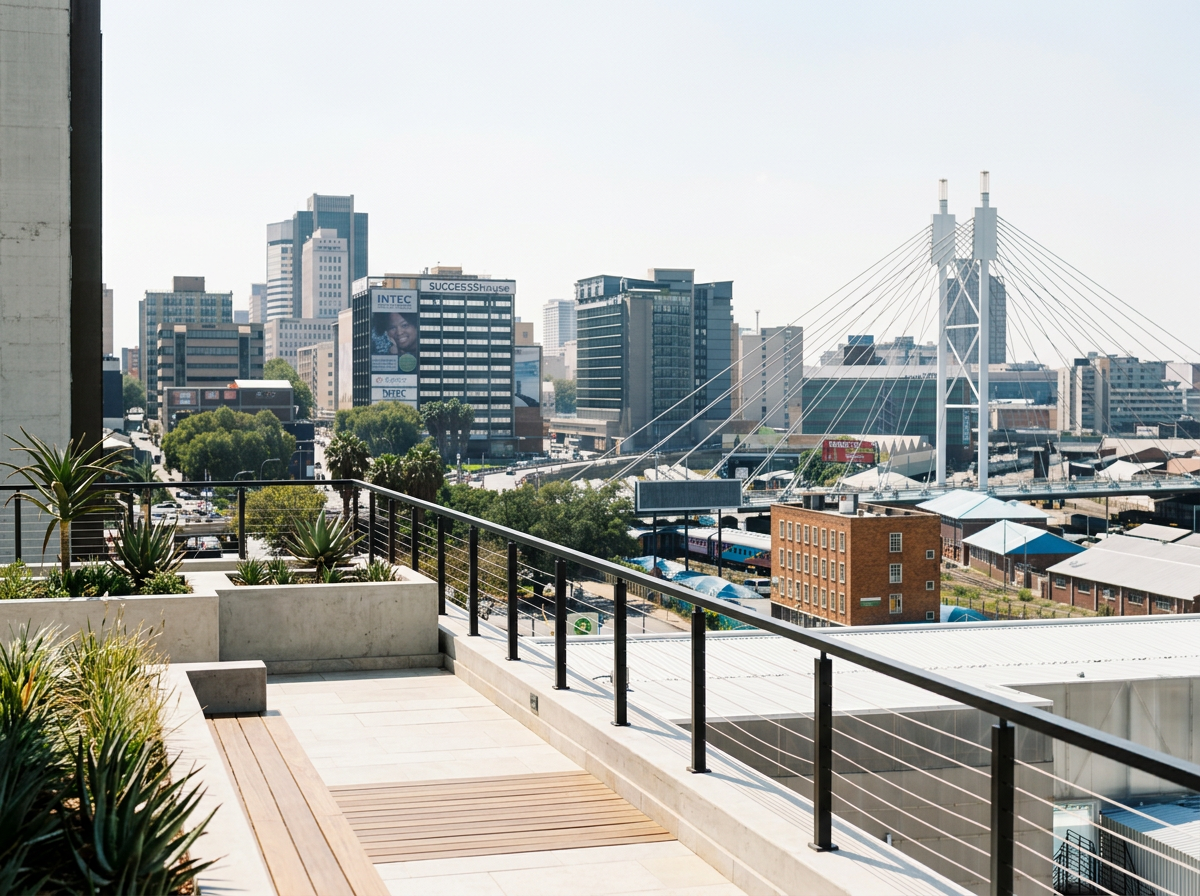

What are the five areas expat families choose between?
Johannesburg is a sprawling city, and the best place for your family will depend on where you need to be most days and how you want to live.
As a starting point, it helps to think about five broad areas: the northern estates, the Bryanston–Morningside–Sandton belt, Rosebank, the Parks and the inner city.
1. North Johannesburg: Dainfern, Fourways, Steyn City and Waterfall
If you picture a spacious family home, a garden, plenty of room for the children and a community of other international families, the northern estates are likely to be on your list.
Dainfern, Fourways Gardens, Cedar Lakes, Steyn City and Waterfall offer a range of secure estate living, with different property styles, facilities and lifestyles. Many families appreciate the sense of community, shared amenities and the convenience of having other newcomers around them.
For families arriving on a two- or three-year work assignment, this can be a comfortable way to settle in. There are established communities, plenty of family-sized homes and opportunities for children to make friends with others in a similar situation.
The trade-off is distance. Depending on your workplace, school and daily commitments, you could spend a significant amount of time in the car. Estate living can also feel a little removed from the wider city, particularly if you want to explore Johannesburg's independent shops, restaurants and neighbourhood life.
Best suited to: Families looking for space, shared facilities, a community of international residents and a more contained residential lifestyle.
2. Bryanston, Morningside and Sandton: central for work and family life

Sandton is Johannesburg's main business hub, so if your new job is based here, living nearby may make everyday life considerably easier.
The surrounding areas of Bryanston and Morningside offer a mix of freestanding homes, cluster developments, apartments and gated estates. There is plenty of choice, from larger family houses to lower-maintenance properties.
Bryanston is particularly worth exploring if you want a family home with a garden without necessarily living on a large estate. Parkmore is another option to consider if you would like a freestanding house and a more neighbourhood-focused feel, while River Club offers estate living nearby.
Morningside can work well for families who want to be close to Sandton and some of the international schools. Sandton itself offers apartments and cluster homes that may suit professionals who prefer less garden maintenance and a shorter journey to the office.
One thing to remember is that being geographically close to work does not always mean a quick commute. Traffic can be heavy, and when traffic signals fail, journeys can take considerably longer than expected.
Best suited to: Families working in or around Sandton who want a practical balance of home, school and work.
3. Rosebank: stylish, lock-up-and-go apartment living
If you would rather swap a large garden for a balcony, a good coffee shop downstairs and less time spent maintaining a property, Rosebank is well worth exploring.
Rosebank offers a more urban style of Johannesburg living, with modern apartment buildings, restaurants, cafés, shops and convenient access to the business districts of Rosebank and Sandton. It can be particularly appealing if you are relocating for work and want a home that is easy to manage, whether you are living alone, as a couple or with a smaller family.
The appeal is the lock-up-and-go lifestyle. You can choose an apartment in a managed building, enjoy having amenities close by and spend more of your weekends exploring the city rather than looking after a large property. For professionals who travel regularly, or families who prefer apartment living to a house with a garden and pool, this can be a very practical option.
Rosebank also offers a useful middle ground for people who want to feel connected to Johannesburg's restaurants, shopping and cultural life without living in the inner city.
As always, look at the individual building as well as the suburb. Check the security arrangements, parking, backup power and water provisions, levies, noise levels and the routes you will use most often. If you have children, consider school locations and the daily commute before committing to an apartment.
Best suited to: Professionals, couples and smaller families looking for convenient, lower-maintenance living, with restaurants, shops and everyday amenities close at hand.
4. The Parks: Parkhurst, Parkview, Parktown North and beyond
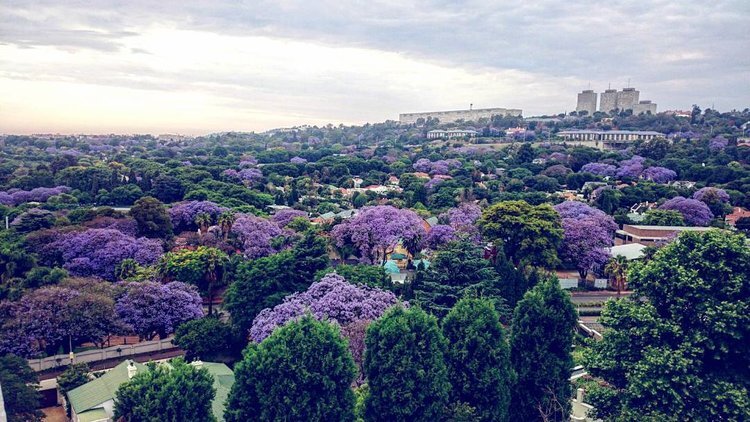
If you imagine Johannesburg as a collection of leafy neighbourhoods with independent coffee shops, local restaurants, established gardens and streets where people stop to chat, take a closer look at the Parks.
This group of older, established suburbs includes Parkhurst, Parktown North, Parkview, Parkwood, Greenside, Craighall Park, Saxonwold and Westcliff.
Each has its own personality. Some have lively high streets, others are quieter and more residential, and property styles range from characterful older houses to renovated family homes and modern developments.
Parkhurst is known for its village atmosphere and Fourth Avenue, with restaurants, independent shops and people out walking their dogs. Parkview has a strong family feel, with George Hay Park and a neighbourhood centre. Parktown North offers its own collection of restaurants and local businesses, while Westcliff is known for its older homes, larger properties and elevated views.
One of the things I love about these neighbourhoods is that they offer a different experience of Johannesburg. You can head out for a coffee, explore a local park, meet friends for lunch or become a regular at a favourite restaurant.
Come October, the jacarandas add a splash of purple to many streets, making this part of the city especially beautiful.
The Parks are not necessarily the easiest option for every newcomer. Finding the right property can take time, and your preferred school may influence which suburb makes the most sense. But if you want to feel connected to a local neighbourhood rather than living entirely within a residential estate, they are well worth exploring.
Best suited to: Families who value character, local businesses, green spaces, established communities and a more neighbourhood-based lifestyle.
5. Braamfontein and Maboneng: a more urban way of living
Not every international arrival is looking for a large family home and a garden.
Braamfontein and Maboneng offer a different perspective on Johannesburg, with apartments, creative spaces, galleries, restaurants and cultural venues. They appeal to people who enjoy an urban environment and want to explore the city's creative side.
These areas tend to attract a different mix of residents from the larger family estates, and they are less commonly the first choice for relocating families with school-age children.
That does not mean they should be overlooked. If you are moving alone, as a couple or as a professional who enjoys city living, they may be worth considering as part of a wider property search. As with any Johannesburg neighbourhood, it is important to assess the specific building, street, security arrangements and daily routes rather than making assumptions about an entire area.
Best suited to: Professionals, couples and those who prefer apartment living and an urban, creative atmosphere.
Should you live in a secure estate, a cluster home or a freestanding house?
This is one of the biggest decisions you will make when looking for a home in Johannesburg. There is no single right answer, and I would always encourage you to experience the options before deciding.
Estate living: convenience and community
Estate living can make the transition to Johannesburg feel more straightforward. Access is controlled, facilities may be close at hand, and children have opportunities to meet other families within the community.
For some families, the appeal is obvious. In Dainfern, for example, children can enjoy a more contained environment, with shared facilities and other families nearby. But estate living comes with its own practicalities. At busy times, even getting through the gate can take 15 minutes — something worth factoring into your daily routine if you have school drop-offs or a commute to manage.
Security is another important consideration. Estates offer managed access and security arrangements, but it is worth understanding exactly what is provided rather than assuming every estate offers the same level of protection.
The alternative is not necessarily compromising on security. In some freestanding neighbourhoods, residents rely on a combination of property-level security, neighbourhood networks and armed-response services. Hannah has heard examples of armed response arriving within two minutes, although response times vary and should never be treated as guaranteed.
The real question is which arrangement suits your family, your property and your everyday life.
Best suited to: Families who value shared facilities, a more contained residential environment and a ready-made community.
Freestanding homes: character and neighbourhood life
A freestanding house in an area such as Parkhurst or Parkview offers a different experience. You may have an established garden, a distinctive older property and a local high street nearby.
You are also more likely to encounter a broader mix of residents, from families who have lived in the area for years to students, young professionals and people who have recently moved to Johannesburg.
Of course, a freestanding home comes with its own responsibilities. Security arrangements, garden maintenance and general upkeep all need consideration, and the details vary from property to property.
Cluster homes: the middle ground
Cluster homes are often overlooked when people first start searching, but they can be an excellent compromise.
They typically offer a house-like layout with less garden to maintain and shared or managed security arrangements. Depending on the development, you may also benefit from a more convenient location than some of the larger estates.
For families who want a little more independence without taking on the full responsibilities of a freestanding property, a cluster home can be worth serious consideration.
What about security?
Security is understandably high on the list for anyone moving to Johannesburg. But I would be cautious about assuming that an estate is automatically the right answer, or that a freestanding house is necessarily the wrong one.
Look at the individual property, its security measures, the surrounding streets, access points and the arrangements in place for residents. Speak to people who live nearby and ask specific questions about their experience.
Community can make a real difference, too. Local residents' associations and neighbourhood WhatsApp groups may help people share information and respond to concerns. They are not a substitute for appropriate security measures, but they can be a valuable part of feeling connected to your area.
The important thing is to make an informed decision based on the property and neighbourhood you are considering, rather than choosing an entire lifestyle out of fear.
How much should your children's school influence where you live?
If you are moving to Johannesburg with children, I would put school location near the top of your decision-making list.
It is tempting to choose a school based on its reputation or curriculum and then look for a home nearby. But Johannesburg is a city where the school run can have a huge impact on your everyday life.
Take Winnie Mandela Drive, for example. The morning traffic between around 6am and 8am can make a significant difference to how long a journey takes. A home that looks conveniently close to school on a map may feel very different when you are driving that route every morning.
Multiply the school run by work commitments, afternoon pick-ups and after-school activities, and the time quickly adds up.
I have seen how much happier families can be when their daily routines work well. Being able to walk to school, where practical, or having a manageable journey in the right direction can make an enormous difference.
Your school choices will help narrow down your property search. For example, the German School Johannesburg is in Parktown, while the Lycée Jules Verne's Morningside campus is in the Sandton area. Families considering the American International School of Johannesburg should also check its current campus location and calculate the journey from any property they are considering.
I would never tell you which school is best for your child. That is a personal decision based on your family, your plans and your child's needs. But I would encourage you to consider the commute just as carefully as the academic offering.
My advice? Start with your school options, map out your likely daily journeys, and then look for a home that supports the life you want to live.
Why are so many relocating families shown properties on estates first?
There is a practical reason estates often feature heavily in relocation searches. They can offer a relatively straightforward starting point for families who are unfamiliar with Johannesburg, with a range of properties, established security arrangements and communities that include other international residents.
Corporate housing requirements can also influence the options presented to employees arriving on assignment.
But the easiest option to organise is not automatically the best fit for your family.
If you are shown only properties in estates, you may never discover the appeal of a leafy suburb, an independent coffee shop around the corner or a neighbourhood where you can build relationships beyond your immediate residential community.
Equally, if you have always lived in a freestanding house, an estate may offer exactly the convenience and peace of mind you are looking for.
This is why I believe in showing families different options and helping them understand the trade-offs, rather than assuming that everyone arriving from overseas wants the same thing.
How do you choose the right Johannesburg neighbourhood before you arrive?
You can read guides, join online groups and ask for recommendations from people who already live here. These are useful starting points, but they can also leave you with a hundred conflicting opinions.
One person will tell you that their suburb is the only place to live. Another will insist that you should never consider it. Both may be speaking from perfectly genuine experience, but their priorities could be completely different from yours.
If you can, spend time exploring before committing to a long-term rental or purchase. Walk along the high streets, visit the parks, drive the school route and see what an ordinary weekday looks like. Explore at different times of day and think about where you will shop, exercise, meet friends and spend your weekends.
If you cannot visit before you move, you can still make a more informed decision by understanding the different areas, asking specific questions and getting advice from someone who knows the city on the ground.
The aim is not to find the universally perfect suburb. It is to find the right fit for your family.
What about property prices, renting and buying?
This guide is designed to help you understand Johannesburg's different neighbourhoods and ways of living. It is not a current price guide: rental and purchase costs vary according to the property, location, condition and facilities.
Before deciding whether to rent or buy, consider the length of your assignment, your budget, your plans for the future and the costs associated with each option.
Foreign nationals can generally purchase property in South Africa, but the financing arrangements available to non-residents can differ from those available to residents. If you are considering buying, speak to a South African bond originator and a conveyancing professional about your individual circumstances before making financial commitments.
The same principle applies to visas, tax and exchange control: seek advice from the relevant specialists rather than relying on general information online.
And when it comes to security, I would always encourage you to look beyond broad labels about which suburbs are safe or unsafe. Understand the specific area, the property and the practical steps residents take to manage risk.
Ready to find your place in Johannesburg?
Moving to a new country is a big adventure, but it can also feel overwhelming when you are trying to make important decisions from the other side of the world.
I know what it is like to arrive without a local network or a clear picture of how the city fits together. It is why I now help international families make sense of Johannesburg, from choosing a neighbourhood and understanding the property market to finding the people and places that make a new city feel like home.
If you are weighing up the northern estates against the Parks, trying to balance school and work, or simply unsure where to begin, let's talk it through.
Book a Home Joburg Discovery Session.
In a 90-minute private video call, we will look at your family's needs, school options, commute and preferred lifestyle. Afterwards, you will receive a written Neighbourhood and Housing Guide to help you move forward with greater clarity.
The session costs US$297, and the fee is credited in full if you subsequently take up the Global Executive Concierge service.
You can also listen to Sarah Passmore and me discussing the differences between living in Parkhurst and Dainfern in our New in Town podcast episode, Where to Live in Johannesburg.
Because finding a house is one thing. Finding your place in Johannesburg is something else entirely.

How to Choose a School in Johannesburg: A Guide for Expat Families
Choosing a school is one of the biggest decisions you'll make when moving to Johannesburg with children. It affects more than their education. It will influence where you live, your daily commute, how quickly your children settle in and even when you decide to move home again.
So, where do you start?
Before you create a shortlist of schools, think about three things: how long you expect to stay in South Africa, where your family might move next, and which university system your children may eventually enter. These answers will help you decide whether an international or a local South African school is the better fit.
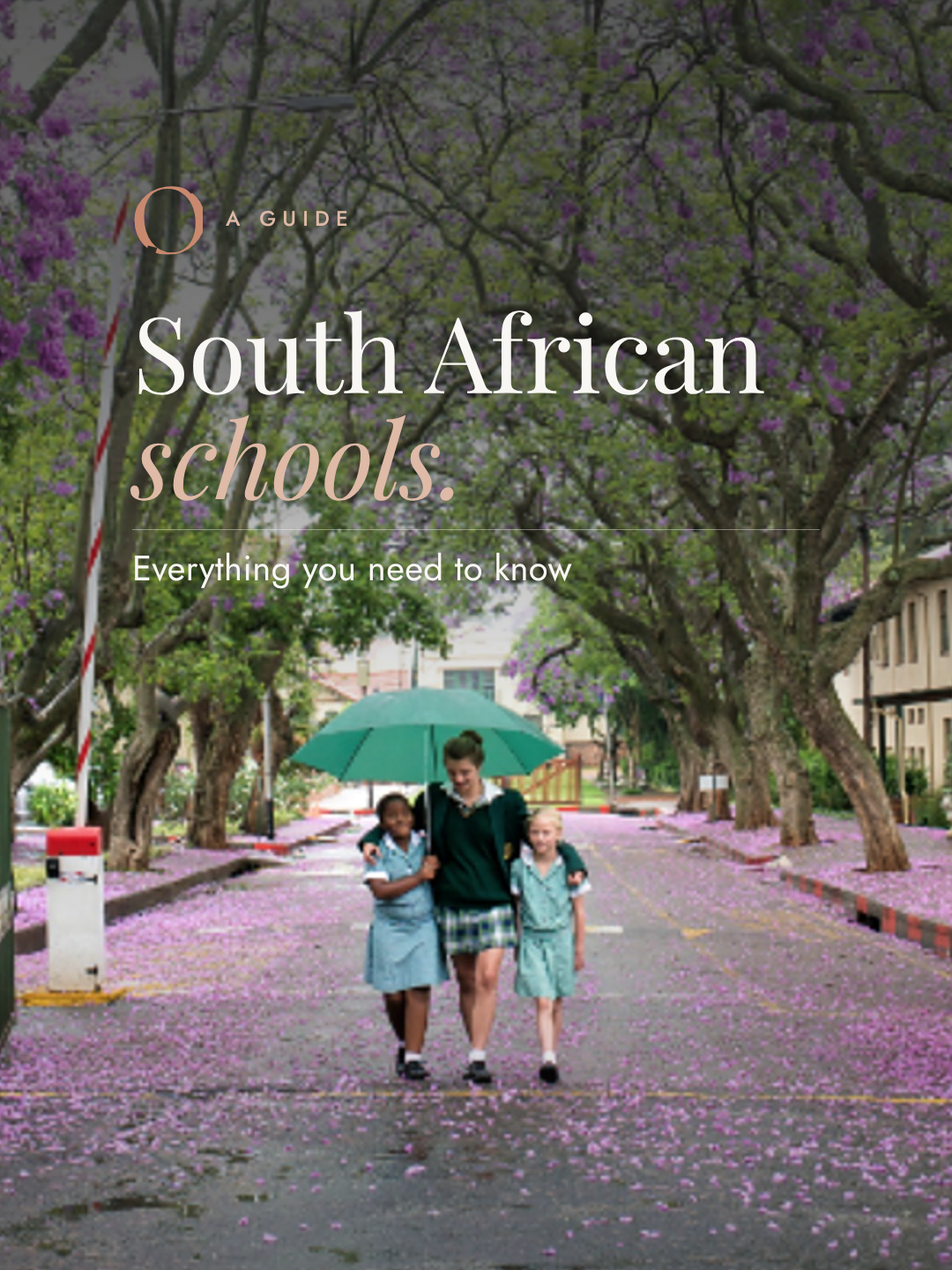
You'll also need to understand the South African school calendar, how children are placed into grades, what school fees look like and how early you need to apply.
I've lived in Johannesburg since 2010 and have helped many families navigate the move. Here is what I would consider before choosing a school for your children.
Updated 21 October 2026 | By Hannah Pirnie
Original Post: Feb 2017
1. Should you choose an international or a local South African school?
The best school for your family depends on how long you plan to stay in Johannesburg, your children's ages and where you expect them to go next.
An international school may be the better choice if you have a fixed-term posting and want your children to continue within a familiar international curriculum. A local South African school may be a better fit if your stay is open-ended and you want your children to experience South African life, culture and friendships.
There is no single right answer, and families can have very different experiences with both options.
The benefits of a local South African school
Local independent schools can offer a wonderful education alongside a real connection to South Africa. Your children have the opportunity to make South African friends, take part in local traditions and become part of a community that isn't constantly changing as international families move on.
Kate, a American mother who moved from London with children aged one and four, initially chose a local independent girls' school. She loved the experience and described it as a school raising "global children", rather than simply South African children.
When her family realised they would move on again, they switched to the French Lycée in Johannesburg. Its curriculum follows the same system as other French Lycées, making it easier to maintain continuity when moving between countries.
Her advice was simple: think about the end goal first, including the university system your children may eventually enter, and work backwards from there.
The benefits of an international school

International schools can offer continuity when families move between countries. Depending on the school, children may follow an American, British, French, German or International Baccalaureate (IB) pathway.
This can be particularly useful if your employer has a defined relocation period or your children are approaching important examination years.
However, international schools can have a higher turnover of families, and the fees can be considerably more expensive than those of many local independent schools.
What about friendships and school culture?
Many British families find that traditional South African independent schools feel familiar, with school uniforms, houses, assemblies, chapel at some schools, sport and an emphasis on manners and service.
Katrin, who moved from the UK with three daughters, chose a local girls' school rather than an international school and says she would make the same decision again.
The important thing is to look beyond the school prospectus. Visit if you can, talk to other parents and think about the environment in which your children will feel comfortable.
2. What curriculum do South African schools follow?
South African schools offer several educational pathways, so choosing a local school does not necessarily mean giving up international qualifications.
Most local independent schools write the matric, the National Senior Certificate, through the Independent Examinations Board (IEB). Government schools write the state version of the same certificate.
Other options include the International Baccalaureate, Cambridge qualifications and international school-leaving certificates.
Examples of different pathways in Johannesburg include:
Redhill School: Offers the IEB pathway and the IB Diploma Programme.
Deutsche Internationale Schule Johannesburg: Offers South African matric alongside the German International Abitur pathway.
St John's College: Offers a Cambridge A-level year after matric.
These are examples rather than a complete list, and the qualifications available can vary by year and programme.
Sine Thieme of Joburg Expat, whose children attended local schools, found that American universities accepted the South African qualifications her children obtained.
If your children are likely to apply to universities in the UK, US, Europe or elsewhere, check the entry requirements for their intended destinations before choosing a curriculum. University requirements vary, and you should confirm directly with the institutions your children may apply to.
3. How much do schools in Johannesburg cost?
School fees vary considerably depending on the school, curriculum, grade and additional services.
Based on published school fee schedules reviewed on 9 July 2026, local independent schools in and around Johannesburg's northern suburbs charged approximately:
| School | Primary (2026) | Senior (2026) |
|---|---|---|
| Local independent schools | R139,000 to R188,000 (Grade 4) | R180,000 to R233,000 (Grade 12) |
| American International School of Johannesburg | R478,800 to R643,400 depending on grade (2026 to 2027) | |
| Lycée Jules Verne | R125,806 (primary, 2026 to 2027) | R154,178 (high school, 2026 to 2027) |
| Deutsche Internationale Schule Johannesburg | R105,240 (Grades 1 to 4) | R118,260 (Grades 10 to 12) |
Annual tuition from each school's own fee schedule, read on 9 July 2026.
These figures are indicative, not a quote for any particular school. The American school's range reflects tuition across different grades, rather than a direct comparison of Grade 4 and Grade 12 fees.
International schools are not all priced at the same level. For example, the 2026 fee schedules reviewed for the German school ranged from R105,240 to R118,260, while the French Lycée's 2026–2027 fees ranged from R125,806 to R154,178.
What additional school costs should you budget for?
Tuition is only part of the overall cost of education in Johannesburg.
Ask each school about:
Application, enrolment and capital fees.
Uniforms, books and stationery.
School transport or bus services.
Lunches and aftercare.
Sport, music, trips and extracurricular activities.
Boarding, where applicable.
Annual increases and payment arrangements.
One-off fees can make a significant difference to your first-year budget. The schedules reviewed in July 2026 included enrolment fees ranging from a few thousand rand to more than R40,000 at local independent schools. The American International School of Johannesburg listed a capital fee of R185,200 for a new student.
If your employer is paying for education, ask for written confirmation of exactly what the relocation package covers. Some packages cover tuition but not enrolment fees, transport or extracurricular activities.
Always check the latest fee schedule directly with the school before making a financial commitment.
4. How does the South African school year work?
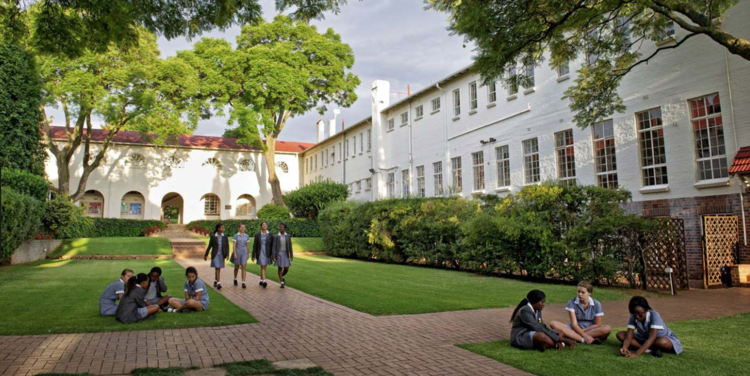
St Marys Waverly
The South African school year generally runs from January to December, with the main summer holiday over Christmas and New Year.
This is an important difference for families moving from the UK or other Northern Hemisphere countries, where the academic year often starts in August or September.
The American International School of Johannesburg follows an August-to-June calendar, while the French Lycée follows a September-to-July calendar.
What does this mean when relocating?
If your children arrive from a September-start school system, they may need to bridge the gap between academic years. Depending on their age, previous school and intended destination, you may need to plan for a transition period.
Most local independent schools run three terms, although some operate four. Exact term dates vary by school.
Before confirming your relocation dates, check:
When the school year starts and finishes.
Whether your children can join partway through the year.
How the school will assess their previous education.
Whether their current grade will transfer directly.
How the dates fit with your employer's relocation arrangements and home-country holidays.
Do not assume that a child will automatically move into the next grade simply because they have completed it overseas. Schools will consider their age, previous schooling and their own placement policies.
In our New in Town podcast, Sine Thieme of Joburg Expat explained that her children had been in gifted programmes in the US, but their Johannesburg school would not move them up a grade.
The earlier you discuss placement with your prospective school, the fewer surprises you are likely to encounter.
5. At what age do children start school in South Africa?
In the South African school system, children typically enter Grade 1 in the year they turn seven, following Grade R, the reception year.
This can be later than families from the UK expect, and the early years of school can look quite different from what children have experienced elsewhere.
Grade R places a strong emphasis on learning through play and developing foundational skills. A child arriving from a system that introduces formal reading and writing earlier may find some areas familiar, while a child leaving South Africa may need additional support to adjust to a more academic early-years programme.
Can my child start Grade 1 early?
Placement depends on the applicable rules and the individual school's admissions policy.
The Department of Basic Education's guidance allows for certain early admissions to Grade 1 in public schools, subject to age cut-offs. Independent schools may have their own policies, so ask the admissions team how it would assess your child's age and previous schooling.
Do not rely on age alone when planning a move. Get the proposed grade confirmed by the school in writing.
Will my child fall behind when we move again?
This is worth thinking about, particularly if your children are under eight.
Sine's daughter arrived in a Johannesburg school already reading Harry Potter. Her school supported her by giving her a separate reading group and access to the older children's library.
Katrin's youngest daughter had a different experience when the family moved from South Africa to Dubai. She needed about a year of additional support in reading, writing and maths.
Katrin's advice was to arrange support during school hours where possible, rather than adding lessons at the end of an already long school day. Some families also arrange tutoring in the final months before an international move to help children prepare for the next curriculum.
Every child is different, so these experiences are examples rather than a prediction of what will happen to your child.
What should you look for in a preschool?
When visiting a preschool, look at how children are learning, not just what is displayed on the walls.
Are the children encouraged to ask questions, explore and create their own work? Or does every child produce an identical picture using the same template?
The atmosphere, teacher-child interactions and opportunities for play can tell you a great deal about how a preschool approaches early learning.
6. How important is the school run when choosing where to live?
Your school choice and your choice of suburb should be made together. Johannesburg is a large, spread-out city, and the daily school run can have a significant impact on family life.
Morning traffic starts early, often before 6am, and can remain busy until around 10am. The evening commute brings similar challenges.
A school that looks manageable on a map may involve a much longer journey during peak traffic. Depending on where you live and where the school is located, the wrong combination can mean spending an hour or more travelling each way.
When comparing schools, think about:
The actual drive during school-run hours.
Whether the route is against or with the main flow of traffic.
Whether siblings can attend the same school or nearby schools.
Whether the school operates a bus service.
How sport, after-school activities and late finishes affect transport.
How the commute will work for both parents.
Where are Johannesburg's international schools located?
Some of the main international school options are spread across different parts of Johannesburg and its surrounding areas:
American International School of Johannesburg: Knopjeslaagte, Midrand, near Kyalami.
Lycée Français Jules Verne: Morningside.
Deutsche Internationale Schule Johannesburg: Parktown, on Sans Souci Road.
British International College: Bryanston Drive, Bryanston.
Several schools offer paid transport services, although routes and availability should be checked directly.
The best arrangement is often one where the children can walk, use school transport or travel on a route that avoids the worst of the traffic.
For more information on choosing an area to live, read my guide: Where do expat families actually live in Johannesburg?
7. How early should you apply to Johannesburg schools?
Apply as early as possible, particularly if you are considering a popular independent school.
The main entry points at many independent schools are Grade 0 (year they turn 6yr) and Grade 8 (year they turn 14yr).
Places in other grades may only become available when a family leaves, and admissions teams often work through waiting lists.
For example, in July 2026, St David's Marist Inanda was accepting applications for 2028, while St John's College had already closed Grade 8 applications for 2027.
Application dates and availability differ from school to school. Some schools accept applications well in advance, while others limit how far ahead families can apply.
The 2026 admissions information reviewed for this guide included:
St Stithians College: Its first-round Grade 8 application deadline was 31 January of the year before entry.
Lycée Français Jules Verne: The application deadline for September 2026 was 15 May 2026.
American International School of Johannesburg: Applications could not be submitted more than 18 months ahead, and the school described its waiting lists as relatively short compared with some local schools.
These are historical examples, not current deadlines. Always check the school's latest admissions information.
What can you do to improve your chances?
Start early. Research schools as soon as your relocation becomes likely, even if you do not yet have a confirmed arrival date.
Explain your circumstances. Tell the admissions team when you expect to arrive, how long you plan to stay and which grade your child needs.
Keep in touch. Follow up politely after submitting your application and ask whether any additional information is required.
Be clear about your preferences. If the school is your first choice, say so.
Ask about employer relationships. If your employer has an established relationship with the school, ask whether it can assist with the admissions enquiry.
Have alternatives. A second or third option can make the relocation process less stressful if your first choice has no space.
If you are applying from overseas, ask each school what documents it needs and whether interviews or assessments can be completed remotely. For more advice and support book in a Discovery Session with Hannah to help connect you and your children into the right school.
8. What is different about attending a local South African school?
One of the things many expat families enjoy about local South African schools is the emphasis on developing the whole child.
Alongside academics, schools may place considerable importance on sport, music, cultural activities, manners, leadership and community service.
Sport can be a particularly important part of school life. Teachers often play a hands-on role in coaching, fixtures and extracurricular activities, and schools may organise transport for matches and events.
However, provision varies. Some traditional schools still divide certain sports by gender, and the opportunities available can differ between schools. If your child is serious about a particular sport, check that it is offered at the appropriate level.
Will my children need to learn another language?
Depending on the school, children may study Afrikaans, isiZulu or another language as part of their education.
They will also encounter South African history and cultural perspectives that may be different from those taught in their previous school.
As a British parent, I found it fascinating to learn more about South African history, including the Boer War, through the experiences of my children.
Sine also found that her son's isiZulu was something he was asked about during university interviews.
Some schools have a religious foundation or affiliation. St John's College, for example, has Anglican roots, while Brescia House has a Catholic foundation. If faith is important to your family, ask how it is reflected in school life and admissions.
Boarding is another consideration at some traditional South African schools, with some children starting at around 14 or 15. For certain families, it is an established and positive part of the school experience, but it will not suit everyone.
9. What should you consider if you plan to leave South Africa again?
It is just as important to plan your children's next move as it is to plan their arrival in Johannesburg.
The January-to-December school year can create a mismatch when returning to the UK, US or another country. Your children may be partway through a grade when the next school year starts elsewhere.
Different education systems may also have specific requirements for subjects, languages and qualifications.
Sine's son needed two years of language study to meet the requirements of the US system. His fluent German and his isiZulu did not meet the requirement in the way the family expected, so he had to complete an additional German course online.
Her family also chose to stay until the end of the South African school year so the children could receive their school prizes, which were an important part of the school's traditions. When they returned to the US, the children entered a different grade placement, but the family felt the transition worked out.
The lesson is not to avoid a South African education. It is to understand how your chosen school system will fit with your longer-term plans.
If a future move is likely, speak to your current school and the intended destination school well in advance. Ask about subject requirements, grade placement, examination dates and any documentation you will need.
10. How do you choose the right school for your family?
There is no single best school in Johannesburg for every expat family. The right choice depends on your children's ages, personalities, educational needs, your budget, your likely length of stay and where you plan to live.
Before making a shortlist, work through these questions:
How long are we likely to stay in South Africa?
Where might we move next?
Which university systems do we want to keep open?
What is our annual school-fee budget, including additional costs?
Which curriculum best suits our children?
What grade will each child enter, and has the school confirmed this?
How will the daily school run work?
What are the admissions deadlines?
What support might our children need when arriving or leaving?
Does the school's culture and approach feel right for our family?
If your child has an identified learning need, or you suspect they may need additional support, consider speaking to an educational psychologist before finalising your shortlist. This can help you understand what to look for when speaking with prospective schools.
For visa and study-permit questions, seek advice from a qualified immigration specialist. Schools' fees, admissions rules and dates change, so confirm important details directly with each school.
Need help choosing a school in Johannesburg?
Schools are where I start with almost every family I help relocate to Johannesburg. Once we understand where your children will go to school, we can make much better decisions about which suburb to live in, how the commute will work and what kind of home will suit your family.
If you are moving to Johannesburg and are not sure where to start, my Discovery Session is a private video call focused on your family's relocation questions.
Together, we look at your children's ages, your relocation dates, where you may move next and the practicalities of the school run. We then build a shortlist of three or four schools for you to investigate further.
After the session, you receive four personalised documents:
A summary of our conversation and recommendations.
A school-visit crib sheet with questions to ask.
A research sheet for each shortlisted school.
A dated application plan to help you stay on track.
The Discovery Session costs US$297. If you subsequently choose my Global Executive Concierge service, the full fee is credited towards it.
You can also listen to our conversation about schools in Johannesburg on the New in Town podcast, featuring Sine Thieme of Joburg Expat.
Listen to the podcast: Schools in Johannesburg with Sine Thieme
Moving countries is a big enough adventure without trying to work out the school system on your own. Start with your family's bigger picture, ask plenty of questions and remember that choosing a school is also about finding the right community for your children.
Best Johannesburg schools by area
A directory to start your research, grouped by area.
Last updated October 2026: curricula, grades and affiliations change, so confirm the details with each school.
Midrand, Waterfall, Kyalami and Centurion
American International School of Johannesburg (AISJ): Knopjeslaagte, international (American and IB), co-ed, Pre-K to Grade 12, day and boarding
Reddam House Waterfall: Waterfall, private (IEB), co-ed, from age one to Grade 12
Kyalami Prep: private, co-ed, 18 months to 13
Beaulieu College: private, co-ed, three to 18
Pinnacle College: private, co-ed, two to 18, day and boarding
Cornwall Hill: private, co-ed, three to 18, day and boarding
Fourways, Dainfern and Steyn City
Dainfern College: Dainfern, private (IEB), co-ed, Grade 0000 to Grade 12, Christian
Steyn City School: Steyn City, private (IEB), co-ed, Grade 000 to Grade 12, day only
Crawford International Fourways: Craigavon, private, co-ed, Grade 0000 to Grade 7 (high school at Crawford Lonehill)
HeronBridge College: Nietgedacht, private (IEB), co-ed, age three to Grade 12, Christian
Fourways High School: government, co-ed, Grade 8 to Grade 12
Mi Kinder Educational Centre: preschool
French Pre School: preschool
Lonehill
Crawford International Lonehill: private, co-ed, pre-primary to Grade 12
Lonehill Academy: co-ed, Cambridge, four to 19
Bryanston
St Stithians College: Lyme Park, private (IEB), boys' and girls' schools on one campus, Grade RRR to Grade 12, Methodist
Brescia House School: private (IEB), girls, Grade 000 to Grade 12, Catholic
British International College: Bryanston Drive, international (Cambridge, Junior High to A Level), co-ed; its prep school is in Northriding
Michael Mount Waldorf: private, co-ed, four months to 18
Sandton, Morningside, Inanda and Sunninghill
Crawford International Sandton: Benmore Gardens, private (IEB), co-ed, Grade 0000 to Grade 12
Redhill School: Morningside, private (IEB or IB Diploma), co-ed, KG1 to Grade 12
Lycée Jules Verne: Morningside, international (French, with an American section), co-ed, age two to 18
St David's Marist Inanda: Inanda, private (IEB), boys, Grade 000 to Grade 12, boarding in the College, Catholic
St Peter's Schools: Sunninghill, private (IEB), Grade 000 to Grade 12, separate boys' and girls' prep schools and a co-ed College, Anglican
The Willows: Montessori, 18 months to six
Grayston Prep: private, co-ed, five to 13
Rivonia Primary: five to 13
Melrose and Waverley
St Mary's School, Waverley: private (IEB), girls, Grade 000 to Grade 12, day and boarding, Anglican
Kingsmead College: Melrose, private (IEB), girls, Grade 000 to Grade 12, Anglican
Future Nations: private, project and digital learning, 18 months to 18
Houghton, Parktown, Westcliff and the Parks
St John's College: Houghton, private (IEB, with a co-ed Cambridge A-level Sixth Form), boys from pre-prep to Grade 12, day and boarding, Anglican
Roedean School: Parktown, private (IEB), girls, Grade 0 to Grade 12, day and boarding, Anglican
Deutsche Internationale Schule Johannesburg (DSJ): Parktown, international (IEB and German International Abitur), co-ed, from age one to Grade 12
St Katharine's: Parktown, private, girls' prep school
The Ridge: Westcliff, private, boys' prep school
Pridwin: private, boys, five to 13
Auckland Park Prep: private, girls, five to 13
King Edward's: government, boys, five to 18
Parktown Girls School: government, girls, 13 to 18
Parkview Primary: government, co-ed, five to 13
Hyde Park: government, co-ed, 13 to 18
Sacred Heart College: co-ed, three to 18, Catholic
Kairos: co-ed, five to 13, Waldorf-inspired
Small World Playschool and Pre School: co-ed, one to six
BlueBird: co-ed, 18 months to five
Bedfordview
Reddam House Bedfordview: private (IEB), co-ed, early learning to Grade 12
Crawford Italia Preparatory: private, co-ed
Holy Rosary School: private, girls, three to 18, Catholic
Saheti School: private, co-ed, three to 18, Greek Orthodox
St Andrew's School: private, girls, five to 18
St Benedict's Catholic School: private, boys, five to 18, Catholic
Other faith schools
King David: Jewish
De La Salle Holy Cross College: co-ed, Catholic
Nur-ul-Islam: Lenasia, Islamic
Remedial and special needs schools
Further reading
Jozi Kids: school listings for the northern suburbs
ISASA: the Independent Schools Association of Southern Africa
Joburg Expat: Sine Thieme on the South African education system
Frequently asked questions about schools in Johannesburg
-
Not necessarily. International schools can provide continuity for families moving between countries, while local South African schools can offer a strong education and deeper integration into local life. The right choice depends on your children's needs, your budget and your future plans.
-
The South African school year generally runs from January to December, with the main summer holiday over December and January. Some international schools in Johannesburg follow different calendars, so check the dates for your chosen school.
-
Children typically enter Grade 1 in the year they turn seven, following Grade R. Admissions and early-entry rules vary, so confirm your child's placement directly with the school.
-
Fees vary considerably. Published 2026 schedules reviewed for this guide showed local independent schools in and around the northern suburbs charging approximately R139,000 to R188,000 annually in Grade 4 and R180,000 to R233,000 in Grade 12. Some international schools charge considerably more, and additional fees may apply.
-
Apply as early as possible. Popular independent schools may fill key entry grades well in advance, while other schools accept applications within a defined window. Check each school's current admissions dates and availability.
-
Yes, but grade placement is not always a direct transfer. Schools will consider the child's age, previous schooling and their own admissions policies. Discuss your child's records and proposed entry grade with the admissions team before moving.
-
St John's College offers Cambridge A Levels in it Sixth Form, and Redhill offers the IB Diploma alongside the matric. British International College and Lonehill Academy teach Cambridge qualifications, the Deutsche Internationale Schule Johannesburg (German International School) offers the German International Abitur alongside the matric, and Lycée Jules Verne offers the French Baccalaureate. Check the current curriculum and university-entry requirements with each school.
-
It is usually sensible to consider both together. Johannesburg is spread out, and peak-hour traffic can make the school run a significant part of daily family life. Understanding where your children will study helps you choose a suitable area to live.
Please note: School fees, application dates, curricula and admissions requirements can change each year. The information above is intended as a starting point for research, not a substitute for confirmation from the school.
Setting Up Mobile Phones and Internet in South Africa
(Please note we do not have any paid affiliation or sponsorship deals with any of the accounts mentioned below - all comments are made from our personal experiences)
There are three main service providers, which all use the same telecommunications infrastructure (a legacy of a centralised communication network), and provide essentially the same kinds of contract options, but with some pros and cons:
Cell C: Affordable contracts but limited signal in some areas
MTN: There have been complaints of poor customer service in the past but MTN undoubtedly has the most expansive service network on the continent so with an MTN contract you’ll often get signal in area when others don't, which can be helpful if you intend on travelling to off the grid places.
Vodacom: The most established and accessible service provider (apart from in Bryanston area), you’ll find a branch in most shopping malls, and although there are still complaints around customer service, steps have been taken to improve this.
Similarly to setting up a bank account, to set up a cellphone contract you will need to provide proof of identity and proof of address, to comply with RICA, the Regulation of Interception of Communications and Provision of Communication-Related Information Act, which makes it compulsory for everyone in South Africa to register their cellphone number.
This can be a pain, but to reduce crime, needing to provide a permanent address has recently been introduced to make cheap phones and pay-as-you-go contracts more difficult for criminals to buy on the fly.
You can set up a contract at any franchise store around the country, provided you have the right documentation, but be aware that these stores can be busy, especially on weekends, and are often understaffed.
With rare exceptions, everyone in South Africa will have a mobile phone, but not everyone will have a smartphone, so keep in mind that communicating with some people will be largely via text, calls or Whatsapp.
Be aware that to get onto a contract you will need to have a work permit that is valid for the full 24 month period. But once on a contract it is cheaper than pay as you go for data and calls.
The best way to get set up is to pick up a SIM card at the airport, (you then don't need to have proof of residence). One company that offers this service is: B4 I Travel https://b4i.travel/za/.
Internet
If you want to get connected straight away, the fastest way to do this is to purchase a router through Vodacom and use their pay as you go service, this will enable you to get wi fi until you or your landlord set up the fibre or connection for you.
For more info click here: http://www.vodacom.co.za/vodacom/services/home-internet
Tip: Where possible try to get the wifi included in your rent, since often the contracts are 24 months, and hard to disconnect (particularly Telkom)
Telkom is the national telecommunications provider, and is a company you will often hear South Africans complain about due to poor customer services (although this has also been challenged to improve with recent industry competition).
Fixed Phone Line
Telkom provides fixed line voice and ADSL services, but they only provide the line. Once you have secured a Telkom line (which can sometimes be a lengthy process), you’ll need to take out an additional service provider contract, although they will manage the line for you.
If you are renting an apartment or house that has been lived in before you’ll often find that there is an existing Telkom line that just needs to be reactivated. In order to set up a Telkom line you will need to set up an appointment for a technician to activate/install the line.
While inconvenient, you will need to set aside a day to be at home, or arrange for someone to be there, as the technicians work on a rotation basis and won’t give you a definite time of arrival. They will also be leaving and coming back in order to check the line and how it corresponds with the central hub for your suburb/area so expect this to take at least an hour or two, depending on whether there is a problem or not.
You will be billed separately for the Telkom and the ISP accounts. You will receive all of the invoices via email.
The easiest way to pay your Telkom is by setting up a private beneficiary on your online banking profile and pay via EFT, otherwise you can pay in person at various physical locations, like Checkers and Pick n Pay stores, Telkom stores or at the Post Office. Easy Pay is another online payment option: https://new.easypay.co.za/
There is the option to set up a debit order for payment to your ISP, which you can set up through your online client profile (this is the case with Afrihost).
You will need to buy your own modem, although you can order this through your service provider for an extra fee. You will also need to do the setup yourself but if the Telkom line is working correctly this isn’t difficult at all.
Some options include:
Some Reviews
https://mybroadband.co.za/news/adsl/174116-best-and-worst-adsl-isps-in-south-africa-3.html
NOTE: When dealing with Telkom, especially when logging a fault (when your internet doesn’t work), always get a reference number.
Fibre
In many areas of Joburg there are various companies setting up fibre-optic lines, which are contracted by suburb.
Check with your apartment complex manager or residents association to find out which fibre optic service providers are in your area, and to find out specifics about contracts. In the case of an apartment complex, there will be a central fibre connection point that all apartments will connect to.
The difference with fibre is that it is independent of Telkom infrastructure, so you can deal with the service provider directly instead of having to go through a third-party line provider.
Some Options:
WebAfrica
Fibrehood
Vumatel
Vox Telecom
Cool Ideas
Vodacom
TELEVISION
To own a television in South Africa, you will need to pay an annual TV licence fee, which gives you access to all of the free national channels: SABC 1, 2 and 3 and eTV.
Read more: http://www.tvlic.co.za/tvlic/index.php?lang=en
To be able to watch a more diverse variety of television shows you will need to subscribe to DSTV. Premium access currently costs R759 a month, with various other packages available depending on the channels you want to watch. Note that there will be an additional cost for the DSTV decoder.
Read more: http://www.dstv.com/topic/compare-packages-20150713?pos4_GetDstv_ComparePackages
While many South Africans will have a DSTV subscription, online subscriptions are also becoming more popular, like Netflix and Showman. Particularly when linked to your own VPN service.
https://www.netflix.com/za/
https://www.showmax.com/eng/welcome/za
Voice Line
It’s not as common for households to have a fixed voice line anymore as everyone is contacted via mobile phone, but in the case that you want one for international calls, you will just need to follow the same contract setup process with Telkom as you would for an ADSL line- you’ll just be paying extra for voice line rental, and for calls.

How to Open a Bank Account in South Africa
Getting all of your finances sorted can be stressful when you’ve just moved to a new country, and in South Africa, there are a number of bureaucratic processes that you’ll need to go through to open a bank account which can be potentially frustrating and time consuming.
But no need to worry, we’ve got all the information you need, which will save you some time and hassle!
MAKE SURE YOU HAVE THE RIGHT SUPPORTING DOCUMENTATION
To initiate any kind of administrative process with an official institution in South Africa you will always need to provide proof of residence, whether you are a local or a foreigner.
This is because of the implementation of FICA, or the Financial Intelligence Centre Act, which requires everyone to provide proof of residence as part of reducing financial crime.
Another document you will always need to provide is proof of identification, which for South Africans is the green ID book or newly implemented ID card. As an expat, use your passport.
In some instances it is perfectly acceptable to provide a driver's license as proof of identification, for example, when checking in at the airport, but this isn’t the case when dealing with a bank.
As a foreigner, this means you will need to provide your passport and proof of residence when conducting any kind of transaction. Proof of residence can be a copy of a lease (entire lease or a letter from the guest house / hotel you are staying at) or a utilities bill sent to your address (which you probably won’t have yet).
Sadly many banks will not open a bank account for you unless you have a work permit. Also joint bank accounts also come with large amount of paperwork, and often require you explaining exactly what you expect from a joint account. It took me a good 6 months to get full access to my husbands account (which was meant to be a joint account) so I could pay for bills etc.
Documents Needed
Proof of ID and permanent visa/work permit
Proof of residence
Starting deposit (can help with monthly fees)
3 months Statements from existing bank (not always required)
Letter from employer confirming contract and monthly salary
For Spouses…
When your family signs up for a bank account, you will be able to get full privileges on the account, but you need to make sure it is set up for you to use online and on your mobile phone App. This way, you can manage accounts, pay for school fees, make your own EFTs, see balances, etc.
When going to the bank, be sure you have your original passport with visa and original proof of residence, and maybe even marriage certificate if you have one handy! Sometimes getting full access takes a while because you might not have the right documents. But don’t give up! As a Spouse, having access and knowledge of your accounts is important!
CHOOSING A BANK
In South Africa the three most popular banks expats use are:
ABSA (which Barclays has just sold)
Investec
First National Bank (FNB) / RMB - Private bank
You will find most of these banks in any big shopping malls in Johannesburg, and ATM’s (Automatic Teller Machines) can be found in various locations in the city, at shopping malls, strip malls and petrol stations.
TIPS
Banks charge you a fee for holding an account here, they also often have number of additional fee's for services (such as drawing money out of ATMs). So make sure you are fully aware of all the fee's.
When taking out cash - try to choose an ATM within a busy shop and be aware of your surrounding.
FNB App is the most user friendly in our opinion, plus it has a great rewards programme, giving you access to Slow Lounges at the airports amongst other benefits. Their personal banking operation however, isn't as good as Investec, who also operate a good global rewards programme.
Most South Africans use Debit and Credit Cards to manage their transactions, although mobile apps - Zapper and Snap Scan are becoming increasingly popular. Especially at pop up markets and outdoor events. Don't be surprised if you are asked to sign for your purchase in addition to entering your pin.
You will need to learn how to make an EFT (Electronics Fund Transfer) as lots of independent operators and contractors prefer to be paid this way. This can be done through your bank’s online portal or their App on your phone.
Be prepared to receive notifications after every transaction (often both you and your partner will get text messages or email alerts), this is great to pick up on any fraud, not so great for your partner to know how much you just spent shopping.......... ;)
The South African postal service is not 100% reliable at the moment, so rather opt to receive updates via email, although most banking communication is moving towards online communications anyway.
NOTE: Banks are notoriously busy at lunchtime and weekends so if you need to talk to a bank employee face to face, it’s best try and go in the morning during the when it’s inclined to be less busy.
If you have your own local expert - they can assist you with completing all the necessary paperwork for you. If you would like a list of all paperwork and certification process for your chosen bank, then request your own personalised report here.
FOREIGN EXCHANGE
South African banks are very strict about any money coming into and out of the country, so when receiving funds from abroad, it can be easier to use something like PayPal (which is currently only affiliated to First National Bank). You will however, pay a transaction fee and it is a bit of a process to set up the account and to make withdrawals or deposits.
When receiving a PayPal payment or a fund transfer from abroad you will always need to give a reason for the transaction before funds are allocated. There are a variety of options, just choose the most appropriate one. Your bank will charge a fee for any incoming or outgoing transaction so just be sure to check.
Making a FOREX payment can be done online on your online banking profile, but you will need a SWIFT/BIC code when making a foreign payment. You’ll also need to provide your bank’s SWIFT/BIC code when you’re going to be receiving funds into your account (it makes the process a lot quicker).
The private banks are much better set up to receive foreign funds - but still prepare for it to take some time in getting cleared.
You can not exchange Rand into a foreign currency unless you have an airline ticket
For more information for banking click here.