

Is Johannesburg safe for expat families?
Yes, most expat families can build a good life in Johannesburg with sensible security habits. Crime is serious, and the risk changes from one street to the next. Start with a home that has working security, make a few routines second nature and stay alert when you are out. You do not have to live on an estate, and you do not have to let fear decide how much of the city your family gets to enjoy.
First recorded as a New in Town episode, February 2024, you can listen here to the advice CAP provide on how to stay safe and what the crime is really like in Johannesburg.
Updated 18 November 2026 · Hannah Pirnie, raising her British family in Johannesburg since 2010
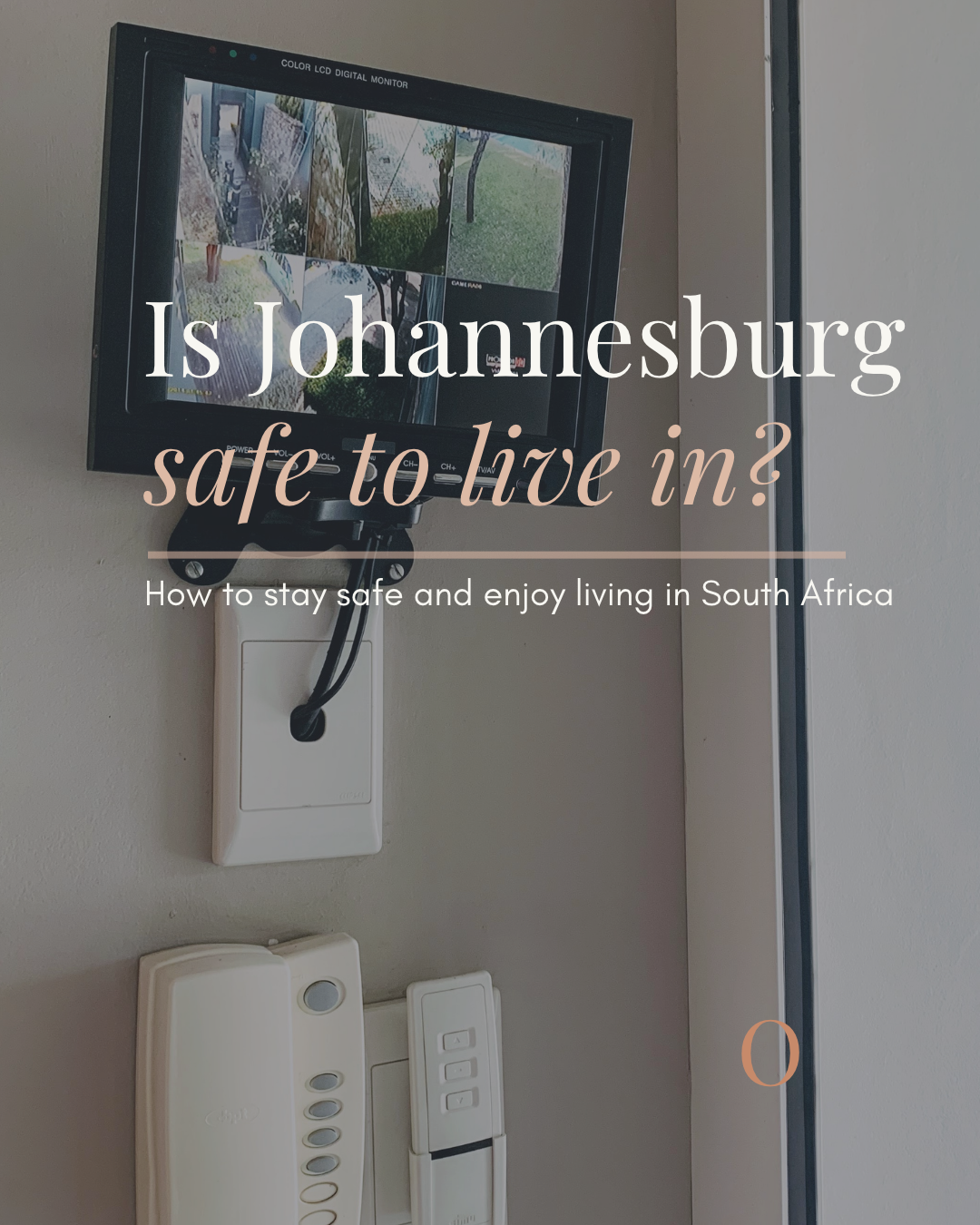
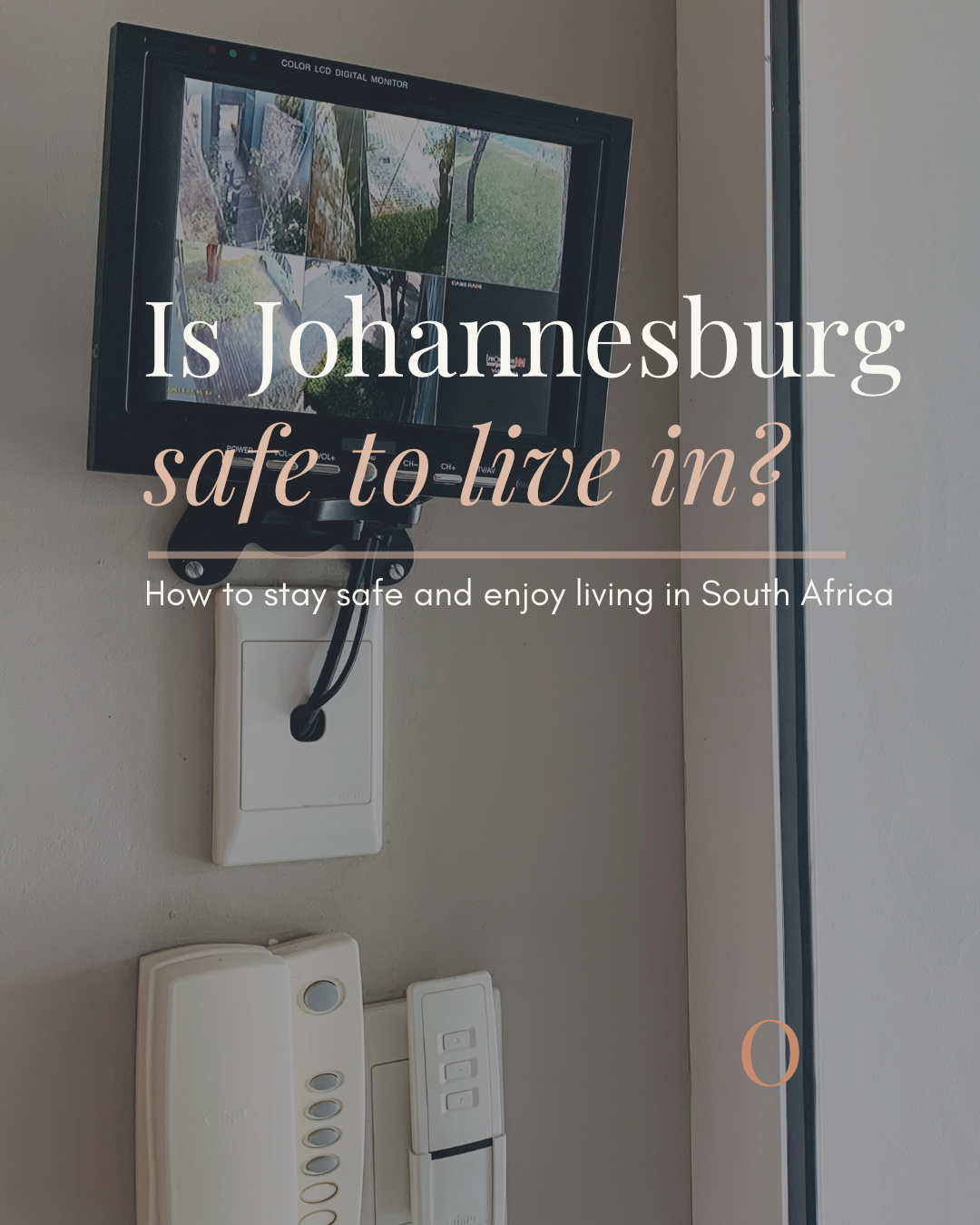
“Am I going to get shot?”
That is the question underneath most of the others. Sarah Passmore and I took it to people who work on this every day: CAP, a non-profit security company working alongside the police in parts of Johannesburg. This page brings together what we discussed, the latest figures available to me and the habits I have learnt since moving here.
How much crime is there, really?
Crime is serious, but the latest police figures show several important categories falling. From April to June 2026, murder was down 5.9%, carjacking 18.2% and house robbery 17.6% compared with the same period in 2025. Gauteng still carries a large share of the national burden: it accounted for 57% of reported carjackings from January to March 2026.
Sources: SAPS first-quarter release, reported by SAnews, 28 August 2026; Parliament's analysis of the fourth quarter of 2025/26, 18 June 2026.
National figures cannot tell you what happens on your street. CAP shared local incident rates with us in February 2024: around 23 to 27 incidents per 1,000 households across the better-off suburbs it discussed, including trespass and theft as well as violent crime. Its best-performing areas were around three incidents, and its highest around 15
CAP's Sean Jammy also described a small, changing group of repeat offenders as responsible for a large share of violent crime in Johannesburg. The figure quoted in the episode was around 300 suspects and 70% of violent crime.
Inequality is part of the backdrop to crime, but it does not make the harm any less real. Understanding the wider picture can help you respond with care and perspective while still taking practical steps to protect your family.
Do we need to live on an estate?
No. An estate can make security feel simpler and give children room to move around within its boundaries. A freestanding home can also work well when its physical security, daily routines and response arrangements are properly set up. The right choice depends on the life you want, as well as your home's actual security plan.
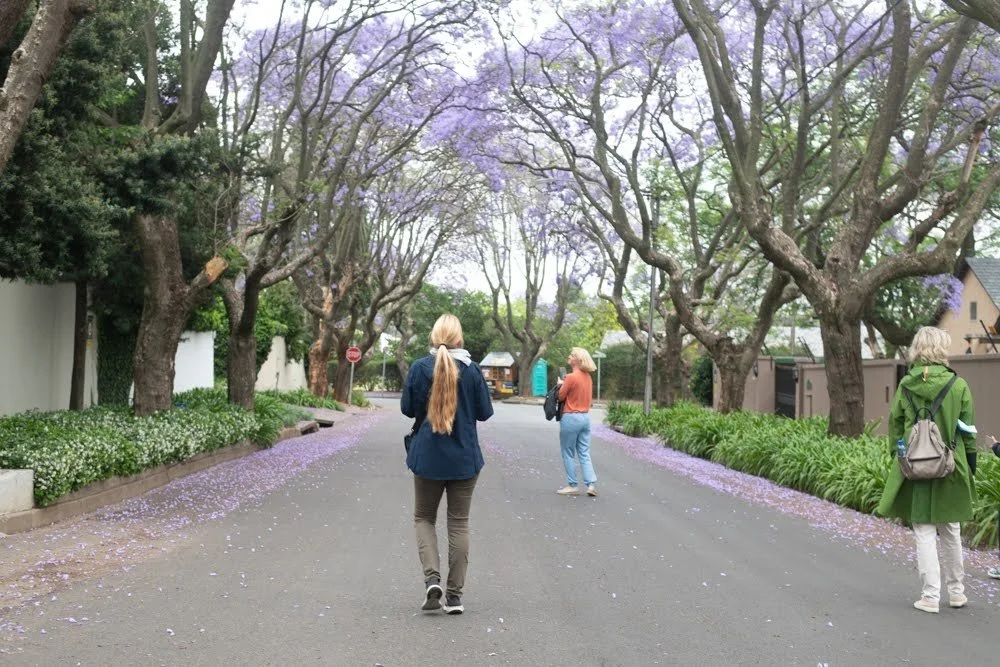
An estate may suit a family that wants managed security and a shared community. A house in the Parks may bring a high street, familiar neighbours and Saturday mornings on 4th Avenue. For the wider neighbourhood decision, read Where do expat families actually live in Johannesburg?.
How do we secure a family home?
Think about three things: the physical setup, the routines and the people who come into your home. Gates, lighting, an electric fence and an alarm matter. So does using and maintaining them consistently. Most security plans have weak points where equipment, routine and access meet.
Arm the alarm when you leave and use the beams at night.
Ask whether an interior security gate can create a secure area around the bedrooms, then use it consistently.
Test panic buttons with your response provider so you know they connect to the control room.
Ask your security provider how best to keep pets safe overnight.
If you have a safe, keep its key somewhere secure and accessible to you.
If you are renting, ask which systems are installed, whether they work and whether the response contract can transfer to you
What about people who work in our home?
Set up a fair, consistent process for checking references and identity before someone starts work. Staff and contractors learn how the household runs, so share the information they need to do their jobs and keep alarm codes and family routines private.
CAP described a domestic-staff vetting service involving police criminal checks and profiling.
Is it safe to drive in Johannesburg?
Driving is part of daily life here. Keep valuables out of sight, put your phone away and lock the car yourself before you leave it. When you get home, pause beside your gate and check that the road is clear before turning in. Plan long trips so you are not driving unfamiliar rural roads late at night.
Car jamming: A jammer can block the signal from your key, leaving the car unlocked even when the remote appears to work. Stand beside the car, lock it and check the doors or the usual lock signal before walking away.
At traffic lights: Slow down as you approach and leave space around your car where possible. “Robot” is the local word for a traffic light.
Vehicle theft: Popular models can attract thieves, but the most-targeted vehicles change over time.
Night driving: Traffic, animals and heavy vehicles can make rural roads demanding after dark. If you are driving to the Cape, consider splitting the trip over two days.
CAP also recommended an anti-hijack course for drivers.
Can we walk, run and get outdoors?
Yes. Choose busy routes, keep your phone out of sight and leave valuable jewellery at home. Those simple choices make it easier to enjoy Johannesburg's parks and trails.
When I first arrived, I walked the dog to the vet, about a mile down the road. My South African friends looked at me as if I had lost my mind. The security professionals I spoke to encouraged people to walk, while staying aware of their surroundings. One practical suggestion was to carry an inexpensive prepaid phone and a spare wallet with a little cash, leaving the phone you care about at home.
The bigger loss would be letting worry keep your family indoors. Get to Delta Park, Emmarentia and the Wilds. Walk the dog. Try a Saturday parkrun. Being outside with other people is part of what makes this city feel like home.
What should we do if something happens?
If someone confronts you, stay calm and hand over what they ask for. Do not argue or chase them. A phone or a car can be replaced. Once you are safe, contact the police and your security response provider.
Save your response provider's control-room number in every family phone. SAPS lists 10111 for emergencies; 112 is also available from a mobile phone.
How do families live with the risk?
They set a few rules and then get on with life. Parkhurst residents I spoke to for New in Town described ordinary habits: do not leave valuables outside, and glance behind you as you drive home at night. Then they carry on.
Street WhatsApp groups can spread rumours, and CAP shared an example of a warning about men at gates that turned out to be installers putting up stickers. Still, neighbours who check on one another and respond quickly are one of the lovely things about living here. CAP mentioned Craighall Park, Glenhazel, Norwood and Parkhurst as communities where neighbours look out for each other.
The aim is to move from frightened to prepared. Learn the risks, make a plan that fits your household and leave room for the life you came here to live.
What this page does not cover
This is a general guide for families, not a security assessment of a particular home or street. It does not rank suburbs or recommend a security company. CAP appears here because Sarah and I recorded the episode with them. Ask which providers cover the streets and homes you are considering. Crime figures reflect reported crime, use specific reporting periods and change with each release.
Talk it through with me
I moved to Johannesburg with my husband's job, for an adventure. He was in the office day two. No local network, no idea which suburb was safe, no sense of who to trust.
A Discovery Session is a 90-minute private video call. Choose safety as the focus and I will help you think through the suburbs on your list, the school run, the kind of home you are considering and the habits your family will need in the first weeks. Afterwards, you receive one written document, such as the Neighbourhood & Housing Guide or your first 90 day Action Plan.
Listen, read and watch
Listen: New in Town: How to Stay Safe in Johannesburg, also on Apple Podcasts.
Read: The episode summary (PDF).
Watch: Staying safe at home, on the road and out and about, a webinar with Sine Thieme of Joburg Expat.
More: What do expat families need to know before moving to Johannesburg?



How do you hire a domestic worker in South Africa, and what should you pay?
Hiring a domestic worker in South Africa makes you an employer from the first day. You pay at least the national minimum wage, R30.23 an hour since 1 March 2026, register them for UIF and COIDA, give them a written contract and a monthly payslip, and agree hours, leave and food before they start. The minimum wage is the legal floor, not a living wage, so a fair employer pays much more.
Most of the advice below comes from a New in Town conversation Sarah Passmore and I recorded with Maggie Mthombeni and Amy Tekié of Izwi Domestic Workers Alliance. Listen to New in Town: Hiring Domestic Staff in South Africa.

Updated 18 November 2026 · Hannah Pirnie, in Johannesburg since 2010
Originally published 27 November 2019
The employment of household staff is common in South Africa by both local and expat families of all races, due to the large social-economic gap pervasive in the country (for cleaning, gardening, child care, etc.). It can be complicated, both morally and practically, and can dramatically improve your lifestyle in some ways. But, at the end of the day, it’s a personal choice for what’s best in your situation.
When I first came to South Africa I was firmly against employing full time household staff but then I found Francina working and living in the home we were moving in to.
My choice changed to hiring someone or whether to make a middle-aged woman unemployed and homeless.
It made my decision easier…
Although she retired shortly after my first child was born!!!
Very wise of her!!
I have been very lucky with the people we have employed. Each has been fantastic and we now have the most wonderful and joyful lady working with us. Nonhlanhla has been a massive blessing to my family, she brings fun and laughter to our house, loves our children, and looks after any guest like royalty.
In truth, I now believe the moral question is not whether you choose to employ or not. Rather, if you do employ someone, how will you do it? In his inspirational The Long Walk to Freedom, Nelson Mandela wrote that:
“A Nation should not be judged by how it treats its highest citizens, but it's lowest ones”.
I firmly believe that you can judge the character of a person and a household by how happy, engaged and fairly paid the domestic worker or nanny is. (Please note that the term “maid” is used often but can be considered derogatory, and the word domestic worker is used instead.)
Some South Africans are amazing employers and are helping in their own homes to rewrite the wrongs of the past. Many South Africans pay for their domestic worker’s children to attend the same private schools their own children go to, others pay for driving licenses, loans to buy property, cars, to put them through apprenticeships… there are 101 ways you can support an individual or family that makes your life a bit better.
Unfortunately here are still some who do still take advantage of people needing work. It is common to hear that employers don't pay a fair wage because they think they can always get someone else at a cheaper daily rate look after their children and homes. There are others who treat their employment as charity, expecting to be thanked, and favours to be returned for their generosity. There are also those who feel let down, betrayed or misunderstood.

At the start of employment, I’ve always asked each person what they would like to do and will offer to pay for training in order for them to upskill (and ultimately let them escape us). Our first nanny took courses in health and safety, food preparation and crafts. Our current nanny (the aforementioned Nonny) decided she would like to be a teacher. Each Saturday morning she attends college, and now has a job as a pre-school teacher.
Having staff in the home is a big cultural difference if you aren’t used to it, but you can approach it the same as any other form of employment or relationship. Keep communication open and regular. Ask yourself if you could do that role, work those hours, and for that pay. I am sure you will hear good and bad stories, but your experience will be uniquely yours.
How do you hire a domestic worker in South Africa, and what should you pay?
The domestic worker industry has come a long way since 1994 at the end of apartheid. This is now a regulated industry that will require complying with the following legislation:
Common Laws of South Africa
Labour Relations Act
Basic Conditions of Employment Act
Sectorial Determination of Domestic Workers
There is a domestic staff workers union who advocates for the industry, but it is rare that you hear of any formal reporting happening by employees or employers at this time, partly out of lack of information (and fear, honestly). But it does happen. Overall, it’s important to establish clear lines of communication and expectations upfront. A language barrier might be something you may need to overcome in some instances, as many domestic workers don’t speak English as their first language (common first languages are Zulu, Tswana, Pedi and Sotho).
What is the minimum wage for a domestic worker in South Africa?
From 1 March 2026, the national minimum wage is R30.23 for each ordinary hour worked. That is roughly R5,895 gross a month before deductions. However most expats will pay between R9,000 and R12,000 per month. Allowances and benefits in kind, including food or accommodation, don’t replace the minimum wage. The OpenUp Living Wage Calculator can help you think through someone’s household needs.
Live-In or Live-Out?
Most domestic workers will travel long distances for their jobs if they are live-out. Consider this in your pay rate or your expectations on hours and over-time work.
Most houses that you will see around the metro areas have domestic quarters on the property. You can choose to have a live-in support, or live-out support in either case. Be sure you see this attached or detached cottage and understand what quality of house you can provide for a domestic worker, if you want someone live-in.
Naturally, these women have lives of their own as well, and many have children. If they do have children, would the children be able to stay living with them, or are the children enrolled in a school across town? If they are living with you, how will the children interact with you and your family? We find it a blessing to have added South African family/siblings to our household, but not everyone is so open. Think about what works for you and your family and be clear about what you expect!
What hours and overtime rules should we agree?
Domestic workers can work up to 45 ordinary hours a week. The daily limit is generally nine hours if they work five days or fewer a week, and eight hours if they work more than five days.
Agree overtime in advance and record it. Overtime is paid at no less than one and a half times the ordinary hourly wage, with limits on how many overtime hours someone can work. Sunday and public-holiday pay depend on whether those days are part of the usual schedule and whether the worker agrees to work the holiday. A shift shorter than four hours must be paid as four hours.
These rules are set out in Sectoral Determination 7. Its older wage figures have been superseded by the current national minimum wage.
How do I find and choose the right person?
Many families start with a recommendation from a neighbour, school parent or the family moving out of their new home. You can also ask in local community groups or speak with an agency.
Interview more than three people. Phone the references. Do proper background checks at the start: done well, they are a kindness, not an insult.
Then run a real three-month probation, and tell the person they are on it. The mistake employers make is knowing it is probation and never saying so. When it does not work out, the person reasonably believes they have been dismissed. Labour law applies from the first day of probation, not from the day the contract is signed.
To employ domestic workers to look after children, make sure you have a more in-depth research and interview process. Many service providers can offer this support to find the right fit.
If the person you’re considering is not a South African citizen, check that they have the right to work here. The Department of Employment and Labour has a guide to work permits and employment rights. For advice about a particular immigration situation, speak with an immigration specialist.
What leave does a domestic worker get?
A domestic worker earns at least three weeks’ paid annual leave for each 12-month cycle. Sick leave and family responsibility leave have separate rules. A worker who meets the service and workweek conditions may qualify for five days of paid family responsibility leave a year for specified family events. The rules are in Sectoral Determination 7.
Parental leave rules changed after a Constitutional Court judgment on 3 October 2025. While Parliament works on new legislation, the Court’s interim order provides at least four consecutive months for a single parent or the only employed parent. If both parents are employed, they share four months and ten days. The order sets out how leave is divided if they cannot agree, and includes a six-week period after birth when the birth parent may not work unless medically cleared. Read the Constitutional Court judgment and get labour advice before responding to a parental-leave request.
Agree annual-leave dates together and plan ahead for December. Your employee may want to travel to see family, but don’t assume that all their leave should be taken then.
What about leave over Christmas and the 13th cheque?
Christmas carries real weight here. For many people it is the one time in the year they go home to see their own children, brothers and sisters. The law lets you negotiate when leave is taken, but where you can, give three weeks over December. With the public holidays, that becomes nearer a month.
The 13th cheque is optional but widely expected. Be clear from the start whether it is part of the salary or a bonus. I would frame it as a bonus tied to a year-end review, so you can reward someone doing a brilliant job and have an honest conversation with someone who is not. Just do not leave it vague.
What about health and HIV?
HIV/AIDS is notoriously prevalent in South Africa, although it is illegal to require someone to reveal their status. However, many professional recruitment services will require domestic workers to have a tuberculosis (TB) screening. In ordinary hiring, you cannot require an HIV test or make a hiring decision based on someone’s HIV status. The Employment Equity Act sets out the protections. Keep health information private and use the same sensible first-aid practices for everyone.
SEE OUR HEALTHCARE BLOG POST FOR FURTHER GUIDANCE ON HIV AND DOMESTIC WORKERS.
You may want to outline expectations about healthcare upfront. There are public hospitals that will provide services, and you should find the one closest to your home in an emergency. It is your choice if you want to support your worker or worker’s family in the case of a health crises. It may be something you want to consider, as we often hear of problems surrounding ongoing medication, tests, doctor visits, emergencies, and the like. Set an agreement about what you will and will not consider when health is a challenge.
Many people collect medication from a clinic every month, for all sorts of reasons. Agree upfront whether that time is paid, comes out of sick leave or is made up. If you pay for a doctor, the medical details are theirs to share, not yours to ask for.
Do I have to register a domestic worker for UIF and COIDA?
Yes, for UIF if they work 24 hours a month or more for you, which covers almost any arrangement beyond one morning a week. UIF is 2% of their wage each month: 1% deducted from their pay and 1% from you. COIDA, the fund that pays out if someone is injured at work, has covered domestic workers since a Constitutional Court ruling in November 2020.
You register for UIF through the Department of Employment and Labour's uFiling site, and for COIDA with the Compensation Fund. Payroll services will run UIF, payslips and leave for a few hundred rand a month if you would rather not.
What should a domestic worker's contract cover?
A written contract is a legal requirement, and it is the foundation for everything else. It means that when someone works an extra hour there is already an agreed rate, so asking them to stay late is not awkward. It is just the arrangement. Put in:
the job, the days and the hours
the wage, the overtime rate and the pay date
leave: three weeks' annual leave for full-time work, sick leave, and five days' family responsibility leave a year
notice: one week in the first six months, four weeks after that
what is provided: food, accommodation, uniform
every deduction, agreed in writing
If you are a couple, both of you sign. Maggie's point on the episode was that when a job ends badly, one partner can say they never signed anything, and the person with the least power in the arrangement is left with no one accountable. Two signatures closes that door.
Then keep a notebook. Days off, sick days and leave taken, written down as they happen. Give a payslip every month that shows leave accrued and taken. Vagueness turns into resentment on both sides over the years.
What do I owe a domestic worker when we leave South Africa?
Ask what is kind, not only what is expected. The most important thing is having registered them for UIF from the start, so they can claim when the job ends. Give proper notice, help them find the next family (the people moving into your house are the obvious place to start) and decide whether you will add a lump sum or a pension contribution.
Ending a job because you are leaving the country is generally treated as dismissal for operational reasons, which carries severance of at least one week's pay for every completed year of service.
Anything you give above that is your choice.
Name every payment in writing: this is salary, this is notice pay, this is severance, this is a gift. Otherwise, years on, an old fridge and a run of school fees get counted against severance, and the goodwill goes with them. Paying school fees for their child is generous. It does not replace severance.
What this page does not cover
This is general information for a new employer, not legal or tax advice. The rules here change, the minimum wage every March, so check the current position before you sign a contract. For a dispute, the CCMA is the route. For a contract you want checked, use Izwi's guide or a labour lawyer.
It also does not tell you who to hire. I will not hand you a list of agencies or names on a public page. Who fits your household depends on your children, your hours and your house.
Talk it through with me
Staff is one part of a long first-month list, alongside schools, transport, banking and finding your feet in a new neighbourhood.
A Discovery Session is a private video call, followed by your own Action Plan.
Need more support - listen to our podcast on employing staff in your home here.








What does it cost to live in Johannesburg as an expat family?
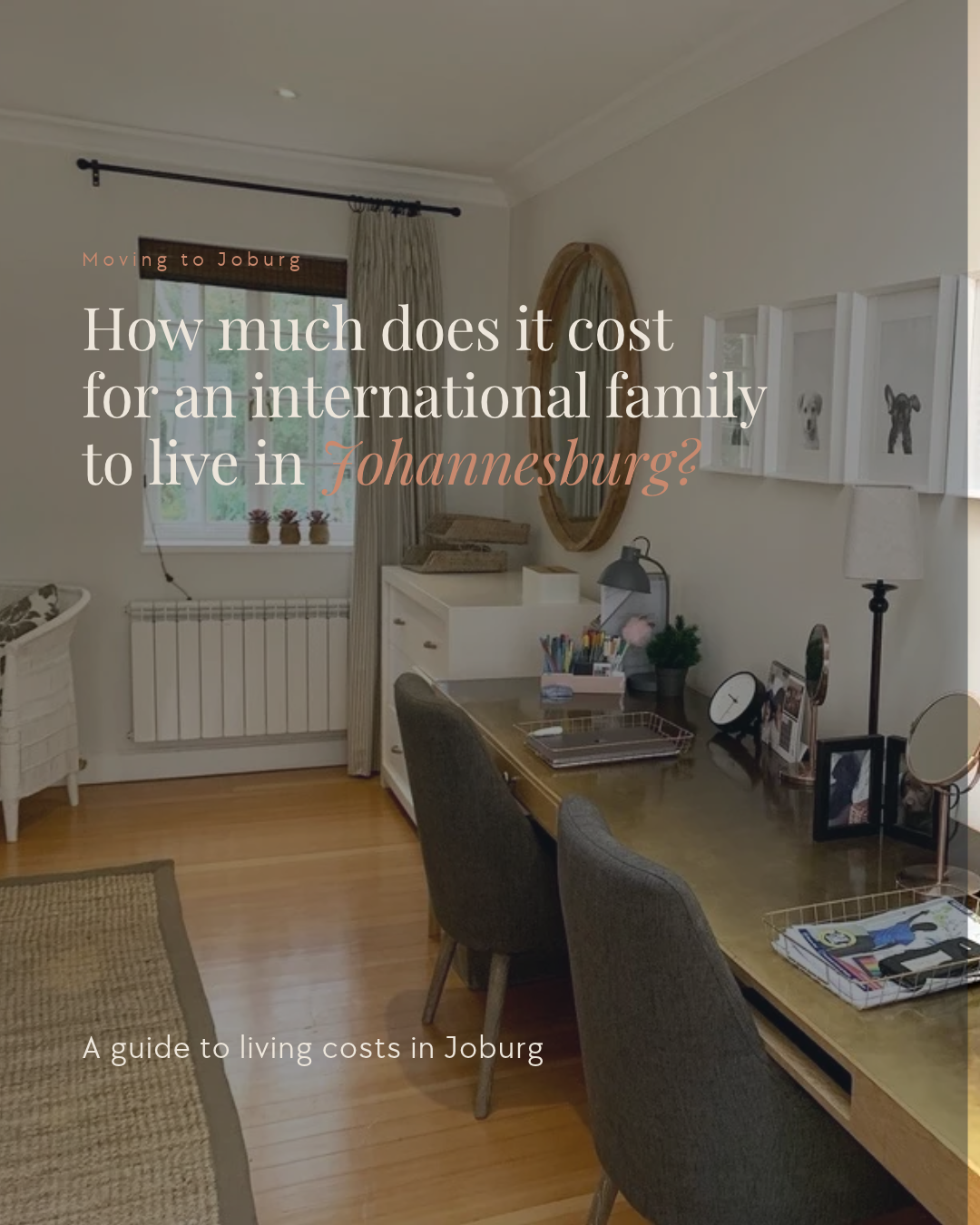
A family of four renting a three-bedroom house in Johannesburg’s northern suburbs, with two children at independent schools, medical aid and full-time domestic help, should budget roughly R55,000 to R120,000 a month for those four costs alone. Utilities, security, cars, food and weekends come on top. Where you land in that range depends largely on your rent and school fees, and both vary by suburb and school.
Updated: 25th November 2026 by Hannah Pirnie, expat in Johannesburg.
Originally published: April 10th 2019
When I first arrived, I couldn’t believe how much it cost to rent a home. We’d just moved from London, where our rent hadn’t gone up in three years. Here, I quickly learnt to expect an annual increase in line with inflation, around 6%.
Cars were another big surprise. South Africa is a long way from everywhere, and I suspect that distance is part of why importing cars and parts costs so much.
Then there’s security: the monthly cost of armed response at home, or the levy if you live in an estate, alongside healthcare. Once you add it all up, living here can cost much the same as living in the UK.
How much is rent for a family home in Johannesburg?
In July 2026, asking rents for three-bedroom family homes in suburbs popular with expat families ranged from about R40,000 to R60,000 a month. Hyde Park, Parktown North and Steyn City had listings at R90,000 or more. Four-bedroom homes started around R55,000 and climbed above R120,000 in Sandhurst, Steyn City and parts of Dainfern.
These are asking prices on live listings, not the final rent agreed between landlord and tenant. The figures cover unfurnished homes and 12-month leases. Furnished homes and short lets usually cost more.
These are asking rents on live listings (Property24, Private Property and agency sites, July 2026), not what tenants finally signed for. Unfurnished, 12-month leases. Furnished homes and short lets sit well above them.
| Suburb | 3-bed house (per month) | 4+ bed house (per month) | Typical setup |
|---|---|---|---|
| Parkhurst | R22,000 to R35,000 | R41,500 (one listing) | Freestanding, private security |
| Craighall Park | R35,000 to R38,000 | R49,950 (two listings) | Freestanding, some complexes |
| Parktown North | R39,000 to R60,000 | R41,500 and R52,000 (two listings) | Freestanding, private security |
| Hyde Park | R23,000 to R68,000 | R47,000 to R76,000 | Complexes and estates |
| Morningside | R15,000 to R40,000 | R28,000 and R30,000 (two listings) | Mostly complexes |
| Bryanston | R30,000 to R42,000 | R35,000 to R65,000 | Estates, complexes, boomed roads |
| Fourways estates | R27,000 to R33,900 | R38,000 to R85,000 | Security estates |
| Dainfern | R35,000 to R55,000 | R42,000 to R100,000 | Security estates |
| Waterfall | R28,800 to R52,200 | R42,500 to R85,000 | Security estates, levies extra |
| Steyn City | R60,000 (one listing) | R79,000 to R165,000 | Security estate |
Two details can change the monthly total. In some estates (such as Dainfern), the tenant pays the levy on top of the rent.
In Waterfall, the listings I tracked showed levies from R1,500 to R7,000 a month. And Rosebank and Melrose Arch are mostly apartment living. If a garden matters to your family, your shortlist may change quickly.
For a feel for daily life in each area, read Where do expat families actually live in Johannesburg?.
How much are school fees in Johannesburg?
Listed 2026/27 tuition at Johannesburg’s independent schools starts at about R85,000 a year per child, and international schools charge up to about R650,000.
That works out to roughly R7,100 to R54,000 a month. Some schools charge more, and most add first-year application, capital or enrolment fees.
Tuition is only part of the school budget. Add uniforms, stationery, trips, clubs and transport. A school run across Winnie Mandela Drive at 7am costs time and fuel too.
I’ve also written about how to choose a school in Johannesburg, including how school locations relate to the suburbs families often consider.
How much does medical aid cost for a family in South Africa?
For two adults and two children, medical aid costs roughly R10,100 to R23,500 a month at 2026 rates. The lower figure is for hospital cover. At the higher end, day-to-day care such as GP visits, specialists and medicines is included through the scheme.
These figures use Discovery Health Medical Scheme’s published contributions for April to December 2026: about R10,100 a month for a family of four on Classic Core and R23,500 on Classic Comprehensive. Discovery’s announced 2027 increases of 7.9% to 8.9% take effect on 1 January 2027, so allow for a higher contribution if you arrive next year.
First, find out what your employer’s package covers. Some corporate assignments include international health insurance, and a family can end up paying for overlapping cover. The right option depends on your family’s needs and circumstances, so speak to an independent medical aid broker before choosing a scheme. We can chat all of these things through in one of our Discovery Calls if you have specific quesitons.
What should we pay a full-time domestic worker in Johannesburg?
The legal minimum wage is R30.23 an hour from 1 March 2026. For a 45-hour week, that is about R5,895 a month. Many expat families I know budget R9,000 to R12,000 a month for full-time help.
You also need to register your employee for UIF and COIDA, and contribute 1% of their wage to UIF. The minimum wage changes each March. My guide to hiring a domestic worker in South Africa covers contracts, leave, a 13th cheque and what to settle when employment ends.
The monthly costs that sit around the big four
Rent, school fees, medical aid and domestic help give you a starting point. You’ll also need to budget for electricity, water, security, internet and at least one car. A house with a pool and garden will use more electricity and water than an apartment.
City Power’s tariffs rose by an average of 8.63% on 1 July 2026.
Electricity and water: range from R3,500 - R6,000 Many homes have prepaid electricity meters. If yours doesn’t, ask the landlord to include electricity on the monthly rental invoice and show the meter reading.
Backup power: Many families keep an inverter and battery for lights, Wi-Fi and the fridge. Ask whether the home has one before you sign, as buying and installing a system can be a significant once-off expense.
Security: In a freestanding house, armed response is usually a separate monthly contract. In an estate, it is often included in the levy. Armed response if around R1,000 per month, and estate security is R6,000 For more, read Is Johannesburg safe for expat families?.
Fibre: Currently uncapped fibre is around R1,000 a month See this guide to mobile phones and internet in South Africa.
Petrol: 95 unleaded cost R30.24 a litre in Gauteng from 4 November 2026. A 50-litre tank would cost about R1,510. Fuel prices change on the first Wednesday of each month. [VERIFY: update the price to the figure effective 2 December 2026.]
Refuse: Collection is usually covered by the levy in a complex or estate. In a freestanding house, check which day your street puts the bins out.
You’ll need a car, and probably two once the school run becomes part of the daily routine. Cars cost more here than many families expect. I cover that in Driving and buying a car in South Africa.
Everyday spending: some things cost less, others more
Eating out, coffee, wine and domestic help can feel noticeably cheaper than in London or much of Europe. Private school fees, medical aid, cars, security and imported brands often don’t. Many families spend less on everyday outings and more on the fixed costs they hadn’t budgeted for.
Coffee out is part of life here. A long Saturday breakfast in Parkhurst costs a fraction of the same table in London.
Imported brands can cost more because of import duty. Electronics, branded clothes and items shipped from overseas may be pricier than you expect. Parcels from international retailers can also attract duties when they arrive, so check the likely extra cost before you order.
What this budget does and doesn’t cover
This guide covers monthly running costs for a family. It doesn’t include the once-off costs of moving: shipping, flights, visas, deposits, buying a car or school capital fees.
It also isn’t tax, immigration, legal or financial advice. If you’re planning salary arrangements, exchange control or moving money across borders, speak to a qualified cross-border financial adviser or tax practitioner.
A budget can help you compare suburbs and make a shortlist. It can’t tell you which area or school suits your particular family. That depends on your work address, your children and the kind of daily life you want here.
Every family I sit down with has a number in mind from a relocation package. It rarely matches the life they want in Johannesburg. Working out where the money goes is often where we start.
Talk it through with me
A Discovery Session is a 90-minute private video call, followed by a written Relocation Roadmap. It costs $297 (R4,988). If you later take Global Executive Concierge, the Discovery Session fee is credited in full.